



Inflation Isn't Finished With Us... And We Should Be Worried
Authored by Peter Reagan via BirchGold.com,
Today we're going to talk about the good, the bad and the ugly.
No, I'm not referring to the classic Clint Eastwood spaghetti western (although, if you haven't watched it recently, you should! It really holds up.)
I'm talking about inflation. And if you're wondering how inflation can possibly have a "good" side, you'll understand in a moment.
I'm afraid we're going to start with the bad news, though. And it's bad enough that I think everyone - especially anyone planning for retirement - ought to pay attention...
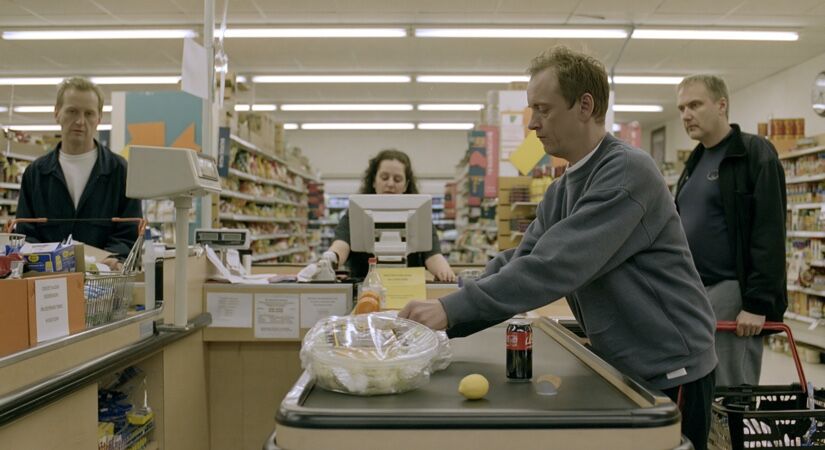
On October 15, Reuters reported that producer prices had increased by the largest amount in four and a half years.
Economists surveyed by Reuters expected the Producer Price Index (PPI) to increase 0.5% in September.
Instead, it jumped 1.3% in a single month - more than two and a half times the expected increase.
According to the Bureau of Labor Statistics, that was the biggest monthly increase since March 2022. Over the last twelve months, producer prices rose 6.3%, the fastest annual increase since December 2022.
Now, that may sound like just another obscure economic statistic. But PPI tells us something important about inflation that the more familiar Consumer Price Index (CPI) doesn't.
PPI measures changes in prices received by domestic producers. CPI measures changes in the prices consumers pay.
In other words, PPI can reveal inflationary pressure building inside the economy before some of those costs reach the checkout counter.
Consider September's wholesale food prices, which increased 1.2%. Within that category, prices for fresh and dry vegetables jumped an astonishing 41% in one month.
Now, that's a particularly volatile category, and the 41% increase doesn't mean grocery-store vegetables suddenly cost 41% more. Other wholesale food prices actually declined.
But the broader report was troubling. Prices for goods rose 2.6%, while services prices increased 0.8%.
This wasn't just one category moving the overall number higher.
And when producers face rising costs, they have a choice: absorb those costs, accept lower profits, or pass some of the increase along to customers.
Not all producer-price increases reach consumers, and there's no reliable formula that tells us exactly when or how much will be passed along.
Still, a sudden jump in producer prices is a warning worth taking seriously.
Especially when you're trying to plan a retirement budget around expenses that refuse to stay put.
But before we go any further, let's consider the good news.
On October 14, just one day before the alarming PPI report, the Social Security Administration announced the 2027 cost-of-living adjustment (COLA).
As Fortune reported, retirees will receive their largest annual increase in four years, +3.6%, effective January 2027.
That sounds pretty good, doesn't it? But how much money are we actually talking about?
The average retired worker will receive approximately $75 more each month. The Social Security Administration confirms that figure. Its estimates show the average monthly retirement benefit increasing from $2,095 to $2,170.
That's an additional $900 per year for the average recipient, before any changes to Medicare deductions.
Certainly, an extra $900 is welcome. It might cover a few utility bills, a car repair or perhaps some of those medical expenses that have a habit of appearing when we least expect them.
But it isn't going to make anyone rich.
And here's the catch.
Social Security's COLA compensates for inflation that has already happened. It doesn't anticipate inflation that's still coming.
The adjustment is calculated using changes in a consumer price index over a specific period. It doesn't predict what groceries, electricity, gasoline or medical care will cost next year.
Nor does it necessarily reflect the actual spending habits of every retiree.
Someone who spends a larger share of their income on healthcare, for example, can experience inflation quite differently from the average household.
So yes, the COLA is good news.
But if living costs continue rising, that additional $75 a month may not stretch nearly as far as retirees hope.
Which brings us to the ugly part of our discussion.
You already know gasoline has gotten more expensive.
What you may not realize is that diesel fuel prices have more than doubled over the past year, reaching record highs.
And diesel has an enormous influence on the cost of just about everything Americans purchase.
I have a close relative who spent nearly his entire adult life driving long-haul trucks, so I've always had a certain appreciation for truck drivers and the work they do.
But I don't think most Americans realize just how much our economy depends on diesel.
Consider what happens before an ordinary product reaches your home:
Raw materials have to be transported to factories. Finished goods have to be delivered to warehouses. Retailers need their merchandise shipped to stores. And when you order something online, someone has to bring it to your doorstep.
Two-thirds of that transportation depends on diesel-powered trucks. Trains also run on diesel - as do the big container ships that cross the oceans.
Agriculture, too: Farmers use diesel-powered equipment to plant, harvest and transport crops. When diesel prices rise, their costs go up - and then diesel prices count again, for moving food from farms and processing facilities to supermarkets.
Mining equipment, heavy construction machinery - they run on diesel, too.
That's why I think of diesel as something much more important than another price displayed outside a gas station. One that most of us don't care about...
Gasoline prices are painfully visible to most of us. Diesel prices can be just as painful, even when we never buy a gallon ourselves.
And we now have evidence that those higher costs are spreading through the economy.
On October 15, Reuters reported that truck freight transportation costs had climbed 19% over the previous year. Even more concerning, prices for food production rose 15.6% over the same period.
Think about that for a moment.
We're not talking about what you're paying at the grocery store today. We're talking about costs incurred before food reaches the grocery store.
Those expenses don't automatically translate into higher prices on store shelves. Businesses can absorb some of the costs. Individual prices can fluctuate considerably. But when transportation, energy and production costs rise together, businesses have less room to absorb the expenses. My back-of-the-envelope calculation tells me the majority, about 80%, of higher business costs result in higher prices for the end-user. That's me and you.
Oxford Economics senior U.S. economist Matthew Martin told Reuters that his firm expects food inflation to accelerate later this year.
And remember, we're heading into the holiday shopping season.
We recently discussed how American consumers are spending more and getting less as higher prices strain household budgets.
So, here's where the bad and the ugly come together.
The September PPI report doesn't guarantee another surge in consumer prices. But it provides substantial evidence of costs building in the supply chain - costs that businesses will eventually pass along to households.
And remember, Social Security's newly announced raise is based on inflation that has already occurred.
That's an uncomfortable combination for anyone living on a fixed income.
As unpleasant as the latest inflation news is, there's something else I find troubling.
Even if the Federal Reserve succeeds in bringing inflation back under control, prices will generally continue rising.
That's not speculation. It's how our current monetary policy is designed to work.
The Fed has a long-term inflation target of 2% per year, based on the Personal Consumption Expenditures price index.
The Fed believes a low, predictable rate of inflation supports price stability and a healthy economy.
You can agree or disagree with that reasoning. Personally, I think it's reasonable to question why a system that deliberately accepts ongoing increases in consumer prices is considered stable.
But here's what matters to your retirement.
Two percent inflation doesn't mean prices stop rising. It means they're rising more slowly.
And, as we've seen repeatedly, maintaining even that modest target is easier said than done.
According to the Bureau of Labor Statistics, consumer prices rose 3.7% on an annual basis as of September.
The Fed has already responded to renewed inflation pressures by raising its benchmark interest-rate range by a quarter percentage point in September. Whether additional increases will be necessary remains uncertain.
And, yes, higher borrowing costs create a different set of problems for households and businesses.
And that leaves Americans planning for retirement facing an uncomfortable dilemma.
How much inflation should you plan for?
Two percent? Three percent? Four percent? (Last time I checked, the post-1971 average annual inflation rate was a little over four percent.)
What happens if you plan for one and experience another?
Think about someone preparing to retire next year. They've worked, saved, budgeted and calculated how much money they'll need to live comfortably for another twenty or thirty years.
Their retirement savings may look sufficient today. But their cost of living isn't locked in when they stop working. It keeps changing throughout retirement.
And each unexpected increase in living expenses can require a larger withdrawal from savings that may already need to last for decades. Or, possibly worse, a reduction in their standard of living. It's brutal math either way - live smaller today, or risk living smaller tomorrow?
That's why I believe purchasing power deserves more attention than the dollar balance of your retirement accounts.
Tyler Durden Wed, 10/28/2026 - 12:10
Continue reading...
[ H/T ZeroHedge ]
Authored by Peter Reagan via BirchGold.com,
Today we're going to talk about the good, the bad and the ugly.
No, I'm not referring to the classic Clint Eastwood spaghetti western (although, if you haven't watched it recently, you should! It really holds up.)
I'm talking about inflation. And if you're wondering how inflation can possibly have a "good" side, you'll understand in a moment.
I'm afraid we're going to start with the bad news, though. And it's bad enough that I think everyone - especially anyone planning for retirement - ought to pay attention...
The bad: Wholesale inflation is surging
On October 15, Reuters reported that producer prices had increased by the largest amount in four and a half years.
Economists surveyed by Reuters expected the Producer Price Index (PPI) to increase 0.5% in September.
Instead, it jumped 1.3% in a single month - more than two and a half times the expected increase.
According to the Bureau of Labor Statistics, that was the biggest monthly increase since March 2022. Over the last twelve months, producer prices rose 6.3%, the fastest annual increase since December 2022.
Now, that may sound like just another obscure economic statistic. But PPI tells us something important about inflation that the more familiar Consumer Price Index (CPI) doesn't.
PPI measures changes in prices received by domestic producers. CPI measures changes in the prices consumers pay.
In other words, PPI can reveal inflationary pressure building inside the economy before some of those costs reach the checkout counter.
Consider September's wholesale food prices, which increased 1.2%. Within that category, prices for fresh and dry vegetables jumped an astonishing 41% in one month.
Now, that's a particularly volatile category, and the 41% increase doesn't mean grocery-store vegetables suddenly cost 41% more. Other wholesale food prices actually declined.
But the broader report was troubling. Prices for goods rose 2.6%, while services prices increased 0.8%.
This wasn't just one category moving the overall number higher.
And when producers face rising costs, they have a choice: absorb those costs, accept lower profits, or pass some of the increase along to customers.
Not all producer-price increases reach consumers, and there's no reliable formula that tells us exactly when or how much will be passed along.
Still, a sudden jump in producer prices is a warning worth taking seriously.
Especially when you're trying to plan a retirement budget around expenses that refuse to stay put.
But before we go any further, let's consider the good news.
The good: Social Security recipients are getting a raise
On October 14, just one day before the alarming PPI report, the Social Security Administration announced the 2027 cost-of-living adjustment (COLA).
As Fortune reported, retirees will receive their largest annual increase in four years, +3.6%, effective January 2027.
That sounds pretty good, doesn't it? But how much money are we actually talking about?
The average retired worker will receive approximately $75 more each month. The Social Security Administration confirms that figure. Its estimates show the average monthly retirement benefit increasing from $2,095 to $2,170.
That's an additional $900 per year for the average recipient, before any changes to Medicare deductions.
Certainly, an extra $900 is welcome. It might cover a few utility bills, a car repair or perhaps some of those medical expenses that have a habit of appearing when we least expect them.
But it isn't going to make anyone rich.
And here's the catch.
Social Security's COLA compensates for inflation that has already happened. It doesn't anticipate inflation that's still coming.
The adjustment is calculated using changes in a consumer price index over a specific period. It doesn't predict what groceries, electricity, gasoline or medical care will cost next year.
Nor does it necessarily reflect the actual spending habits of every retiree.
Someone who spends a larger share of their income on healthcare, for example, can experience inflation quite differently from the average household.
So yes, the COLA is good news.
But if living costs continue rising, that additional $75 a month may not stretch nearly as far as retirees hope.
Which brings us to the ugly part of our discussion.
The ugly: Diesel prices affect almost everything
You already know gasoline has gotten more expensive.
What you may not realize is that diesel fuel prices have more than doubled over the past year, reaching record highs.
And diesel has an enormous influence on the cost of just about everything Americans purchase.
I have a close relative who spent nearly his entire adult life driving long-haul trucks, so I've always had a certain appreciation for truck drivers and the work they do.
But I don't think most Americans realize just how much our economy depends on diesel.
Consider what happens before an ordinary product reaches your home:
Raw materials have to be transported to factories. Finished goods have to be delivered to warehouses. Retailers need their merchandise shipped to stores. And when you order something online, someone has to bring it to your doorstep.
Two-thirds of that transportation depends on diesel-powered trucks. Trains also run on diesel - as do the big container ships that cross the oceans.
Agriculture, too: Farmers use diesel-powered equipment to plant, harvest and transport crops. When diesel prices rise, their costs go up - and then diesel prices count again, for moving food from farms and processing facilities to supermarkets.
Mining equipment, heavy construction machinery - they run on diesel, too.
That's why I think of diesel as something much more important than another price displayed outside a gas station. One that most of us don't care about...
Gasoline prices are painfully visible to most of us. Diesel prices can be just as painful, even when we never buy a gallon ourselves.
And we now have evidence that those higher costs are spreading through the economy.
On October 15, Reuters reported that truck freight transportation costs had climbed 19% over the previous year. Even more concerning, prices for food production rose 15.6% over the same period.
Think about that for a moment.
We're not talking about what you're paying at the grocery store today. We're talking about costs incurred before food reaches the grocery store.
Those expenses don't automatically translate into higher prices on store shelves. Businesses can absorb some of the costs. Individual prices can fluctuate considerably. But when transportation, energy and production costs rise together, businesses have less room to absorb the expenses. My back-of-the-envelope calculation tells me the majority, about 80%, of higher business costs result in higher prices for the end-user. That's me and you.
Oxford Economics senior U.S. economist Matthew Martin told Reuters that his firm expects food inflation to accelerate later this year.
And remember, we're heading into the holiday shopping season.
We recently discussed how American consumers are spending more and getting less as higher prices strain household budgets.
So, here's where the bad and the ugly come together.
The September PPI report doesn't guarantee another surge in consumer prices. But it provides substantial evidence of costs building in the supply chain - costs that businesses will eventually pass along to households.
And remember, Social Security's newly announced raise is based on inflation that has already occurred.
That's an uncomfortable combination for anyone living on a fixed income.
The bigger problem: Inflation doesn't have to surge to erode your savings
As unpleasant as the latest inflation news is, there's something else I find troubling.
Even if the Federal Reserve succeeds in bringing inflation back under control, prices will generally continue rising.
That's not speculation. It's how our current monetary policy is designed to work.
The Fed has a long-term inflation target of 2% per year, based on the Personal Consumption Expenditures price index.
The Fed believes a low, predictable rate of inflation supports price stability and a healthy economy.
You can agree or disagree with that reasoning. Personally, I think it's reasonable to question why a system that deliberately accepts ongoing increases in consumer prices is considered stable.
But here's what matters to your retirement.
Two percent inflation doesn't mean prices stop rising. It means they're rising more slowly.
And, as we've seen repeatedly, maintaining even that modest target is easier said than done.
According to the Bureau of Labor Statistics, consumer prices rose 3.7% on an annual basis as of September.
The Fed has already responded to renewed inflation pressures by raising its benchmark interest-rate range by a quarter percentage point in September. Whether additional increases will be necessary remains uncertain.
And, yes, higher borrowing costs create a different set of problems for households and businesses.
And that leaves Americans planning for retirement facing an uncomfortable dilemma.
How much inflation should you plan for?
Two percent? Three percent? Four percent? (Last time I checked, the post-1971 average annual inflation rate was a little over four percent.)
What happens if you plan for one and experience another?
Think about someone preparing to retire next year. They've worked, saved, budgeted and calculated how much money they'll need to live comfortably for another twenty or thirty years.
Their retirement savings may look sufficient today. But their cost of living isn't locked in when they stop working. It keeps changing throughout retirement.
And each unexpected increase in living expenses can require a larger withdrawal from savings that may already need to last for decades. Or, possibly worse, a reduction in their standard of living. It's brutal math either way - live smaller today, or risk living smaller tomorrow?
That's why I believe purchasing power deserves more attention than the dollar balance of your retirement accounts.
Tyler Durden Wed, 10/28/2026 - 12:10
Continue reading...
[ H/T ZeroHedge ]