



I have been writing for a while about something I call sacred masculinity, and I have been writing about this concept because I think something is missing from the way we talk about boys and men in society today.
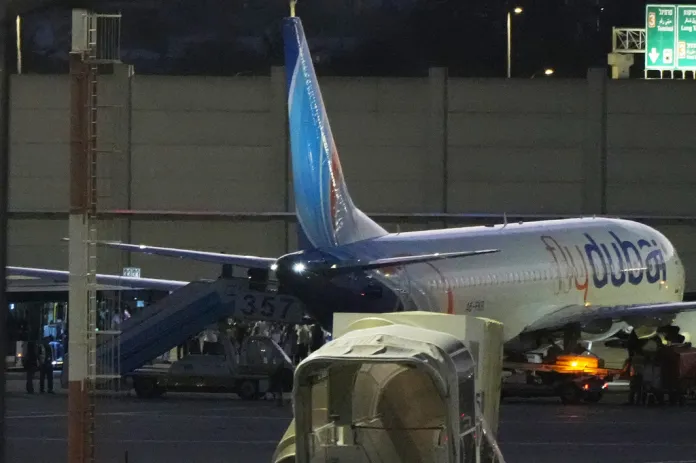
As both a professor and a parent, I spend a considerable amount of time working with younger people, and I keep noticing that we spend a considerable amount of time telling boys and young men what not to be. We tell them not to be aggressive, domineering, reckless, or cruel. Of course, these are important values, but they make up only part of the conversation, and it is the negative side. We need to focus on the positive side far more often and we need to tell boys and men how their strengths, abilities, and instincts can be used. I thought about this again on Wednesday after reading about what happened aboard Flydubai Flight FZ1073.
The flight was traveling from Dubai to Tel Aviv when the co-pilot attacked Captain Smit Machchhar with a knife. The airplane began losing altitude and dropped more than 14,000 feet in less than 30 seconds. The videos surfacing are remarkable. They show passengers screaming and being thrown around the cabin. For a period of time, no one appeared to be in control of the plane, as the co-pilot tried to crash it while it was en route to Israel.
What interests me about masculinity is what happened next. Yaniv Hayoun, an Israeli who works in maintenance, was traveling with his family on the flight. He told the Free Press that when he understood something was terribly wrong, “I ran toward the cockpit.” The airplane was already in a steep dive, but Hayoun and others made their way forward and eventually got inside. He says they fought with the attacker, and Hayoun put him in a chokehold and helped pull him out of the cockpit.
With nobody apparently at the controls, Hayoun then went to the yoke himself and pulled back until another pilot arrived and took over.
Hayoun was only one part of what happened. Machchhar, an Indian pilot who had been seriously wounded, continued fighting back and reportedly managed to unlock the cockpit door before losing consciousness. That gave the passengers and crew the opportunity to get inside and overpower the attacker. Flydubai crew members who happened to be pilots aboard the flight, took control of the aircraft and eventually landed it safely in Tabuk, Saudi Arabia.
Then there was Shota Musaev, a dentist who was also traveling as a passenger. Musaev did not initially run forward because somebody needed dental or medical care. In fact, he has said that he heard the commotion, realized something was wrong, and went toward the cockpit to help stop the attacker. After the man had been restrained, Musaev turned his attention to the badly bleeding Machchhar and treated him until the plane could land.
Miraculously, the plane landed safely in Saudi Arabia and all 174 people aboard survived.
There is no question that what these men did was brave. But what struck me was far bigger than bravery: each man had something he could do, and in a moment of chaos, each one understood that he had a responsibility to do it. No one had time to think about what role he wanted to play. There were people in danger, and the men who could do something stepped forward.
This is what I mean by the word “sacred.” I do not mean that men should be looking for danger, or that manhood is measured by physical courage. I mean that strength, skill, knowledge, and competence carry obligations and responsibilities once other people depend on you. At that point, what you would personally prefer to do becomes beside the point.
Hayoun was not a member of the flight crew or a police officer. He was a father traveling with his family who suddenly found himself in a situation where people needed help. He believed he could do something, so he stepped up and acted.
Machchhar, despite being badly injured, kept fighting and somehow managed to open the cockpit lock, which gave everyone else a chance to save the plane. The other pilots had the training to take over the aircraft, and Musaev had the medical knowledge to help the wounded captain after first helping stop the attacker. Hayoun had the physical ability and courage to confront the attacker directly as the plane was heading toward the ground rapidly. Each man had something different to offer, and in that moment, each used it for the benefit of others.
Thankfully, most men will never confront anything close to what happened on Flight FZ1073. Most fathers will never need to fight their way into the cockpit of an airplane, and most pilots or doctors will never suddenly find themselves responsible for the lives of nearly 200 strangers as a plane is in a nosedive. The obligations men must accept are usually much more ordinary: taking care of people, keeping one’s word, being present, and accepting that what one wants sometimes comes second.
FIVE ARRESTED ON SUSPICION OF PREPARING TERRORIST ACT AT UK AIR BASE USED BY US IN IRAN WAR
This is the part of the masculinity conversation that I think boys and men need to hear more often. We as a society should certainly teach boys and men to control their strength, but we should also tell them to become capable, learn, develop skills, and become people others can depend on. Most of the time, those abilities will be used in ordinary ways. Every once in a while, however, the stakes are much higher and men should act.
The men aboard Flight FZ1073 had almost no warning before that moment arrived. Each saw that there was something he could do for the people around him, and each did it. These men are heroes and exemplars of sacred masculinity.
Continue reading...
[ H/T Washington Examiner ]