




World leaders are arriving in New York for the 81st United Nations General Assembly. All eyes are on Washington’s next move regarding Tehran. Seven months into a naval conflict sparked by the blockade of the Strait of Hormuz, the administration holds all the leverage. The question is no longer whether American pressure is working. The question is how President Donald Trump will deploy his upper hand. He can let the economic stranglehold break the regime, or he can authorize a decisive military strike to finish the job.
This position is the direct result of a return to maximum economic warfare. On Friday, Trump signed the Lindsey O. Graham Sanctioning Russia and Iran Act of 2026. This law expands statutory sanctions and gives the White House massive tariff powers to punish foreign entities that deal with Tehran. The legislative hammer reinforces the Treasury Department’s active “Operation Economic Outcast” campaign. This operation targets the financial networks Iran uses to smuggle oil and evade international restrictions.
The numbers show this economic siege has caused a severe slow boil inside the Islamic Republic. The Iranian rial has plummeted to a record low of over 2.3 million rials to a single U.S. dollar. Domestic inflation is hovering near 90%. Everyday citizens face extreme shortages of basic groceries, fuel, and medical supplies. By blocking oil exports and choking access to foreign currency, the administration has drained the cash reserves Tehran needs to fund its regional proxies.
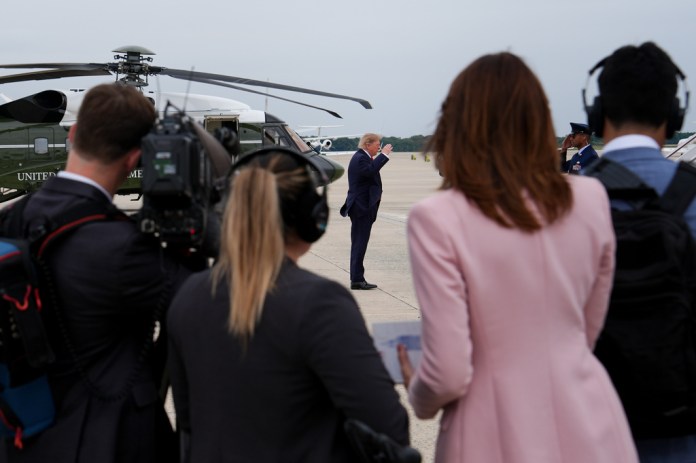
This strategy has backed Iranian President Masoud Pezeshkian into a corner before he even speaks in New York. Over the weekend, Trump openly stated he is in “deciding mode.” His options range from letting the Iranian economy “rot” to wiping the regime out entirely if it refuses to abandon its nuclear ambitions. Predictably, Tehran responded with desperate threats. Revolutionary Guard spokesmen warned of retaliation against American bases across the Middle East.
These threats are a sign of weakness, not strength. The regime cannot survive a prolonged economic blockade, nor can it match American military power.
This brings us to the tactical choice Trump faces at the U.N. General Assembly. The slow boil of economic isolation is low-risk. It breaks the regime from within without deploying American ground troops or further disturbing global energy markets. However, a slow burn gives adversaries time to look for sanctions loopholes or launch sudden, asymmetric provocations in the shipping lanes.
OPINION: TRUMP HESITATED AND LOST THE IRANIAN STREET — BUT THE REVOLUTION DOESN’T NEED HIM
Conversely, a direct military strike offers a permanent solution. It would quickly dismantle command structures, permanently reopen the Strait of Hormuz, and prove that American red lines are absolute. The risk is a wider regional war. This is a calculation Trump is weighing carefully as he reviews intelligence reports.
Ultimately, the administration has earned the luxury of this choice. Through unyielding economic pressure and a refusal to tolerate endless diplomatic delays, the White House is dictating the terms of this conflict. Whatever Trump decides, the American people should support his choice. Despite the endless news and media chatter, the commander in chief has access to all the actionable intelligence while the public does not, and there is a very good national security reason for that. The era of American strategic patience is over, and Tehran’s day of reckoning has arrived.
Dr. Eric Wargotz is a geopolitical analyst and policy commentator who has held leadership roles across government and medicine. A Clinical Professor Emeritus at George Washington University and Maryland judge, he is a former U.S. Senate nominee and elected county commission president. Views are his own.
Continue reading...
[ H/T Washington Examiner ]