







“2016 is the Flight 93 election: charge the cockpit or you die.” Michael Anton’s famous warning, published two months before Donald Trump’s first victory, argued that conservatives had to risk everything rather than accept certain defeat. Even if their man reached the cockpit, he might not know how to land the plane.
Ten years later, Trump is in the cockpit, the American right is strapped in behind him, and he appears hellbent on crashing the whole enterprise. The passengers keep shouting about the turbulence. Almost nobody will confront the pilot.
How much more are we willing to lose by treating one man as a suicide pact?
In 2016, this wager made a brutal kind of sense to voters sick of a Republican establishment that promised to fight and then governed as though nothing could change. But the wager never required permanent obedience to the man in the cockpit. A movement unable to say no to its own leader is no movement at all.
After the midterm rout, I asked how Republicans could rebuild while Trump still controlled their image, message, endorsements, fundraising, and party machinery. His response has been to champion the very priorities voters just rejected: the gilded White House ballroom, tariffs, the Iran war, a stock-market economy that does little for renters, and still more data centers. Even as Nvidia’s Jensen Huang faced a national-security scandal, Trump endorsed the idea of giving him his job back.
He is dying on all the wrong hills while neglecting the issues that brought him to the dance in 2016. And he has signaled a willingness to bargain with Democrats on immigration. This is the post-election course correction?
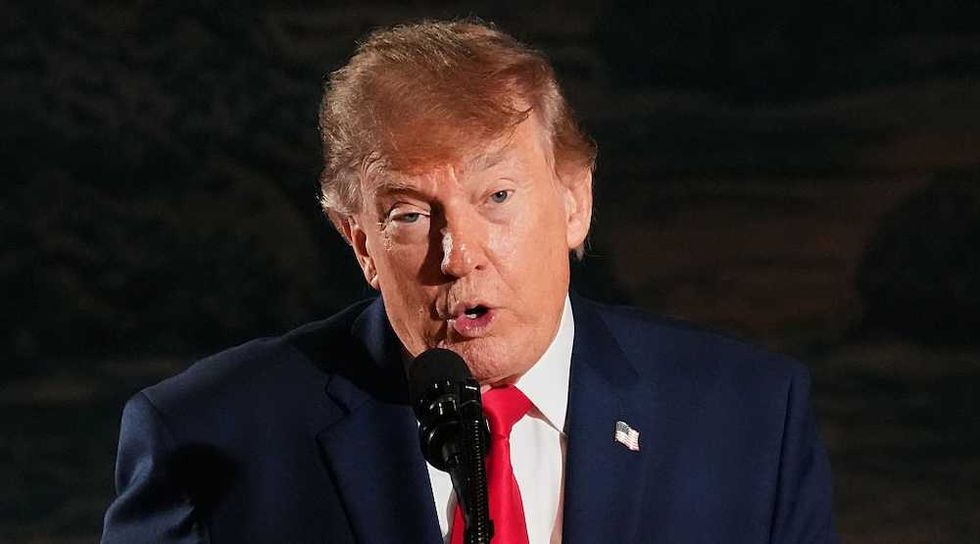
Then came something even I did not expect: an insistence that the Democrats’ landslide was stolen. “The 2026 midterms were rigged,” Trump declared Sunday. “100% of counties in Texas and Kansas shifting to Democrat is impossible. This fraud must be dealt with immediately or this country is gone.”
It apparently cannot occur to him that millions of voters saw what he was doing and rejected it. Trump would rather sell his base another election conspiracy than reckon with the verdict of the electorate.
RELATED: 7 questions the right can’t dodge after the midterm rout
The scale of that verdict should frighten Republicans. Democrats won the aggregate U.S. House vote in Indiana, a state Trump carried comfortably in 2024. Republicans barely led the House vote in Utah and Missouri. And when the new governors take office, Democratic governors will govern states containing roughly three-quarters of Americans.
These are not the results of a movement one staff reshuffle away from recovery. Nor do they become less real because the president posts about voting machines in the middle of the night.
Consider the Republican candidate trying to win back a suburban district. What can she say about the cost of living that voters will hear above Trump’s daily proclamations? How does she promise competent government while her party’s president congratulates himself on monuments to his own greatness? The image of the national party will follow every local candidate into the voting booth.
Mr. President, the unprecedented factor here is your own agonizing behavior. Republicans can change the White House chief of staff, their congressional leaders, even their legislative agenda. None of it will overcome a president who insists that swelling portfolios prove the economy is wonderful while younger Americans struggle to afford housing.
And there is always more to lose. Republicans face a punishing Senate map in 2028, including contests in states where voters have just delivered severe reversals to the GOP. A weakening economy would make the predicament worse. What happens if the AI boom falters or the housing market cracks? Does anyone expect Trump to become more disciplined and responsive as the pressure mounts?
The party’s would-be successors have no answer. Many conservatives seem ready to crown Vice President JD Vance the 2028 nominee. How does nominating Trump’s second-in-command persuade voters that the party has heard their complaints about his boss?
Meanwhile, the conservative commentariat is busy finding scapegoats: congressional Republicans, the president’s advisers, insufficiently loyal candidates, anyone but Trump. They talk about unity while enforcing a code of silence around the man driving away voters they must win back.
RELATED: Democrats are not hiding their plans for 2027
In 2016, Trump’s refusal to bow to his critics looked like strength. In 2026, the same reflex has curdled into an inability to learn from defeat. He congratulates himself on the ballroom while families complain about prices; he boasts about Big Tech while its investments threaten to swallow entire communities; he cries fraud when voters turn against him. And his defenders call this fighting.
And the next two years will not be a quiet retirement tour. Democrats will control Congress. Trump will still command the party’s attention, dominate its news coverage, and force Republican candidates to defend whatever fresh provocation he produces. The right cannot rebuild while its leader keeps demolishing the scaffolding.
Anton wrote about a final test of political survival. Now the test falls on the right itself. Can it distinguish its principles from the fortunes of the man who took over its party? Can it admit that the supposed rescuer has become the greatest obstacle to rescue?
The plane is losing altitude. The passengers can keep cursing the weather, blaming the ground crew, and congratulating the pilot for his courage. Or they can do what the Flight 93 metaphor demanded all along: confront the man in the cockpit.
How much more are we willing to lose by treating one man as a suicide pact?
Continue reading...
[H/T Blaze Media]


