


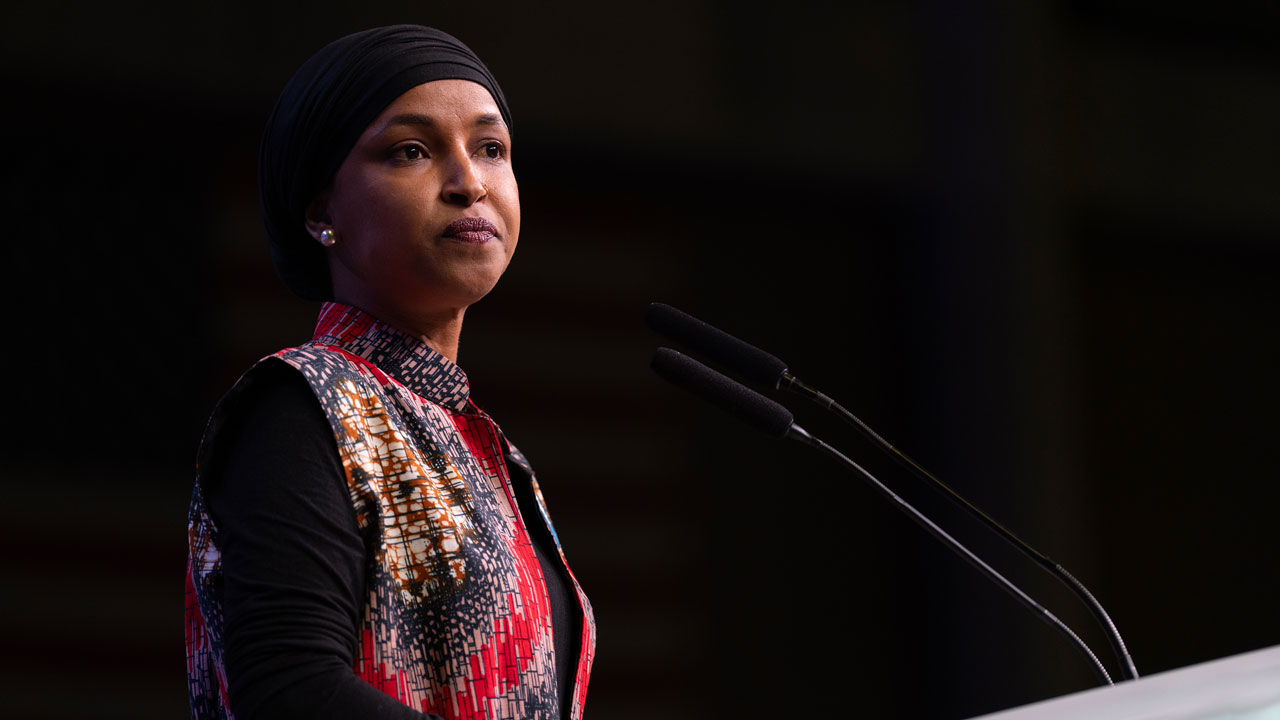
The Trump administration’s ongoing fraud probe into the refugee and U.S. citizenship approvals of Somali-born Rep. Ilhan Omar, D-Minn., carries much more importance than many Americans realize as this political theater unfolds.
The Omar affair highlights an underlying homeland security problem about the other 150,000 other Somali refugees let in before President Donald Trump mostly closed the Somali pipeline spigots and, most pertinently, about the thousands more hoping to get through after his 2029 departure.
Omar denies all wrongdoing, and she has not been tried for any crime. Regardless, the investigation should serve as a reminder to Americans that there are serious concerns about Somali refugees committing immigration fraud with impunity. When Somalis do lie to get in, they bring elevated risks of public welfare fraud and gang crime.
Perhaps most adversely, though, their arrival heralds the potential of Islamic terrorism.
To understand some of the issues with Somali immigration, it is worth understanding Somalia’s history since the January 1991 overthrow of Somali dictator Mohammed Siad Barre.
Until about 2013, anarchy prevailed in the Muslim-majority nation. No effective government existed, let alone a vital records office, to issue uniform documents like birth certificates. Additionally, there were no effective law enforcement agencies to prosecute criminals and create a criminal history database.
No central government intelligence service existed to build computerized datasets of thousands of fighters recruited by the al-Shabaab terrorist group, which still rules large swaths of Somalia and exercises influence in neighboring countries. Atrocity-committing warlords, clan paramilitary groups, and al-Shabaab don’t exactly keep publicly accessible computerized membership records.
It gets worse. Warring militias destroyed almost every pre-1991 citizenship record. The information black hole persists, as the State Department describes on its Somalia web page in its General Documents section.
“Although the United States formally recognized the new government of Somalia on January 17, 2013, there continues to be no recognized competent civil authority to issue civil documents,” it says. “There are no circumstances under which immigrant visa applicants can reasonably be expected to recover original documents held by the former government of Somalia.”
This helps explain why Omar’s investigators are unlikely to find a simple paper trail consisting of documents like birth certificates, driver’s licenses, school enrollment documents, or military records.
Hers is hardly an isolated case, and it could portend broad public safety consequences of far more importance than details about Omar’s own history.
Before Trump cut off most Somali immigration in both of his terms, a potential terrorist from Somalia being considered for entry into our country could get away with far more deception than those from other nations for the simple fact that so little information exists to disprove his claims. This problem left U.S. adjudicators to roll the dice on letting in Somalis who offered unverifiable names and narratives.
Consider the case of Abdul Razak Ali Artan, who was born in Somalia and entered the U.S. as a refugee with his mother and six siblings in June 2014 from a Pakistani refugee camp. On Nov. 28, 2016, he was inspired by ISIS to use a Honda Civic and butcher knife to injure 11 people at Ohio State University before being shot dead by a campus officer. Sen. Charles E. Grassley, R-Iowa, later complained that U.S. adjudicators missed big clues during vetting.
Other Somali refugees were caught after lying about their involvement with terrorist organizations—costing taxpayers unnecessary law enforcement time and prison resources. In his 2007 refugee application, Abdinassir Mohamud Ibrahim lied about which clan he was born into, which helped him dodge the fact that close relatives in his true clan were leaders in Somalia’s violent “Islamic Courts,” the U.S.-designated terrorist entity that later became al-Shabaab.
The FBI finally caught up to Ibrahim in San Antonio in 2014 for having helped his terrorist friends back home recruit more terrorists. He illegally sent cash too.
Somalia is wiped so clean of information that two Ethiopians, married couple Mohamed Abdirahman Osman and Zeinab Abdirahman Mohamed, claimed they were Somalis, no doubt knowing checks with the records-competent U.S.-allied Ethiopian government would reveal that Osman was seemingly a dangerous al-Shabaab operative.
Their 2014 refugee claim and later green card and citizenship applications falsely said al-Shabaab blew off both the husband’s hands. They were living in Tucson in 2018 when the FBI found seeming evidence that he was an active al-Shabaab explosives expert who lost his hands preparing bombs for the group to detonate. Furthermore, the FBI learned a brother went on the run following a terrorism conviction, and an uncle and aunt in 2014 bombed a restaurant in Djibouti. From Tucson, the couple sent tens of thousands of dollars abroad to support these fugitives.
Another consequence of Somali resettlement is that they form culturally insulated enclaves that don’t assimilate well and pass old-country extremism to younger generations.
We know this, in part, because law enforcement has identified nearly 40 Somali-American young men who joined or attempted to join ISIS or Al Shabaab in Iraq and Syria. At least two dozen Minnesota enclave Somalis traveled to join al-Shabaab back in the homeland.
A standard-bearer was Dahir Adan, who was born near the border of Somalia and Kenya and entered the U.S. as a 2-year-old refugee. He went on to stab ten shoppers with two steak knives in September 2016 at the Crossroads Center shopping mall in St. Cloud, Minnesota before an off-duty police officer shot him dead. ISIS claimed Aden “was a soldier of the Islamic State.”
Somali citizens have no doubt suffered persecution, and many who have left can’t return home because of ongoing dangers. But a look beyond the political theater of the Omar investigation makes clear that documentation that can pierce the secrets of Somalis rarely exists. Which means that letting this group into America is high-stakes gambling. The safest bet with Somalis is to just refrain.
Continue reading...
[ H/T The Daily Signal ]