
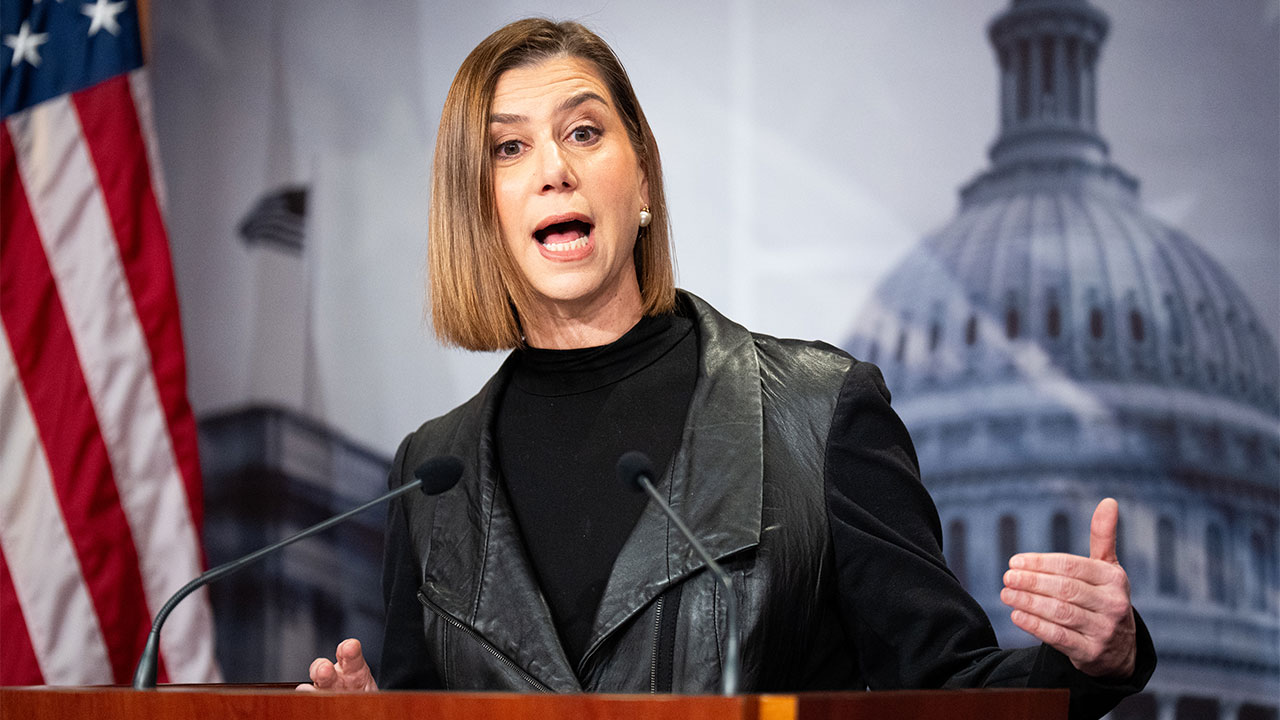






Rep. Ilhan Omar faces no indictment or conviction, and she remains a U.S. citizen.
If federal investigators can prove that fraud infected the immigration or citizenship process connected to her family, an indictment might be only the first step in a much larger legal battle.
The stakes could eventually extend to citizenship itself—and, only after additional proceedings, possible removal from the United States.
That is the legal roadmap Fox News analyst Gregg Jarrett laid out after agents searched Omar’s Washington home, seized devices and records, and reportedly served more than a dozen grand-jury subpoenas on members of her family.
The central point in Jarrett’s Fox News opinion column concerns what could happen next rather than any outcome that has already occurred. Several different statutes and court processes could come into play if prosecutors establish knowing falsehoods involving identity, birth date, family relationships or citizenship documents.
Jarrett identifies possible theories involving false statements, unlawful procurement of citizenship, identity fraud, conspiracy and obstruction. He also argues that proven fraud could open a separate civil path toward revoking citizenship and, later, immigration proceedings.
Those are legal possibilities, not current charges. The Justice Department has not publicly released the affidavit supporting the search warrant, and Omar has not been indicted.
Omar denies wrongdoing and says the investigation is a politically motivated attack by the Trump administration. Her attorneys have demanded that the government return property taken during the search.
That denial matters. So does the distinction between a search warrant, an indictment and a conviction.
A judge who approves a search warrant finds probable cause to believe evidence of a crime may be located in the place to be searched. That is a meaningful legal threshold, but it is not a finding that the target committed a crime—and it is far below the proof beyond a reasonable doubt required for a criminal conviction.
The Associated Press reported that federal authorities seized Omar’s phone and issued more than a dozen grand-jury subpoenas, including subpoenas to relatives. AP said the precise scope of the investigation remains unclear.
Omar’s lawyers told the Justice Department there is no legitimate basis to suggest she violated any law involving her citizenship. They called the search unjustified, politically motivated and unconstitutional.
A Justice Department spokesperson rejected that account, saying federal attorneys and law-enforcement partners complied with court orders and legal obligations.
That leaves the public at a crucial but incomplete point: investigators have taken aggressive steps, Omar has mounted a forceful denial, and the evidence that persuaded the judge remains largely out of public view.
The first major statute Jarrett highlights is federal Section 1425. Subsection (a) covers anyone who knowingly procures or attempts to procure naturalization, citizenship or documentary evidence of either contrary to law, whether for that person or someone else.
Subsection (b) separately addresses knowingly issuing, obtaining, applying for or otherwise trying to obtain citizenship-related documents for someone who is not entitled to them. The text therefore reaches completed procurement and attempted procurement, but prosecutors would still have to prove the knowledge and unlawfulness required by the subsection they charge.
For an ordinary first or second offense unrelated to terrorism or drug trafficking, the maximum prison term is 10 years. The statute sets enhanced maximums of 20 years when the offense facilitated drug trafficking, 25 years when it facilitated international terrorism, and 15 years for another offense outside the first-or-second-offense category.
Those penalties are statutory ceilings, not predictions about anyone’s guilt or sentence. The Supreme Court has also placed an important limit on how naturalization fraud may be prosecuted.
In Maslenjak v. United States, the defendant obtained refugee status after saying that her husband had avoided service in the Bosnian Serb Army, then became a citizen after swearing that she had not lied to obtain an immigration benefit. Evidence later showed that she knew her husband had served as an officer in that army, and prosecutors charged her under Section 1425(a) based on a false statement made under oath.
The trial judge told jurors that the government did not need to prove the false statement was material to the citizenship decision, and the Sixth Circuit upheld the conviction. The Supreme Court vacated that judgment, holding that an illegal act must have played some role in obtaining citizenship.
For a false-statement theory, the government may show that the true fact would have disqualified the applicant or that the lie predictably cut off an investigation leading to a disqualifying fact. Under the Court’s investigation-based framework, a defendant may still prevail by showing that she was legally qualified for citizenship despite the misrepresentation.
That causal requirement would matter in any future case involving alleged discrepancies. The question would be whether a proven falsehood affected the lawful route to citizenship, rather than whether it was merely embarrassing or technically inaccurate.
The citizenship issue is also more complicated than a politician simply ordering that a person be denaturalized.
Axios notes that federal law allows citizenship obtained through naturalization to be revoked when it was illegally procured, secured through willful misrepresentation or obtained by concealing a material fact.
But the president cannot erase citizenship with a speech, social-media post or executive announcement. The government must use a lawful process, present evidence and give the person an opportunity to contest the case.
Axios also points to an added complication specific to Omar: she says she obtained citizenship through her father’s naturalization in 2000 while she was still a minor. Any future case could therefore turn on what Omar herself allegedly knew or said as well as the precise statutory route through which her citizenship was documented.
Jarrett argues that several scenarios could create exposure if proven: a knowingly false birth date, a false identity, a conspiracy to conceal fraud, or a sham marriage used to obtain immigration benefits.
The key words are if proven.
Omar has long denied allegations that she married her brother for immigration purposes. In a recent interview, she described that allegation as a disgusting lie.
When asked more broadly whether she was related to her former husband, she answered, “Not to my knowledge.”
Critics seized on the qualification. Her defenders argue that years of allegations have never produced a conviction and that the current investigation is timed to damage a political opponent shortly before an election.
A newly publicized 1997 marriage certificate has added another layer to the controversy because it contains family names that overlap with names appearing in reporting about Omar and her former husband. But a name overlap does not by itself establish a biological relationship, a sham marriage or a crime.
Records, witness testimony, immigration files, DNA evidence if lawfully obtained, and proof of what any person knew at the time would matter far more than political speculation.
The next legal distinction is just as important: criminal charges and civil denaturalization are related possibilities, but they are not the same proceeding.
The Justice Department announced that it had filed 17 civil denaturalization actions in federal district courts against naturalized citizens accused of concealing serious crimes or other disqualifying facts. DOJ said the complaints relied on statutory grounds allowing citizenship to be revoked when naturalization was illegally procured or obtained through concealment of a material fact or willful misrepresentation.
The announced cases covered markedly different allegations. DOJ said one defendant admitted participating in a health-care-fraud scheme involving 30 clinics and about $36.7 million in allegedly fraudulent billing, another concealed sexual abuse of his minor daughter while his naturalization application was pending, and another allegedly used a husband’s assumed identity to obtain permanent residence and citizenship.
Other complaints described alleged wire and bank fraud, securities fraud, visa fraud, drug offenses and sexual offenses committed or concealed before or during naturalization. These remain government allegations rather than adjudicated facts, and the announcement described filed complaints rather than completed revocations.
Those cases illustrate the basic mechanism: the government files in federal court and must prove its allegations. Each defendant may contest the claims, and filing a complaint does not itself revoke citizenship.
A criminal conviction under Section 1425 can have a direct citizenship consequence under federal law. A civil case under federal Section 1451 follows its own demanding process.
Even then, loss of citizenship would not place someone on an airplane the next morning.
Removal would require additional immigration proceedings, review of the person’s underlying status and a final removal order. The individual could contest removability and seek whatever forms of relief the law makes available.
That is why the phrase “indictment, denaturalization and deportation” describes a possible chain of consequences—not one immediate action.
Each link would require evidence. Each would create opportunities for Omar to challenge the government.
Failure at one stage could prevent the next.
There is also a separate federal inquiry involving the dramatic swings in financial figures connected to Omar and her husband’s business interests. That investigation should not be blended casually with the immigration matter; different facts and different laws may be involved.
Political rhetoric is already racing ahead of the public evidence. President Trump has argued that the situation looks bad for Omar, while Omar says his administration is using law enforcement to silence a critic.
The answer will not come from the loudest claim on either side. It will come from documents, testimony, forensic evidence and the legal standards applied in court.
For now, Omar remains a U.S. citizen and a sitting member of Congress. She has not been charged in the immigration investigation, and the allegations against her have not been proven.
The search, seizures and grand-jury activity show that the matter has moved well beyond internet rumor.
If prosecutors can prove knowing, material fraud tied to citizenship, the consequences could reach far beyond an indictment. If they cannot, the government will have to answer serious questions about an extraordinary investigation of a sitting member of Congress.
Either way, this case now demands evidence—not slogans.
Continue reading...
[ H/T WLT Report ]


