





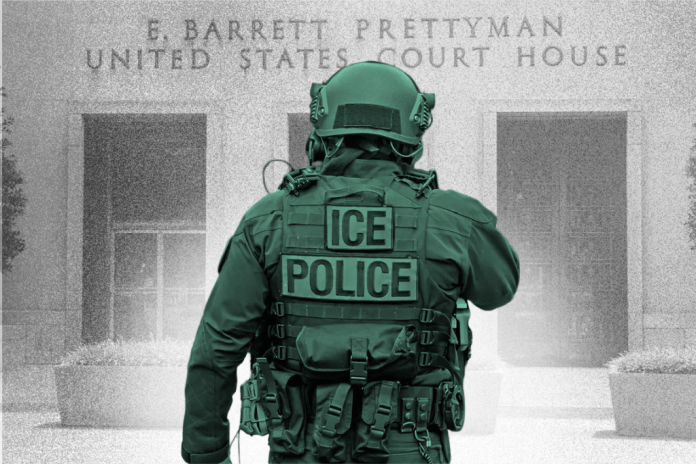
Immigration and Customs Enforcement are looking to expedite deportations of Haitian immigrants as their temporary protected status comes to an end.
Citing two agency sources and federal documents, CBS News reported that the agency is looking to ramp up its operations targeting Haitians, arresting and sending them back to the crisis-ridden island as soon as possible. The Department of Homeland Security ended TPS for over 500,000 Haitians last summer, but the matter had been held up in the courts. The Trump administration won a major Supreme Court victory last month, allowing it to end TPS protections, with the court’s mandate taking effect in lower courts on Monday.
The report suggested that the sweeping operations are set to begin almost immediately after that deadline, with operations to begin as early as this week. One of the locations being eyed for targeting is Springfield, Ohio, which became the center of debates around immigration in the 2024 elections after thousands of Haitians were settled in the small town.
In a statement responding to the outlet, DHS didn’t confirm or deny the plans but communicated to Haitian migrants that it was time to leave.
“What we would say now is it’s closing time which means you don’t have to go home, but you can’t stay here,” it said. “The good news is it’s not too late to get a $2,600 check and a free flight home.”
TPS allows refugees in the United States to obtain work permits and live without fear of deportation until conditions in their home countries improve. The U.S. has TPS designations for 17 countries: Afghanistan, Myanmar, Cameroon, El Salvador, Ethiopia, Haiti, Honduras, Lebanon, Nepal, Nicaragua, Somalia, South Sudan, Sudan, Syria, Ukraine, Venezuela, and Yemen.
TPS is in place for six to 18 months and is subject to renewal. Haiti was first given the TPS designation after the devastating 2010 earthquake, after which it has been renewed.
HAITIANS AND SYRIANS MUST SELF-DEPORT IN A MATTER OF HOURS OR FACE ICE, OFFICIALS SAY
Haiti, ruled by a presidential council formed after the assassination of the last president, Jovenel Moise, on July 7, 2021, has been in a state of anarchy for years. The presidential council wields little power, and actual power belongs to brutal gangs centered in the capital. The United Nations warned that so much of the capital is in the gangs’ hands that it risks falling into complete criminal control.
Despite the situation, DHS argued that the program was only ever intended to be a temporary one and that recipients must be prepared for the possibility that it could end.
Continue reading...
[ H/T Washington Examiner ]