



How Would NATO Defeat A Russian Invasion? Top Commander Reveals Aspects Of Classified Plan
NATO's top military commander, US Air Force General Alexus Grynkewich, on Monday gave an important speech presenting a "theory of victory" in the scenario of a future Russian attack along the Western military alliance's 'eastern flank'.
He asserted that NATO forces would "block, blunt and break" any Russian attack on member territory, which would make any such assault "utterly futile". But he also characterized the plan as one that would seek to avoid a wider, prolonged war from erupting. But he insisted the alliance is "ready to fight tonight" even though it does not seek escalation.
"Should the adversary choose to press the attack or commit his reserves, we will break the warfighting system engaged against us," Grynkewich declared at the speech given at the Warsaw Security Forum on Monday. "This includes not just the attacking force itself, but anything and everything that supports, sustains or controls that force." This would suggest missile attacks deep into Russian territory, including on command-and-control centers.
"I think our populations around the alliance are a bit nervous," Grynkewich acknowledged while explaining why he is taking what was a classified plan established months ago into the public realm.
He said NATO leadership must seek to assure member populations that it will successfully defend them. "What I want to do is assure the 1 billion citizens of our alliance that we’ve got this," he said. "We know what we need to do. We know how we would do it, and it’s going to take all of us working together." However, looming large over all of this is the specter of nuclear war - something not focused on in his strategic talk.
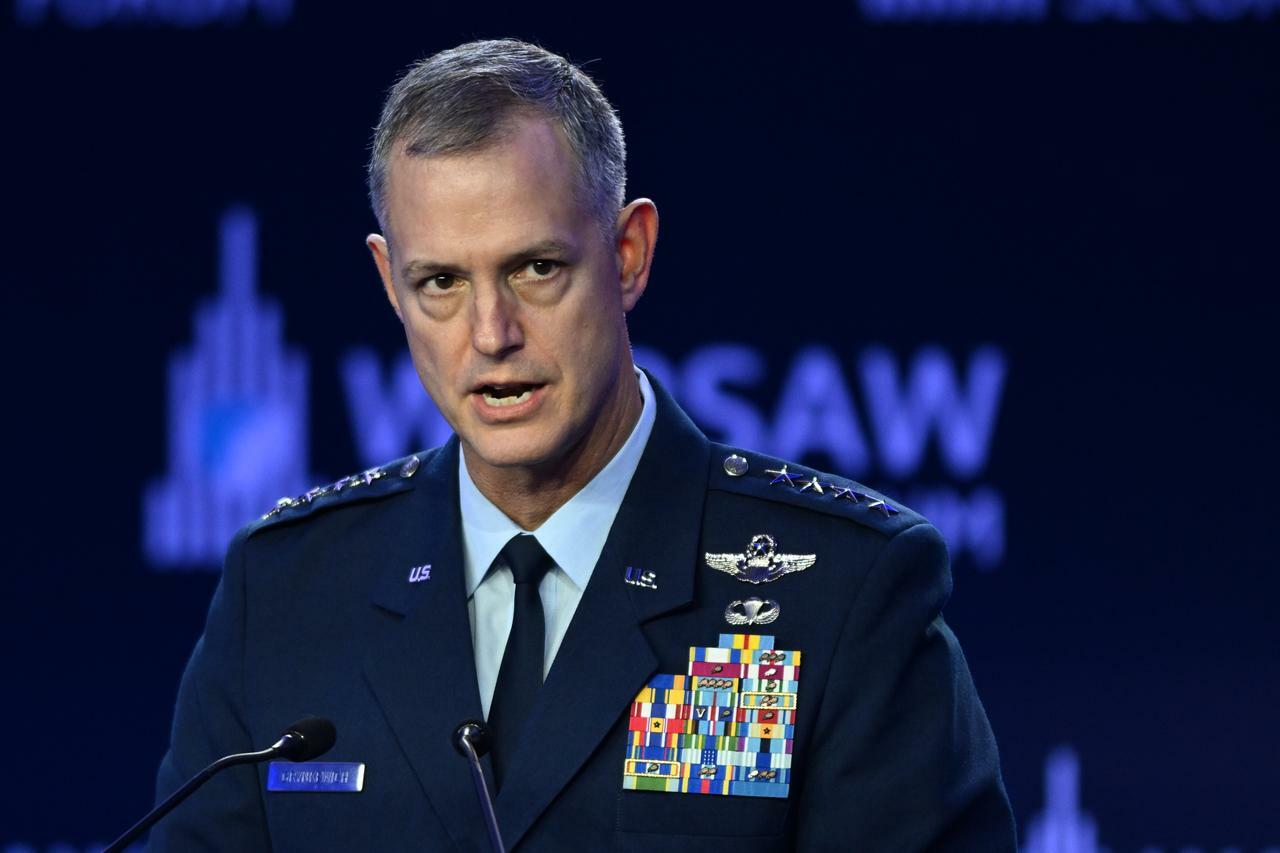
Anadolu Agency: NATO Supreme Allied Commander Europe (SACEUR) General Alexus G. Grynkewich speaks during a panel on the first day of the Warsaw Security Forum, held Monday.
Below is a brief outline and blueprint of what he laid out in the speech...
He described the overall objective as to quickly neutralize a potential invasion force and its direct support systems, but crucially without seeking Russia's wider strategic defeat. He presented that this would be according to multiple phases:
From there Grynkewich emphasized deterrence, describing that NATO's ability to match any enemy escalation will only solidify alliance unity and gradually weaken Moscow's overall force posture and will to keep going.
Bloomberg summarized the talk according to the following key notes:
The Wall Street Journal has further issued a detailed report going into more detail on the Ukraine war-inspired 'autonomous zone' on the eastern flank:
Meanwhile European officials are still strongly hyping and warning about what they call a continuing sabotage campaign which has made heavy use of drones and other tactics that violate European airspace and security.
EU top diplomat Kaja Kallas is also on Monday calling on President Trump to sanction Russian and ditch the controversial diesel deal.
"Pressure on Moscow, not concessions, is the fastest way to end the war," she said.
Tyler Durden Tue, 10/13/2026 - 04:15
Continue reading...
[ H/T ZeroHedge ]
NATO's top military commander, US Air Force General Alexus Grynkewich, on Monday gave an important speech presenting a "theory of victory" in the scenario of a future Russian attack along the Western military alliance's 'eastern flank'.
He asserted that NATO forces would "block, blunt and break" any Russian attack on member territory, which would make any such assault "utterly futile". But he also characterized the plan as one that would seek to avoid a wider, prolonged war from erupting. But he insisted the alliance is "ready to fight tonight" even though it does not seek escalation.
"Should the adversary choose to press the attack or commit his reserves, we will break the warfighting system engaged against us," Grynkewich declared at the speech given at the Warsaw Security Forum on Monday. "This includes not just the attacking force itself, but anything and everything that supports, sustains or controls that force." This would suggest missile attacks deep into Russian territory, including on command-and-control centers.
"I think our populations around the alliance are a bit nervous," Grynkewich acknowledged while explaining why he is taking what was a classified plan established months ago into the public realm.
He said NATO leadership must seek to assure member populations that it will successfully defend them. "What I want to do is assure the 1 billion citizens of our alliance that we’ve got this," he said. "We know what we need to do. We know how we would do it, and it’s going to take all of us working together." However, looming large over all of this is the specter of nuclear war - something not focused on in his strategic talk.
Anadolu Agency: NATO Supreme Allied Commander Europe (SACEUR) General Alexus G. Grynkewich speaks during a panel on the first day of the Warsaw Security Forum, held Monday.
Below is a brief outline and blueprint of what he laid out in the speech...
He described the overall objective as to quickly neutralize a potential invasion force and its direct support systems, but crucially without seeking Russia's wider strategic defeat. He presented that this would be according to multiple phases:
From there Grynkewich emphasized deterrence, describing that NATO's ability to match any enemy escalation will only solidify alliance unity and gradually weaken Moscow's overall force posture and will to keep going.
Bloomberg summarized the talk according to the following key notes:
- Does not believe a conflict is imminent or inevitable.
- NATO will respond to attacks by blockading, degrading and striking adversary forces.
- If necessary NATO will neutralize systems targeting its combat systems.
- The alliance will pair high-end precision-guided munitions with large-scale, low-cost, scalable systems.
The Wall Street Journal has further issued a detailed report going into more detail on the Ukraine war-inspired 'autonomous zone' on the eastern flank:
Meanwhile European officials are still strongly hyping and warning about what they call a continuing sabotage campaign which has made heavy use of drones and other tactics that violate European airspace and security.
EU top diplomat Kaja Kallas is also on Monday calling on President Trump to sanction Russian and ditch the controversial diesel deal.
"Pressure on Moscow, not concessions, is the fastest way to end the war," she said.
Tyler Durden Tue, 10/13/2026 - 04:15
Continue reading...
[ H/T ZeroHedge ]