






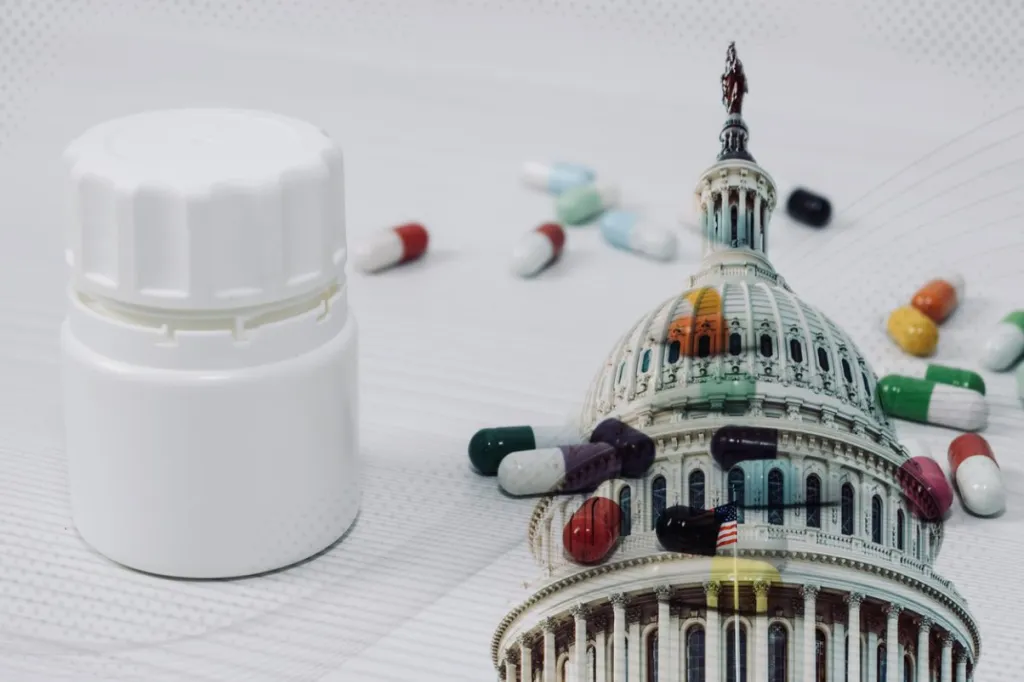
“We’ve got to make sure that nobody has to worry about high healthcare premiums,” former president Barack Obama said at a recent Democratic rally. “We have a lot of work to do.”
The high cost of health insurance has become a central issue for Democrats campaigning to seize control of Congress. It’s not a made-up issue: Average premiums have increased more than 40% in the last four years, and have more than doubled in the past decade.
How did healthcare costs get this high? Much of the blame rests with Obama’s signature achievement: Obamacare, or the Affordable Care Act.
By design, Obamacare drove up the demand for healthcare and consolidated both the insurance industry and the world of healthcare providers, such as physicians’ practices and hospitals. Democrats named it the Affordable Care Act, but in private the law’s architects admitted it was not a cost control bill.
Increase coverage now, address costs later — that was the plan all along. The ACA is best understood as a ticking time bomb that was meant to explode and create demand for single-payer health insurance.
Built to balloon costs
The purpose of Obamacare was to increase Americans’ consumption of healthcare. The law required every last American to buy health insurance, and the insurance regulations were crafted to boost doctor visits and prescription-drug consumption.
On the other side of the ledger, instead of increasing the supply of healthcare providers, the law pushed for consolidation. More demand, no more supply, more consolidation. That’s a perfect recipe for higher prices.
David Bowen, an aide to Sen. Ted Kennedy, was one of the most important staffers in crafting the bill. After Obamacare became law, Bowen exited to the private sector, and in the summer of 2010, he gave a briefing in downtown Washington to industry insiders.
There Bowen compared the federal law to its predecessor in Massachusetts. “In Massachusetts, there was a very conscious decision to do coverage first, knowing that that would bring on a cost battle second,” Bowen explained. “We certainly made the same decision” with Obamacare. “This is a coverage bill, not a cost reduction bill. There is stuff here that will begin to address the issue of cost, but this is not a cost reduction bill with a bit of coverage on it — it is really trying to get coverage first.”
The main point of the bill was to subsidize the consumption of healthcare, and to spread the cost of medical procedures and prescription drugs, using both government subsidies and mandates on private insurance. In short, the law tried to make sure people who used more healthcare services didn’t have to pay more than people who used less or none at all.
When you subsidize something, and when you separate the cost of a service from the consumption of the service, you will inevitably see prices go up.
Additionally, the bill’s hospital regulations were designed to drive industry consolidation. Fewer providers means less competition, but to Obamacare’s authors, less competition meant more efficiency.
“These reforms will unleash forces that favor integration across the continuum of care,” three Obamacare architects wrote. Specifically, it would pressure small physician-owned practices to consolidate or to sell out to large hospitals. “Only hospitals or health plans can afford to make the necessary investments in information technology and management skills,” they wrote.
Consolidation boosts hospitals’ profits and seems to give patients worse results, according to one recent study.
As a result, premiums climbed for years. Democrats, under the Biden administration, slapped an expensive patch on that problem: Massive taxpayer subsidies to insurance companies. They pitched these as temporary pandemic measures, but clearly intended to make them permanent. When Republicans removed that patch a year ago, middle-class and upper-middle-class customers were left to pay their full premiums.
Higher premiums cause higher premiums, thanks to the “death spiral.” Once premiums are high enough, they become a bad economic deal for relatively healthy customers, who then drop insurance. That makes the insurance pool less healthy, thus driving premiums higher, thus pushing more customers out of the market.
The massive increases in the last year seem to be part of a death spiral. Obamacare was supposed to prevent the death spiral through the individual mandate, thus preventing people from going uninsured. Republicans, in the 2017 Tax Cuts and Jobs Act, reduced the penalty for going uninsured to $0.
The Democrats’ long game
As voters get angry about skyrocketing premiums, Democrats are seeking to get a political advantage off of this.
“Paired with a reduction in tax credits to help buy insurance through the Affordable Care Act, and rising employee premiums, the cuts are colliding with a broader voter revolt against the high cost of living — and have turned healthcare into a top midterm issue,” reported the liberal website Vox.
This makes sense on a purely political level — the out-of-power party is attacking the in-power party for massively disruptive cost increases.
But this isn’t just short-term politics. It’s part of the Democrats’ long-term policy goal.
Obamacare was always intended as paving the way to single-payer healthcare: A socialized system where the federal government is the only health insurer.
Obamacare drove up health insurance coverage and usage, which, as the architects promised, was laying the groundwork for later steps to address costs. The Democrats’ plan for driving down healthcare costs is single-payer, which allows bureaucrats to set prices.
This year, Democrats made that explicit.
Liberal Democrat Abdul el Sayed, the Democratic Senate nominee in Michigan, has made single-payer (“Medicare for All”) a centerpiece of his campaign. On one level, this looks like explicit rejection of Obamacare, but it’s really the logical conclusion, as Sayed and Obama both say.
THE COST OF OBAMACARE IS A TIME BOMB
Obama says Sayed will “Finish the job we started with the Affordable Care Act and guarantee quality, affordable healthcare to every single American.”
Sayed says the same thing.
OUR 44th president. Let's finish what he started and guarantee healthcare for every American.pic.twitter.com/aWcolg9ziY
— Dr. Abdul El-Sayed (@AbdulElSayed) October 27, 2026
Obama, then, is admitting what was said in private last decade, and what conservatives charged at the time, too: Obamacare didn’t make healthcare more affordable; it, in fact, drove up costs, and this was part of a long-term plan to replace our health insurance system with a fully socialized one.
Continue reading...
[ H/T Washington Examiner ]