





Hawkish Minutes Show "Almost All" FOMC Members See More Hikes As Fed Frets Over "Opaque" AI Debt
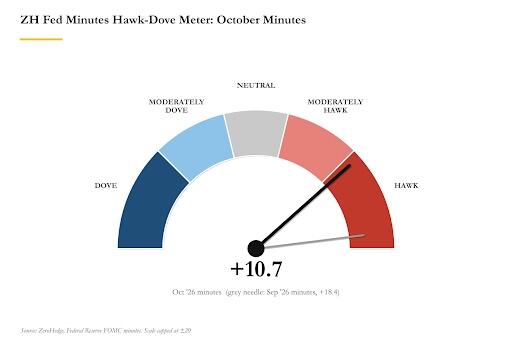
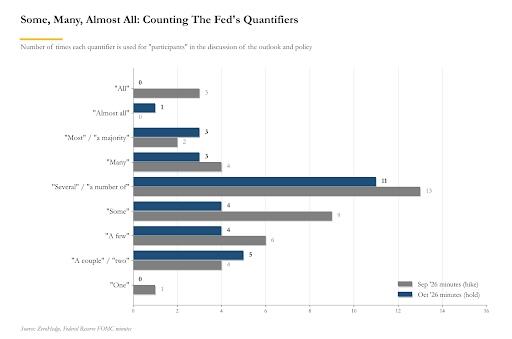
Tl;dr: One chart to rule them all... a very hawkish minutes - it's not if but by how much they hike in December...
~~~~~
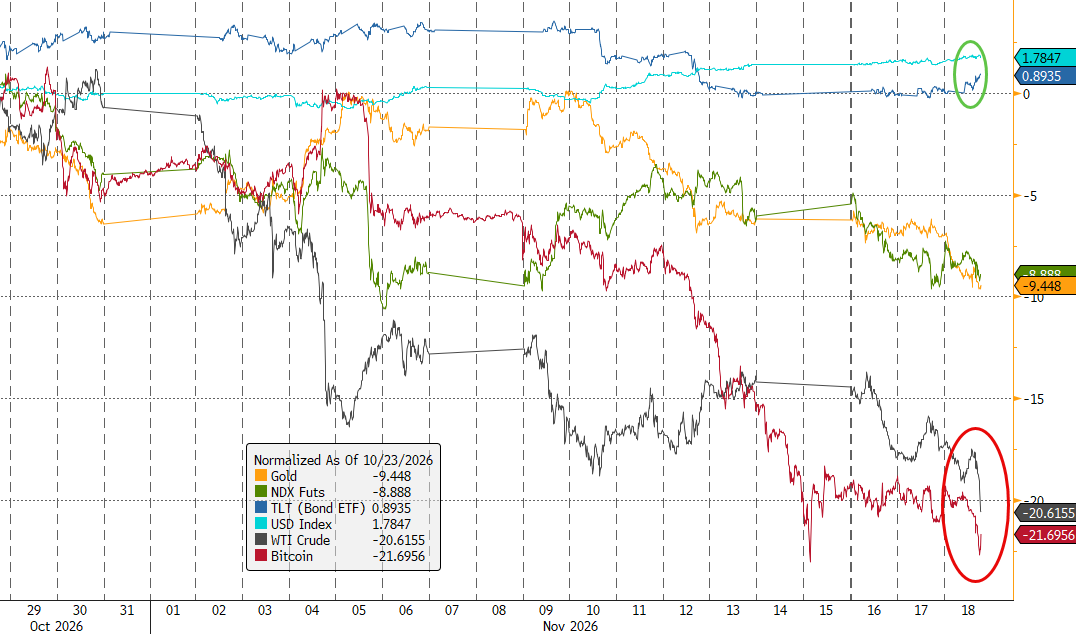
Since the 'heated' hold (2 hawkish dissents) at the last FOMC statement (Oct 28th), bitcoin and oil prices have crashed, gold and tech stocks have tumbled while the dollar has rallied and bonds flat...
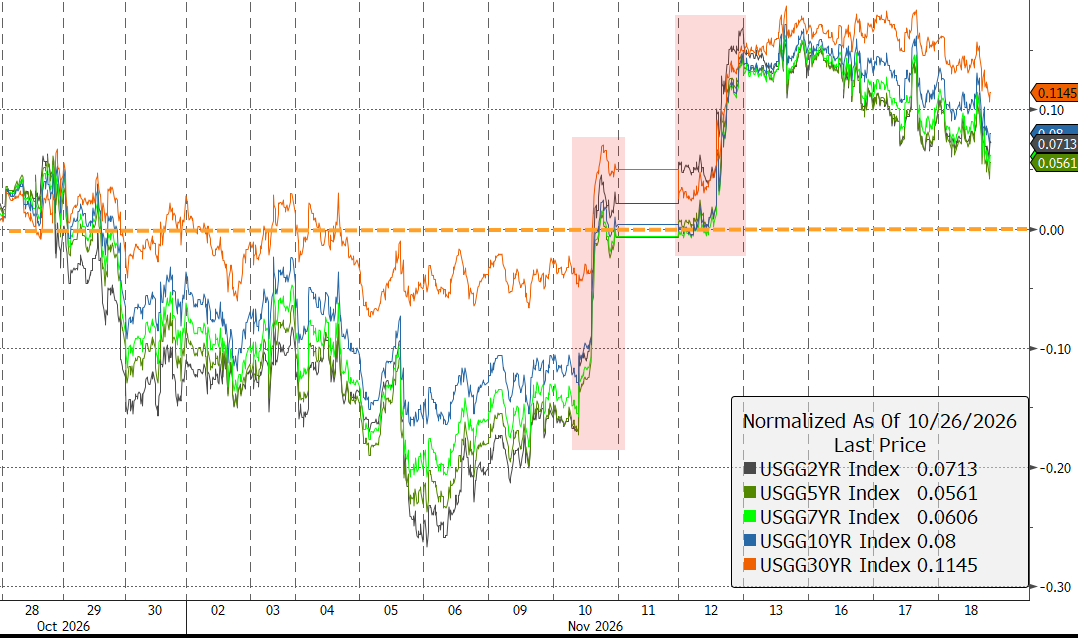
The last couple of days have seen yields leak lower but remain up 6-12bps since the last Fed meeting...
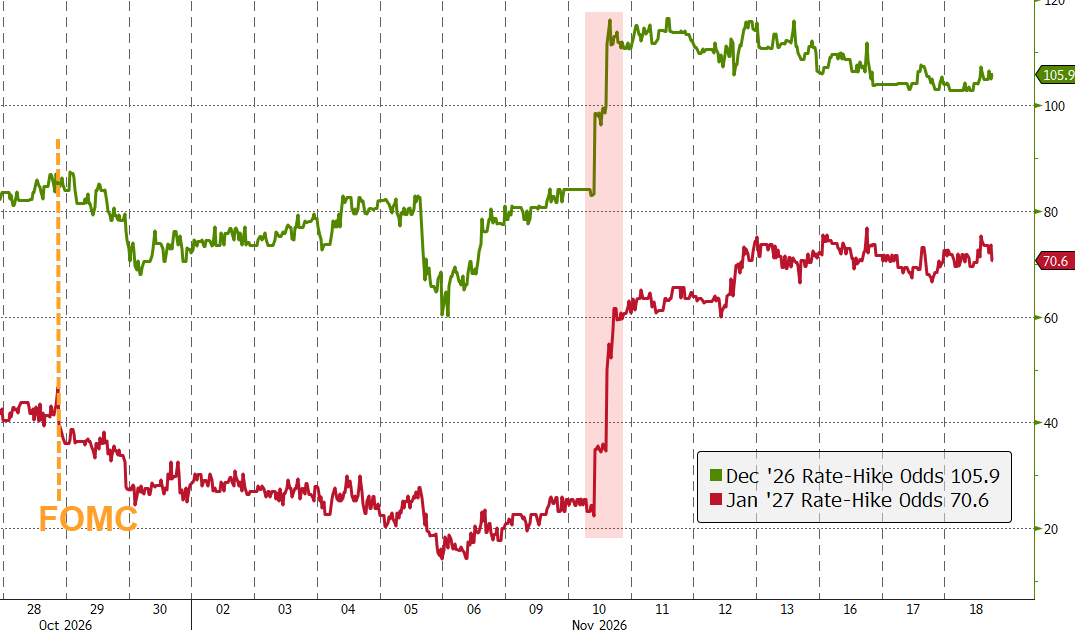
Hot CPI lifted rate-hike odds (and that was maintained by a seemingly endless stream of hawkish FedSpeak, some pushing for a 50bps hike in Dec)...
It will take a lot to surprise markets today as the minutes will likely confirm what everyone already suspects: a committee that wanted to hike in October, held off for (mostly) calendar reasons, and has since been handed every excuse it needs to move in December. The only open questions are by how much and how often, and those won't be answered at 2pm today...
The 10-2 vote flattered the doves.
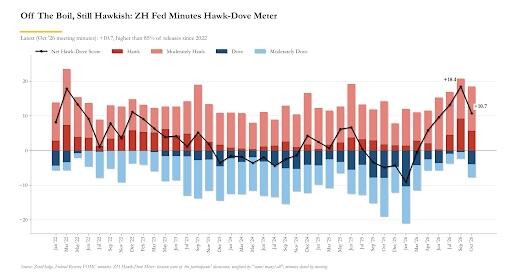
As we suggested in our preview this morning, the minutes of the Oct 27-28 FOMC meeting (full text here) show that the camp pushing for an immediate hike was bigger than the two dissenters, Lisa Cook and Beth Hammack. "Some participants favored an increase of 25 basis points," and "a few" of those who voted to hold "viewed the decision as a close call."
And the October pause looks like a matter of timing, not direction:
Since then, the inflation data have been unfavorable: core CPI printed 0.3% for a third straight month. Which explains why Waller is now openly talking up a 50bps move for Dec 9.
The hawks' argument was simple: inflation "had remained too high," they "saw few signs of it abating," and policy "was not sufficiently restrictive." A few warned that further delay risked "necessitating a larger and more disruptive tightening later". Others noted that only limited data would arrive before December and that the next inflation print "was likely to be unfavorable." (Spoiler: it was.)
The giveaway is what the hawks wanted in exchange for holding: a few said they could have backed no change "provided that it was clearly understood by market participants that further tightening was likely." In other words, the pause came with a hike pre-announced.
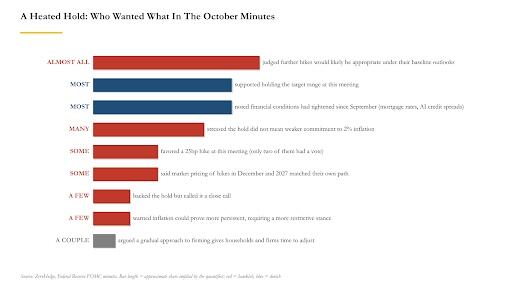
The majority that voted to hold leaned on the statement's "accumulation of more information" language: the durability of AI investment, financing conditions, and the lagged effect of September's hike. A couple wanted a "gradual approach" so households and businesses could adjust. Several were comforted that market pricing for hikes in December and next year was already "broadly consistent" with their own path. That's convenient: the market did the tightening, so the Fed didn't have to. Many also stressed that the hold "did not reflect a weakening" of the Fed's resolve, which is what you say when you're afraid it will be read exactly that way.
This all fits Goldman's read. In this morning's GS Morning email (available to pro subs), the bank's chief US economist David Mericle described October as a compromise to "hike every other meeting." After last week's CPI, Goldman added a third 25bp hike in March 2027 on top of December. The NY Fed's Desk survey wasn't far off: its median respondent expected a hike in December, another in March 2027, then a cut early in 2028. The survey's median estimate of the longer-run fed funds rate also rose to about 3.4%.
Several participants said tariff effects appeared to be waning, but "most remarked that inflation pressures in the economy were broad based." The vast majority pointed to energy. More notably, many said demand from the AI buildout was "continuing to strain supply and raise prices of technology-related consumer goods," with several judging those pressures were "increasingly extending beyond industries directly affected by data center construction."
Many participants called AI "a material source of inflation risk." So the same capex boom keeping GDP afloat is now on the list of reasons to hike.
The Fed staff were blunter. Staff estimated September headline PCE at 3.6% and core at 3.1%, and listed the possibility that long-run expectations "could have become unanchored after five years' worth of elevated inflation" as a "salient risk." Five years. For anyone keeping count of how "transitory" that has turned out.
The financial stability section reads as if it came from our own archives. Staff "highlighted the rapid growth of debt associated with the artificial intelligence (AI) buildout, noting that off-balance-sheet leasing commitments and circular financing arrangements among AI-related firms could amplify losses if returns on AI investment were to disappoint." Then the participants weighed in:
Off-balance-sheet leases, circularity, opacity, concentration: regular readers will recognize every item on that list, since we have been warning about the AI debt binge since last October. Now the FOMC has caught up, so we'll allow ourselves a modest victory lap.
The rest of the stability discussion is no more reassuring:
The markets section described the same mood: two leading AI firms missed revenue expectations, a hyperscaler's capex plan "required a greater amount of financing than investors had anticipated," and high-yield bonds issued to fund data centers saw "an especially notable widening in spreads."
Notably, the minutes say nothing about the shorter press conference or any change to the meeting calendar. The policy discussion is all about December.
Putting it together: almost all participants see more hikes, a majority see financial conditions tightening, and only "a couple" floated 50bps, conditional on bad inflation data, which has since arrived. With Waller already on board for 50bps and Williams saying the situation doesn't call for "dramatic action," Warsh's choice on Dec 9 is probably between a hawkish 25bp and a 50bp that nobody can blame on the doves.
Our take: OIS is right that December is a lock, and the risk is skewed toward more. The more interesting signal is the Fed hiking into an economy where its own financial stability staff are warning about an AI debt binge built on opaque structures and private credit. That combination rarely ends quietly. Then again, as the minutes put it, "monetary policy was not the appropriate tool to address financial stability risks directly." It's a comforting line, until the hikes themselves start tightening the screws.

Read the full FOMC Minutes below:
Tyler Durden Wed, 11/18/2026 - 14:05
Continue reading...
[ H/T ZeroHedge ]
Tl;dr: One chart to rule them all... a very hawkish minutes - it's not if but by how much they hike in December...
~~~~~
Since the 'heated' hold (2 hawkish dissents) at the last FOMC statement (Oct 28th), bitcoin and oil prices have crashed, gold and tech stocks have tumbled while the dollar has rallied and bonds flat...
The last couple of days have seen yields leak lower but remain up 6-12bps since the last Fed meeting...
Hot CPI lifted rate-hike odds (and that was maintained by a seemingly endless stream of hawkish FedSpeak, some pushing for a 50bps hike in Dec)...
It will take a lot to surprise markets today as the minutes will likely confirm what everyone already suspects: a committee that wanted to hike in October, held off for (mostly) calendar reasons, and has since been handed every excuse it needs to move in December. The only open questions are by how much and how often, and those won't be answered at 2pm today...
So what did The Fed want us to know?
The 10-2 vote flattered the doves.
As we suggested in our preview this morning, the minutes of the Oct 27-28 FOMC meeting (full text here) show that the camp pushing for an immediate hike was bigger than the two dissenters, Lisa Cook and Beth Hammack. "Some participants favored an increase of 25 basis points," and "a few" of those who voted to hold "viewed the decision as a close call."
And the October pause looks like a matter of timing, not direction:
Since then, the inflation data have been unfavorable: core CPI printed 0.3% for a third straight month. Which explains why Waller is now openly talking up a 50bps move for Dec 9.
"A Close Call"... In The Hawkish Direction
The hawks' argument was simple: inflation "had remained too high," they "saw few signs of it abating," and policy "was not sufficiently restrictive." A few warned that further delay risked "necessitating a larger and more disruptive tightening later". Others noted that only limited data would arrive before December and that the next inflation print "was likely to be unfavorable." (Spoiler: it was.)
The giveaway is what the hawks wanted in exchange for holding: a few said they could have backed no change "provided that it was clearly understood by market participants that further tightening was likely." In other words, the pause came with a hike pre-announced.
The majority that voted to hold leaned on the statement's "accumulation of more information" language: the durability of AI investment, financing conditions, and the lagged effect of September's hike. A couple wanted a "gradual approach" so households and businesses could adjust. Several were comforted that market pricing for hikes in December and next year was already "broadly consistent" with their own path. That's convenient: the market did the tightening, so the Fed didn't have to. Many also stressed that the hold "did not reflect a weakening" of the Fed's resolve, which is what you say when you're afraid it will be read exactly that way.
This all fits Goldman's read. In this morning's GS Morning email (available to pro subs), the bank's chief US economist David Mericle described October as a compromise to "hike every other meeting." After last week's CPI, Goldman added a third 25bp hike in March 2027 on top of December. The NY Fed's Desk survey wasn't far off: its median respondent expected a hike in December, another in March 2027, then a cut early in 2028. The survey's median estimate of the longer-run fed funds rate also rose to about 3.4%.
Inflation: "Broad Based," And Now The AI Buildout Is Part Of It
Several participants said tariff effects appeared to be waning, but "most remarked that inflation pressures in the economy were broad based." The vast majority pointed to energy. More notably, many said demand from the AI buildout was "continuing to strain supply and raise prices of technology-related consumer goods," with several judging those pressures were "increasingly extending beyond industries directly affected by data center construction."
Many participants called AI "a material source of inflation risk." So the same capex boom keeping GDP afloat is now on the list of reasons to hike.
The Fed staff were blunter. Staff estimated September headline PCE at 3.6% and core at 3.1%, and listed the possibility that long-run expectations "could have become unanchored after five years' worth of elevated inflation" as a "salient risk." Five years. For anyone keeping count of how "transitory" that has turned out.
The Real Headline: The Fed Is Worried About AI Debt
The financial stability section reads as if it came from our own archives. Staff "highlighted the rapid growth of debt associated with the artificial intelligence (AI) buildout, noting that off-balance-sheet leasing commitments and circular financing arrangements among AI-related firms could amplify losses if returns on AI investment were to disappoint." Then the participants weighed in:
Off-balance-sheet leases, circularity, opacity, concentration: regular readers will recognize every item on that list, since we have been warning about the AI debt binge since last October. Now the FOMC has caught up, so we'll allow ourselves a modest victory lap.
The rest of the stability discussion is no more reassuring:
- Most flagged hedge fund leverage or thin dealer intermediation as amplification channels, and several want closer supervision of banks' prime brokerage exposures.
- Several worried that supervisors can't fully see banks' indirect exposure to private credit funds, and cautioned that bank vulnerabilities "could emerge rapidly even after seemingly reassuring initial assessments." That's a remarkably candid admission.
- Some flagged the interaction of government debt, rising long-term yields and financial stability in a world of "diminished fiscal policy space." The Desk noted the French-German 10Y spread hit levels last seen in the 2011 euro crisis, as France went all PIIGS on the bond market.
The markets section described the same mood: two leading AI firms missed revenue expectations, a hyperscaler's capex plan "required a greater amount of financing than investors had anticipated," and high-yield bonds issued to fund data centers saw "an especially notable widening in spreads."
December Is A Hike. The Question Is How Big
Notably, the minutes say nothing about the shorter press conference or any change to the meeting calendar. The policy discussion is all about December.
Putting it together: almost all participants see more hikes, a majority see financial conditions tightening, and only "a couple" floated 50bps, conditional on bad inflation data, which has since arrived. With Waller already on board for 50bps and Williams saying the situation doesn't call for "dramatic action," Warsh's choice on Dec 9 is probably between a hawkish 25bp and a 50bp that nobody can blame on the doves.
Our take: OIS is right that December is a lock, and the risk is skewed toward more. The more interesting signal is the Fed hiking into an economy where its own financial stability staff are warning about an AI debt binge built on opaque structures and private credit. That combination rarely ends quietly. Then again, as the minutes put it, "monetary policy was not the appropriate tool to address financial stability risks directly." It's a comforting line, until the hikes themselves start tightening the screws.
Read the full FOMC Minutes below:
Tyler Durden Wed, 11/18/2026 - 14:05
Continue reading...
[ H/T ZeroHedge ]