





Summary
- A new form of socialism is growing on the Left.
- It combines economic socialism with woke identity politics.
- It feeds on envy and social alienation.
A new form of socialism has escaped from the lab of “Woke 1.0,” and it seems intent on taking over the Left.
The strain of socialism driving movements like the Democratic Socialists of America goes far beyond the traditional definition of government ownership of the means of production—it marries economic socialism to identity politics.
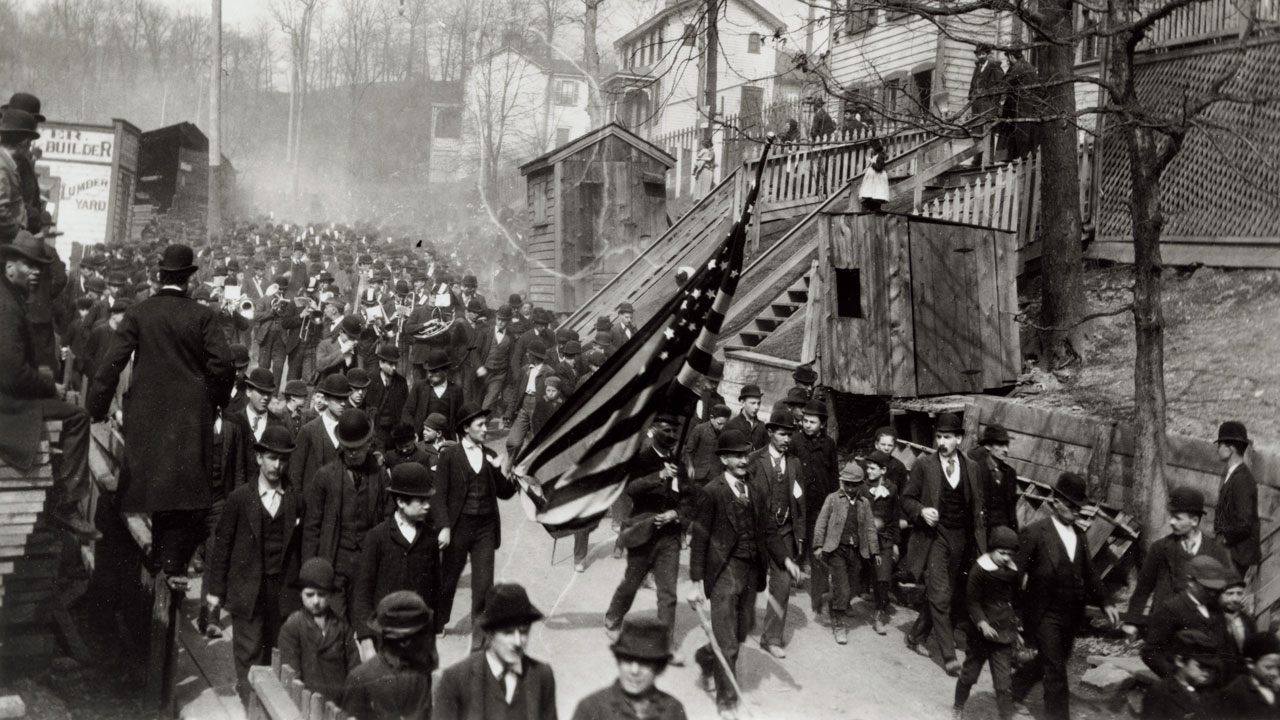
This isn’t your grandfather’s socialism, featuring factory workers waving red flags and professors droning on about dialectical materialism. The new socialists are young, college-educated, and racially diverse. They talk about intersectionality, pronouns, and microaggressions. They may not think the USSR was on the right side of history, but they’re sure America’s on the wrong side of it.
When socialism surpassed 40% favorability in the latest Gallup poll last month, it wasn’t because young Americans are overwhelmingly burying their heads in the works of Karl Marx and Friedrich Engels. Instead, they’re breathing a noxious cocktail of envy, social alienation, distrust of institutions, and an ideological framework teaching them to interpret inequality as evidence of oppression.
Socialism is still fundamentally about government control over the means of producing wealth, but Marx’s class struggle has expanded into the social realm. The Frankfurt School applied critical theory to culture, while later scholars developed theories centered on race, sex, and sexuality.
Marxist critical theory teaches people to view the world through the lens of oppressor and oppressed. Critical race theory teaches that America is institutionally racist, and it justifies radical change to root this alleged racism out of our systems. Queer theory teaches that an oppressive gender binary keeps us all down, so we have to throw out the old vision of human beings as male and female, to liberate society.
Other theorists developed intersectionality, the idea that overlapping identities can compound oppression. Membership in more oppressed groups therefore confers greater moral authority to demand change—and ultimately, power—or so the reasoning goes.
That logic proved remarkably malleable. Marxism supplied the class struggle, other critical theories applied it to race and sex, and intersectionality combined them into a new ideological strain. Modern democratic socialism gathers all these grievances under a single political banner.
The socialists have worked to build power through institutions Americans don’t necessarily think of as socialist. DSA members have sought influence in organized labor, while socialist organizers aim to form tenant unions to organize renters around a class-struggle model of tenants versus landlords. Electoral politics is only one front in their broader effort to build power.
The same intellectual framework spread to other American institutions after George Floyd’s death in police custody in 2020. Corporations embraced racial preferences, schools told white kids they were oppressors, and government ramped up diversity, equity, and inclusion.
These trends inspired a backlash, and President Donald Trump has used the federal bureaucracy to root out DEI, but the underlying ideas remain resonant on the Left and in many American institutions.
Critical theory acts as an accelerant for the flames of natural human envy, and our current environment represents a dry tinderbox.
Social media allows us to highlight the best parts of our lives publicly, while hiding the work that we did to achieve that success. This creates a hall of mirrors, where everyone around you seems wealthier, happier, and more prosperous than you, but you know you’re not as happy as they seem.
As a student of history, I can’t escape the contrast. For most of human existence, people lacked electricity, running water, safe transportation, and effective medicine. Famine was an ever-present threat. Today Americans complain, often with justification, about rising grocery bills and health care costs while enjoying material conditions our ancestors could scarcely have imagined.
We enjoy a gobsmacking level of absolute prosperity, while increasingly measuring our lives by relative deprivation. It matters less that I live better than a king did centuries ago if the man on my smartphone appears to live better than I do.
Socialism feeds on the gap between those two ways of seeing the world.
The ultimate danger of socialism isn’t the pronouns or the microaggressions. Those ideas matter, but socialism’s final answer to economic and cultural grievances remains what it has always been: political power.
America’s free economy, protected by the rule of law, has produced an astonishing degree of prosperity precisely because no central authority gets to decide everything Americans should produce, buy, sell, or become. Socialism asks us to distrust that messy freedom and entrust ever more decisions to top-down politics instead.
“Woke 1.0” didn’t replace the old class struggle. It multiplied it, creating new categories of “oppression” and broadening the socialist cause.
Call it gain-of-function Marxism, but whatever you do, don’t spread it.
Continue reading...
[ H/T The Daily Signal ]