


Periods of structural change don’t reward leaders who react the fastest. They reward leaders who think the most clearly. During times of extraordinary uncertainty, calibrated, data-driven thinking is not hesitation. It is leadership.
The greatest risk during periods of structural change isn’t uncertainty itself. It is becoming too certain too soon. Great leaders understand that asking better questions often matters more than having faster answers. The quality of their decisions ultimately depends on the discipline of their inquiry, the rigor of their analysis, and their willingness to adjust when new evidence emerges.
Institutional humility is not a lack of confidence. It is the confidence to recognize that yesterday’s assumptions may no longer explain today’s reality. It is the willingness of great institutions to question whether their assumptions remain valid when the world changes around them. The strongest institutions recognize that reality before circumstances force them to. That may be the most important leadership lesson emerging from this week’s Federal Reserve meeting.
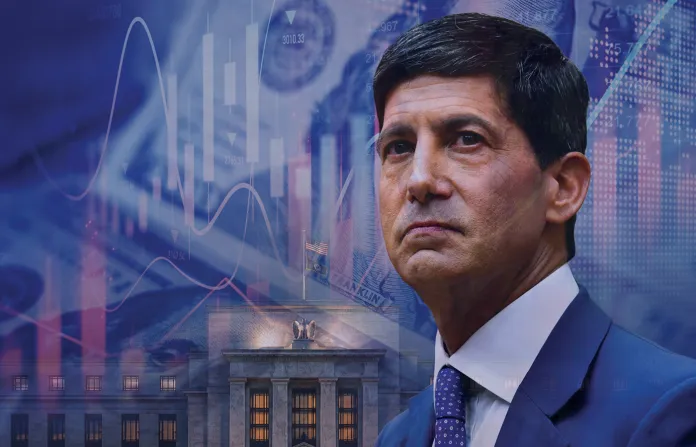
Much of the discussion has focused on whether Chair Kevin Warsh and the Federal Reserve will raise interest rates, lower them, or leave them unchanged. Those decisions matter. They affect mortgages, business borrowing, financial markets, retirement savings, and household budgets.
But a more important question comes first: Is the Federal Reserve asking the right questions about an economy changing faster than many of its traditional models were designed to measure?
Warsh’s five working groups are not about delaying decisions. They are about strengthening the Federal Reserve’s analytical foundation before making consequential monetary policy decisions. By examining economic data, inflation, productivity and artificial intelligence, the balance sheet, and communications, Warsh is asking whether the institution’s understanding of the economy is keeping pace with the economy itself. The objective is not more data. It is better judgment built on rigorous analysis.
History offers an important lesson. Alan Greenspan understood that structural economic change required the Federal Reserve to rethink long-held assumptions about productivity, inflation, and growth before recalibrating monetary policy. Leadership required recalibrating the institution’s thinking before recalibrating monetary policy.
Warsh inherits a different economy but a remarkably similar challenge. Artificial intelligence is reshaping productivity. Long-term Treasury yields remain elevated. Geopolitical tensions continue to influence energy markets. Businesses are recalibrating long-term investment decisions. No single economic model can fully explain all of these forces simultaneously.
The more uncertain the environment becomes, the more disciplined the decision-making process must become. That is precisely why Warsh’s leadership approach deserves patience. Rather than forcing today’s economy into yesterday’s analytical framework, he is strengthening the Federal Reserve’s understanding of the economy before making decisions that affect every American household and business.
Recent CPI and PPI reports suggest inflation continues to moderate, while geopolitical instability reminds policymakers that new inflationary pressures can emerge quickly. One argues for patience. The other argues for vigilance. Neither argues for predetermined conclusions. That is why I expect the Federal Reserve to leave interest rates unchanged this week.
For millions of Americans, the consequences extend well beyond the federal funds rate. They influence mortgage rates, business financing, investment decisions, and retirement savings. Families want confidence before purchasing a home. Businesses want confidence before making long-term investments. Those outcomes are more likely when monetary policy is built on a stronger understanding of the economy rather than outdated assumptions.
Markets naturally focus on the next interest rate decision. They should also recognize that Warsh is investing in something potentially far more valuable: a stronger analytical foundation for monetary policy.
Strong institutions are defined not by the certainty of their conclusions, but by the discipline of their questions, the rigor of their analysis, and the willingness to adjust when new evidence emerges.
Today’s economy is being reshaped by multiple, overlapping uncertainties. The defining leadership challenge of our time is learning to govern when the world changes faster than the models we use to understand it.
Markets should be patient and allow that process to work. If Warsh’s approach succeeds, the payoff will extend well beyond this week’s meeting: more stable monetary policy, lower and more predictable borrowing costs, greater confidence for long-term investment, stronger productivity growth, and a longer period of sustained American prosperity.
EVERYONE’S OBSESSING OVER THE WRONG ECONOMIC NUMBER
History rarely remembers central bankers for a single interest-rate decision. It remembers whether they understood the economy they were trying to manage.
The Federal Reserve’s most important decision this week may not be where it sets interest rates. It may be its commitment to building tomorrow’s monetary policy on tomorrow’s economy — not yesterday’s assumptions.
Dan Varroney is an economic growth strategist, founder and CEO of Potomac Core, and author of Rethinking Economic Growth.
Continue reading...
[ H/T Washington Examiner ]