







Guest Post by Martin Armstrong
 Why on earth does a company that supposedly sells license plate readers need to contribute to politicians’ campaigns? The Chicago Sun-Times has exposed how Flock Safety has been contributing to the campaigns of local officials whose jurisdictions purchase its technology. We are told these cameras are necessary to protect the public from crime. Yet the company collecting information on the movements of millions of Americans is now financially supporting politicians connected to its government customers. At what point do we begin questioning why a surveillance contractor needs political influence in the first place?
Illinois election records show that Flock contributed $6,000 between 2021 and 2025 to the political organization supporting Cicero Town President Larry Dominick. Cicero began working with Flock around 2020 and now operates 31 of its cameras. Flock also contributed $1,000 to Lake County Sheriff John Idleburg’s campaign in 2025 after the county approved the purchase of 15 cameras the previous year. Another $500 went to Dan Jungles, an unsuccessful candidate for Will County sheriff, whose department operates 25 Flock readers. These contributions are documented, although there is no evidence that contracts were awarded in exchange for campaign money. The officials involved insist the donations had no influence over their decisions. Fine. Then why is a surveillance company contributing to their political campaigns at all?
Flock also maintains a lobbying operation in Illinois, employing firms including Cozen O’Connor Public Strategies and National Strategies LLC. Cozen O’Connor reported approximately $485,000 in political contributions since early 2024, although that spending covers numerous clients and cannot be attributed entirely to Flock. The company’s CEO, Garrett Langley, has also made political contributions personally. Flock is not simply selling cameras and waiting for police departments to place orders. It is participating in the political system that determines how surveillance technology is purchased and regulated.

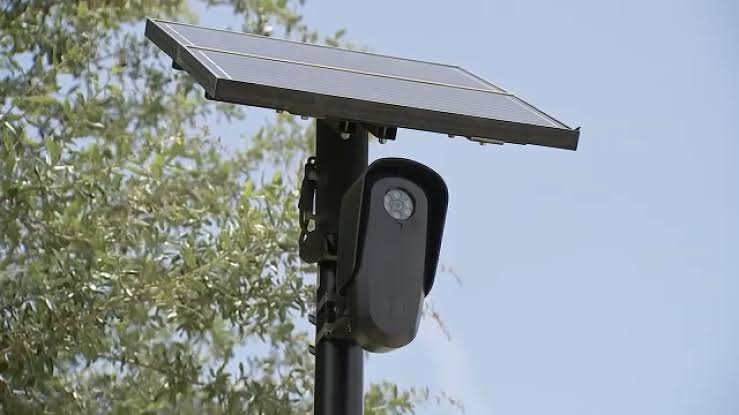
The company now serves more than 7,000 law enforcement agencies nationwide, including over 500 in Illinois. Its cameras photograph passing vehicles, record license plates, and attach timestamps and locations to those observations. Police can search the information and receive alerts when a vehicle matches an investigative database. Police can also search ANYONE and track their whereabouts with the click of a button. The cameras do not distinguish between criminals and law-abiding citizens when collecting information. Everyone passing the camera is recorded.
The scale of automated surveillance is extraordinary. Illinois State Police reported that a separate license plate reader system operated by Motorola scanned more than three billion vehicles in a year, with fewer than 3% of scans producing flagged matches. Those figures do not describe Flock’s network, but they demonstrate the volume of information these systems can collect. Billions of observations are gathered while only a small fraction produce investigative alerts. We have moved far beyond an officer observing a license plate on a public road. Technology now allows the government to assemble searchable records showing where vehicles have traveled over time.
The constitutional questions are serious. The Fourth Amendment was intended to protect Americans against unreasonable government searches. A license plate may be publicly visible, but there is an enormous difference between a police officer seeing a vehicle drive past and a government agency being able to reconstruct a person’s movements through a network of cameras. Technology has created surveillance capabilities that previous generations could scarcely have imagined, and the law is still struggling to determine where the boundaries should be drawn.
Flock’s contributions were relatively small compared with the enormous sums spent in national elections. That does not make them irrelevant. The public should be able to examine those relationships without being told that questioning them is somehow unreasonable. The real issue is how much power the government should possess over the daily movements of its citizens. Americans are already living in an environment where their financial transactions, communications, and online activities generate enormous quantities of information. Automated license plate readers add physical movement to that expanding collection of data. The government does not need to follow someone in a patrol car when a network of cameras can record where that person’s vehicle appears.
I have warned repeatedly that governments never willingly surrender power once they acquire it. Surveillance technology is particularly attractive because it can be expanded quietly, justified through public safety, and operated with limited public visibility. The companies supplying these systems have every incentive to encourage further adoption. The politicians overseeing them have a responsibility to ensure that the public’s constitutional protections are not sacrificed in the process.
Flock’s documented campaign contributions expose another connection between government surveillance contracts and political financing. Americans have every right to question why a company collecting information about their movements is financially supporting officials associated with its customers.
Tweet
Continue reading...
[ H/T The Burning Platform ]
Why on earth does a company that supposedly sells license plate readers need to contribute to politicians’ campaigns? The Chicago Sun-Times has exposed how Flock Safety has been contributing to the campaigns of local officials whose jurisdictions purchase its technology. We are told these cameras are necessary to protect the public from crime. Yet the company collecting information on the movements of millions of Americans is now financially supporting politicians connected to its government customers. At what point do we begin questioning why a surveillance contractor needs political influence in the first place?Illinois election records show that Flock contributed $6,000 between 2021 and 2025 to the political organization supporting Cicero Town President Larry Dominick. Cicero began working with Flock around 2020 and now operates 31 of its cameras. Flock also contributed $1,000 to Lake County Sheriff John Idleburg’s campaign in 2025 after the county approved the purchase of 15 cameras the previous year. Another $500 went to Dan Jungles, an unsuccessful candidate for Will County sheriff, whose department operates 25 Flock readers. These contributions are documented, although there is no evidence that contracts were awarded in exchange for campaign money. The officials involved insist the donations had no influence over their decisions. Fine. Then why is a surveillance company contributing to their political campaigns at all?
Flock also maintains a lobbying operation in Illinois, employing firms including Cozen O’Connor Public Strategies and National Strategies LLC. Cozen O’Connor reported approximately $485,000 in political contributions since early 2024, although that spending covers numerous clients and cannot be attributed entirely to Flock. The company’s CEO, Garrett Langley, has also made political contributions personally. Flock is not simply selling cameras and waiting for police departments to place orders. It is participating in the political system that determines how surveillance technology is purchased and regulated.
The company now serves more than 7,000 law enforcement agencies nationwide, including over 500 in Illinois. Its cameras photograph passing vehicles, record license plates, and attach timestamps and locations to those observations. Police can search the information and receive alerts when a vehicle matches an investigative database. Police can also search ANYONE and track their whereabouts with the click of a button. The cameras do not distinguish between criminals and law-abiding citizens when collecting information. Everyone passing the camera is recorded.
The scale of automated surveillance is extraordinary. Illinois State Police reported that a separate license plate reader system operated by Motorola scanned more than three billion vehicles in a year, with fewer than 3% of scans producing flagged matches. Those figures do not describe Flock’s network, but they demonstrate the volume of information these systems can collect. Billions of observations are gathered while only a small fraction produce investigative alerts. We have moved far beyond an officer observing a license plate on a public road. Technology now allows the government to assemble searchable records showing where vehicles have traveled over time.
The constitutional questions are serious. The Fourth Amendment was intended to protect Americans against unreasonable government searches. A license plate may be publicly visible, but there is an enormous difference between a police officer seeing a vehicle drive past and a government agency being able to reconstruct a person’s movements through a network of cameras. Technology has created surveillance capabilities that previous generations could scarcely have imagined, and the law is still struggling to determine where the boundaries should be drawn.
Flock’s contributions were relatively small compared with the enormous sums spent in national elections. That does not make them irrelevant. The public should be able to examine those relationships without being told that questioning them is somehow unreasonable. The real issue is how much power the government should possess over the daily movements of its citizens. Americans are already living in an environment where their financial transactions, communications, and online activities generate enormous quantities of information. Automated license plate readers add physical movement to that expanding collection of data. The government does not need to follow someone in a patrol car when a network of cameras can record where that person’s vehicle appears.
I have warned repeatedly that governments never willingly surrender power once they acquire it. Surveillance technology is particularly attractive because it can be expanded quietly, justified through public safety, and operated with limited public visibility. The companies supplying these systems have every incentive to encourage further adoption. The politicians overseeing them have a responsibility to ensure that the public’s constitutional protections are not sacrificed in the process.
Flock’s documented campaign contributions expose another connection between government surveillance contracts and political financing. Americans have every right to question why a company collecting information about their movements is financially supporting officials associated with its customers.
Tweet
Continue reading...
[ H/T The Burning Platform ]
