



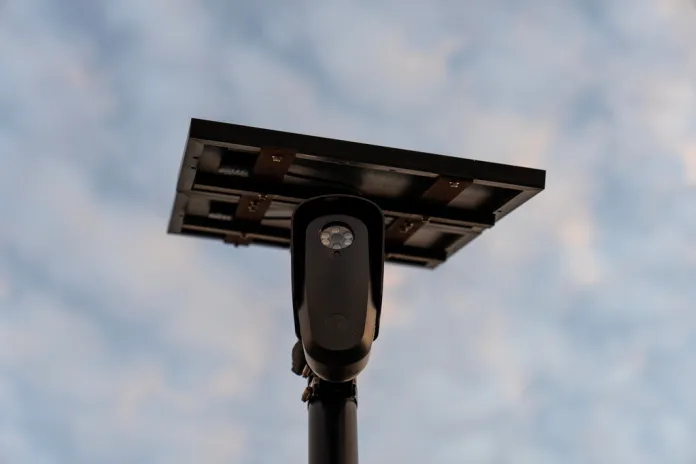
Supporters of Flock cameras argue that Americans shouldn’t allow privacy concerns to stand in the way of public safety. Most Americans want police to have effective tools to keep criminals off the streets, but the debate over Flock cameras represents something much larger than a discussion about speed cameras, license plate readers, or public facial recognition technology.
Americans are increasingly being asked to surrender personal information in exchange for convenience, security, or access to modern services. Flock cameras are only the latest example. Whether we are driving through our communities, shopping online, or managing our finances, vast amounts of personal data are being collected, stored, and sold to the highest bidder.
For years, most people have made an uneasy peace with this, founded on the assumption that all this data was simply too much for anyone to read. Your data was useful for marketing to a demographic, not for building a case against a particular person — at least, not at scale.
Artificial intelligence has ended that assumption. What once would have taken an investigative team weeks now takes a query. Records that sat inert for years can be assembled, cross-referenced, and turned into a detailed portrait of an individual at almost no cost. In many cases, nothing new needs to be collected because the collection has already happened.
That concern extends well beyond street cameras. Financial technology firms collect enormous quantities of consumer financial data, often with limited public awareness of how that information may be used, shared, or secured. Are these vendors storing your data, selling it to other firms, or passing it to adversaries like China? No one knows, and consumers have limited options to find out.
Consider what those records reveal: where you were and when, who you owe and who pays you, your pharmacy, your doctors, where your kids go to school and what activities they participate in, your attorney, your church, the candidates and charities you support, the month your income collapsed, even your preferences when dining out. A camera shows where a car went, but a transaction history shows what a person did there, what it cost, and what it says about them. In the wrong hands, that detailed profile can be weaponized in ways far more dangerous than facial data.
FINALLY, SOMETHING AMERICA AGREES ON: WE ALL HATE THIS AI CAMERA COMPANY
This is not a hypothetical concern for some future Congress. The Consumer Financial Protection Bureau is rewriting Section 1033 of the Dodd-Frank Act, the rule governing how third parties access consumer financial data. That provision was written in 2010, when moving records between institutions was just a plumbing problem, and long before software could read millions of transactions in seconds and infer what they mean. Before Washington widens that pipe, it should say plainly who is accountable once the data leaves the bank, how it will be used, and how every company that touches it must help keep it secure.
The debate over Flock cameras should remind us that once personal information is collected, the question is no longer whether it can be used, but who controls it, how far it spreads, and what safeguards prevent it from being abused or weaponized. The argument that Americans should have no expectation of privacy in public places carries little weight when considering the full extent of how their data can be mishandled by groups that were never entrusted with it in the first place. The burden should remain on those seeking to collect more data to prove that the safeguards are worthy of public trust.
Evan Power is the chairman of the Republican Party of Florida and a member of the Republican National Committee.
Continue reading...
[ H/T Washington Examiner ]