







Fifth Circuit To Rehear Drug Trafficker's Second Amendment Challenge
Authored by Matthew Vadum via The Epoch Times,
A federal appeals court voted to rehear a constitutional challenge to a federal law that prevents felons from possessing guns, weeks after Supreme Court Justice Clarence Thomas said he hoped a lower court would consider the law's constitutionality.
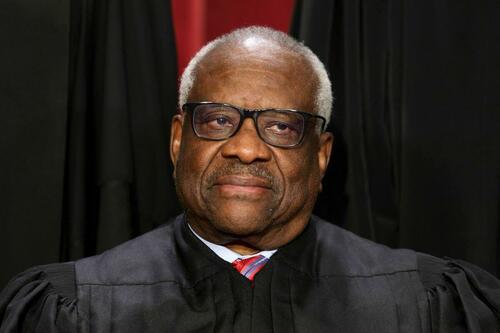
Supreme Court Associate Justice Clarence Thomas poses for an official portrait at the East Conference Room of the Supreme Court building in Washington on Oct. 7, 2022. Alex Wong/Getty Images
The July 20 decision by the U.S. Court of Appeals for the Fifth Circuit came after a three-judge panel of the same circuit on June 2 denied convicted drug trafficker Curtis Squire's challenge to Section 922(g)(1) of Title 18 of the U.S. Code. The felon-in-possession provision is part of the federal Gun Control Act of 1968.
Federal gun laws have largely been justified under the Constitution's commerce clause. The legal theory is that guns move in interstate commerce, meaning they are manufactured, sold, and transported across state lines. This means Congress can regulate gun possession, even inside the home, because it supposedly has an impact on the national market for firearms.
A majority of the judges sitting on the Fifth Circuit voted to grant the petition of Squire for a so-called en banc hearing before the full court. The panel had unanimously upheld Squire's conviction and sentence on June 2 for being a felon in possession of a firearm.
Squire had filed a so-called as-applied challenge to Section 922(g)(1), arguing the provision was unconstitutional as applied to him under the Second Amendment.
He cited the Supreme Court's landmark 2022 ruling in New York State Rifle and Pistol Association v. Bruen. That decision recognized a constitutional right to bear arms in public for self-defense and held that restrictions on guns must be deeply rooted in American history if they are to survive constitutional scrutiny.
Squire argued the Second Amendment allowed him to possess a firearm in his home, so the onus was on the government to prove there was a historical tradition justifying a lifetime ban on someone with his criminal past.
He also cited the high court's 2024 ruling in United States v. Rahimi, in which the justices upheld a federal gun control law that bars people under domestic violence-related restraining orders from possessing firearms.
The justices found in that case that the Second Amendment isn't violated when an individual is disarmed after a court has found him to pose a credible threat to the physical safety of another.
Squire argued that precedent stands for the principle that the disarmament must be related to a specific finding that a person is dangerous and that he was not because he was not convicted of using violence. His position was that Section 922(g)(1) was a categorical ban that did not mandate an ongoing assessment of dangerousness, so it was overbroad when applied to him.
The panel rejected these arguments, saying it affirmed the conviction and sentence "because our historical tradition supports disarming drug traffickers based on their dangerousness."
The Fifth Circuit did not provide an explanation for its new ruling that sets aside the panel's decision, but Circuit Judge Stephen Higginson noted in his dissent that mere weeks ago, Thomas "asked lower courts to reexamine the constitutionality of [the legal provision] under the Commerce Clause."
"Already, our court answers the call," Higginson said.
The judge was referring to Thomas's concurring opinion on June 18 in United States v. Hemani, a case in which the high court ruled unanimously that the government may not prosecute a man for owning a firearm just because he has habitually smoked marijuana. The ruling clarified a provision of the Gun Control Act.
Thomas agreed that the drug user ban as applied should be struck down but warned that Section 922(g) provisions - including the felon ban - may exceed Congress's authority under the commerce clause.
Thomas said Section 922(g)(3) of the Gun Control Act, which bars illegal drug users from possessing firearms, "appears to exceed Congress's enumerated powers to regulate interstate commerce."
"As an original matter, the Commerce Clause authorizes Congress only 'to regulate the buying and selling of goods and services trafficked across state lines,'" he said.
The clause does not give Congress power to regulate "activities wholly separated from business, such as gun possession," he said.
"Congress cannot regulate the possession of every thing that ever traveled across state lines," Thomas added.
It is unclear when the Fifth Circuit will conduct the rehearing.
Tyler Durden Wed, 07/22/2026 - 10:50
Continue reading...
[ H/T ZeroHedge ]
Authored by Matthew Vadum via The Epoch Times,
A federal appeals court voted to rehear a constitutional challenge to a federal law that prevents felons from possessing guns, weeks after Supreme Court Justice Clarence Thomas said he hoped a lower court would consider the law's constitutionality.
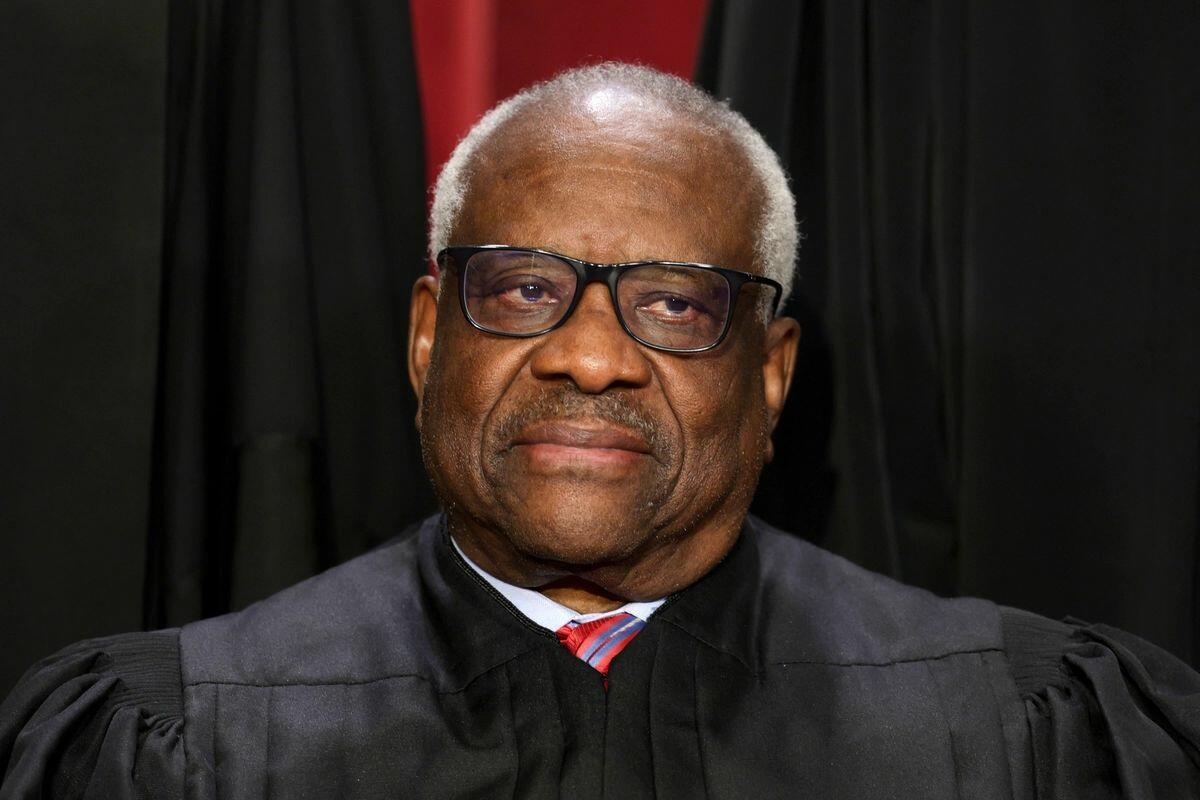
Supreme Court Associate Justice Clarence Thomas poses for an official portrait at the East Conference Room of the Supreme Court building in Washington on Oct. 7, 2022. Alex Wong/Getty Images
The July 20 decision by the U.S. Court of Appeals for the Fifth Circuit came after a three-judge panel of the same circuit on June 2 denied convicted drug trafficker Curtis Squire's challenge to Section 922(g)(1) of Title 18 of the U.S. Code. The felon-in-possession provision is part of the federal Gun Control Act of 1968.
Federal gun laws have largely been justified under the Constitution's commerce clause. The legal theory is that guns move in interstate commerce, meaning they are manufactured, sold, and transported across state lines. This means Congress can regulate gun possession, even inside the home, because it supposedly has an impact on the national market for firearms.
A majority of the judges sitting on the Fifth Circuit voted to grant the petition of Squire for a so-called en banc hearing before the full court. The panel had unanimously upheld Squire's conviction and sentence on June 2 for being a felon in possession of a firearm.
Squire had filed a so-called as-applied challenge to Section 922(g)(1), arguing the provision was unconstitutional as applied to him under the Second Amendment.
He cited the Supreme Court's landmark 2022 ruling in New York State Rifle and Pistol Association v. Bruen. That decision recognized a constitutional right to bear arms in public for self-defense and held that restrictions on guns must be deeply rooted in American history if they are to survive constitutional scrutiny.
Squire argued the Second Amendment allowed him to possess a firearm in his home, so the onus was on the government to prove there was a historical tradition justifying a lifetime ban on someone with his criminal past.
He also cited the high court's 2024 ruling in United States v. Rahimi, in which the justices upheld a federal gun control law that bars people under domestic violence-related restraining orders from possessing firearms.
The justices found in that case that the Second Amendment isn't violated when an individual is disarmed after a court has found him to pose a credible threat to the physical safety of another.
Squire argued that precedent stands for the principle that the disarmament must be related to a specific finding that a person is dangerous and that he was not because he was not convicted of using violence. His position was that Section 922(g)(1) was a categorical ban that did not mandate an ongoing assessment of dangerousness, so it was overbroad when applied to him.
The panel rejected these arguments, saying it affirmed the conviction and sentence "because our historical tradition supports disarming drug traffickers based on their dangerousness."
The Fifth Circuit did not provide an explanation for its new ruling that sets aside the panel's decision, but Circuit Judge Stephen Higginson noted in his dissent that mere weeks ago, Thomas "asked lower courts to reexamine the constitutionality of [the legal provision] under the Commerce Clause."
"Already, our court answers the call," Higginson said.
The judge was referring to Thomas's concurring opinion on June 18 in United States v. Hemani, a case in which the high court ruled unanimously that the government may not prosecute a man for owning a firearm just because he has habitually smoked marijuana. The ruling clarified a provision of the Gun Control Act.
Thomas agreed that the drug user ban as applied should be struck down but warned that Section 922(g) provisions - including the felon ban - may exceed Congress's authority under the commerce clause.
Thomas said Section 922(g)(3) of the Gun Control Act, which bars illegal drug users from possessing firearms, "appears to exceed Congress's enumerated powers to regulate interstate commerce."
"As an original matter, the Commerce Clause authorizes Congress only 'to regulate the buying and selling of goods and services trafficked across state lines,'" he said.
The clause does not give Congress power to regulate "activities wholly separated from business, such as gun possession," he said.
"Congress cannot regulate the possession of every thing that ever traveled across state lines," Thomas added.
It is unclear when the Fifth Circuit will conduct the rehearing.
Tyler Durden Wed, 07/22/2026 - 10:50
Continue reading...
[ H/T ZeroHedge ]