



Sen. John Fetterman (D-PA) won’t be the lone Senate Democrat defending the filibuster next year.
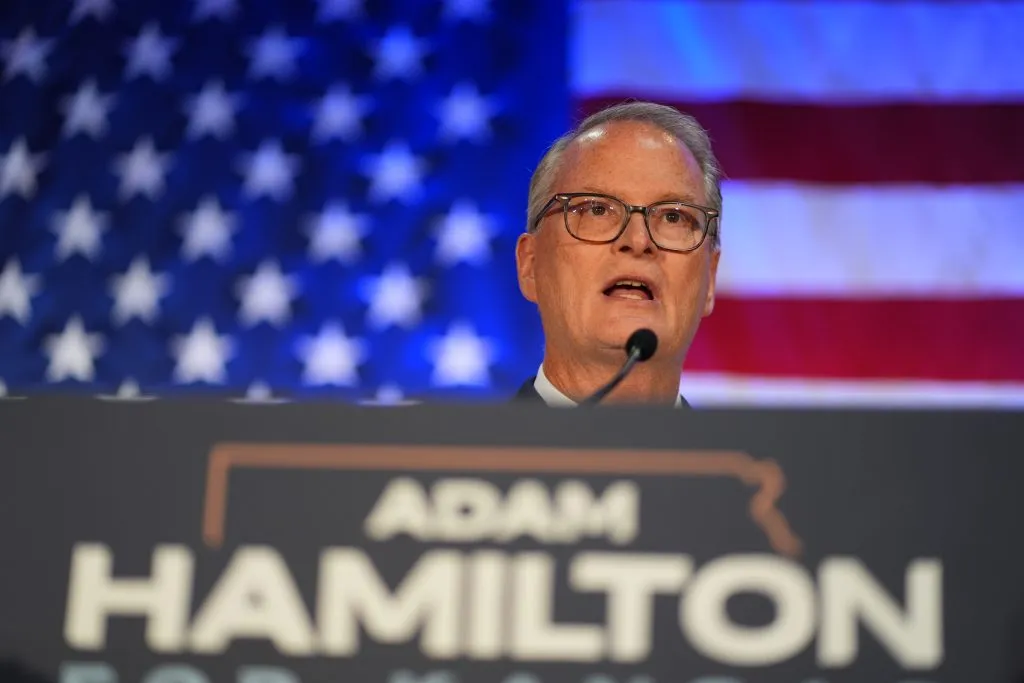
Adam Hamilton, the megachurch pastor elected in Kansas on Tuesday, would vote to keep the 60-vote threshold intact, while former Gov. Roy Cooper, the senator-elect in North Carolina, hasn’t been quite so definitive but praised it recently as a firewall to stop “bad legislation.”
That pro-filibuster ethos brings the Senate closer to the days of former West Virginia Sen. Joe Manchin and could make it marginally harder for Senate Minority Leader Chuck Schumer (D-NY) to attempt any sort of rule change. He needs 51 votes and will have at least 54 members of his caucus next year.
Hamilton and Cooper are likely to be outliers, however, as Democrats prepare to take over the Senate in January with a new crop of freshmen who, by and large, support reform or outright abolishment.
Of the 11 Democratic candidates who won their Senate races on Tuesday, nine fall in the latter camp, according to a Washington Examiner review of interviews and campaign statements. Mary Peltola and Scott Colom, who have yet to clinch their races in Alaska and Mississippi, respectively, have not widely shared their views on the filibuster.
Schumer, the expected majority leader, has sidestepped the question of whether he will pursue changes to the filibuster when the Senate convenes in January. He’ll be taking over with as many as 56 seats and may wait to see if Democrats can grow that number to a filibuster-proof 60 two years from now, a scenario that was unthinkable before their Tuesday rout of Republicans.
But Schumer has previously expressed interest in weakening the filibuster and led the charge four years ago to exempt voting rights legislation, falling two votes short thanks to resistance from Manchin and then-Arizona Sen. Kyrsten Sinema.
Since then, Manchin and Sinema, who entered the Senate as Democrats but became independents before leaving office, have retired, and all successive Democrats elected to the Senate, about a half dozen of them, support abolishing the filibuster.
The only exception is Fetterman, who initially fell in that group but recast himself as its biggest defender earlier this year.
Democrats like Hamilton may join Fetterman as the new face of opposition in the new Congress. In a late-October interview with Fox News, Hamilton argued a rule change would take away Democrats’ power to stop GOP legislation once they wind up in the minority again.
(They’ve made extensive use of the filibuster in the first two years of President Donald Trump’s second term.)
“The next time the other party is in control, suddenly it cuts the second way,” Hamilton said. “I think it’s going to hurt, you know, one way or the other. I don’t think we should end the filibuster. I’m not going to vote for that.”
Whether that opposition matters will depend on the size of Schumer’s majority and if he can wrangle members who remain skittish about reforms. One current senator to watch is Sen. Angus King (I-ME), who sided with Schumer in 2022 but now wants to see the filibuster preserved and considers that vote a mistake.
Of the freshmen, Cooper said his “No. 1 priority” was trying to achieve bipartisan “consensus so that issue won’t have to even be addressed as much as it has been now.” A spokesperson did not respond to a request for clarification on how Cooper would vote if presented with a rule change.
Rep. Chris Pappas (D-NH), elected to the Senate in New Hampshire, has already evolved on the issue, telling Semafor in June that he supports targeted reforms. A year earlier, he called the filibuster an “important tool to be able to stop bad policy.”
Working against the idea of a rules change is the fact that Democrats won’t have the White House until 2029 at the earliest and could still run into a veto from Trump.
Still, progressive members of Schumer’s caucus have urged him to pursue a “bold agenda,” regardless of whether Trump blocks their priorities, and could steer him in that direction as he attempts to lock down the votes to become majority leader in early December.
In a Thursday op-ed, Sen. Elizabeth Warren (D-MA) called on Senate Democrats to “clear away Senate filibuster rules and pass the laws anyway” if Republicans object to bills dealing with stock trading and corruption.
Indivisible, an outside progressive group, demanded that Senate Democrats “break” the filibuster as soon as the new Congress convenes.
The most cautious voices on the filibuster have typically come from Senate Democrats in red states. And to some extent, that is still true today. State Rep. Josh Turek, the senator-elect from Iowa, differed from his Democratic primary opponent, state Sen. Zach Wahls, in that he supported “filibuster reform” rather than its outright abolition.
As a middle ground, Turek proposed that the Senate revert to a “talking filibuster,” which requires that senators hold the floor if they want to stall legislation. Sen.-elect Annie Andrews in South Carolina has advocated that position as well.
Not all red-state Democrats are going for moderation, however. And some reject it entirely. In Texas, state Rep. James Talarico eschewed any nuance on the issue before winning his Senate race, calling the filibuster a “relic” of the Jim Crow era and broadly endorsing its elimination.
“It’s why we can’t bring down the cost of groceries and gas and utilities and healthcare,” Talarico told NBC News. “It’s why we can’t get this economy back on track. And so I believe the majority, whether it’s a Democratic majority or a Republican majority, should have the right to govern.”
Andrews has also given conflicting messages and spoken loosely of “abolishing” the filibuster.
They are staking out their views as the Republican Party undergoes its own reevaluation of the filibuster, with some GOP senators — but not most — bending to Trump’s yearslong pressure campaign and embracing workarounds such as the talking filibuster.
Like Democrats, Republicans want to skirt the filibuster to federalize elections, but their favored legislation would mandate stricter, not looser, requirements to cast a ballot.
Over the summer, Trump pointed to Michigan Sen.-elect Abdul el Sayed’s outspoken support for abolishing the filibuster as an argument for why Republicans should do it first.
El Sayed, along with Sens.-elect Juliana Stratton in Illinois, Peggy Flanagan in Minnesota, and Troy Jackson in Maine, openly supports eliminating the filibuster.
In Ohio, Sen.-elect Sherrod Brown preferred to avoid the topic in an October interview with a local NPR affiliate, but conceded he was “open” to a rule change. Brown, who is returning to office after losing his seat two years ago, was one of the 48 Democratic senators to support the carveout for voting rights legislation in 2022.
CHUCK GRASSLEY, 93, WON’T STEP DOWN EARLY AFTER DEMOCRAT ROB SAND WINS IOWA GOVERNORSHIP
The Peltola and Colom campaigns did not respond to multiple requests for comment, but Peltola, who served two years in the House, would plausibly fall into the more cautious camp owing to her time as co-chairwoman of the conservative Blue Dog Democrats.
As of now, their races are too close to call.
Continue reading...
[ H/T Washington Examiner ]