




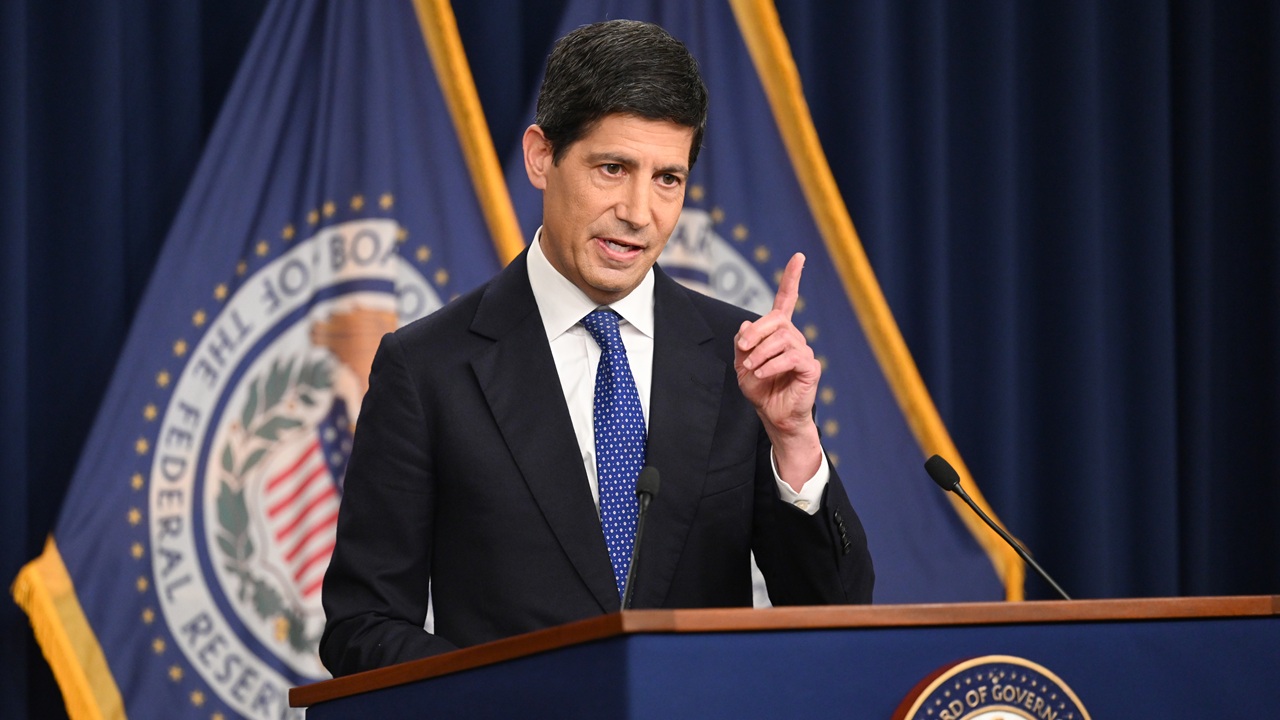
Kevin Warsh—the new, spiffy Federal Reserve chairman—just offered an old, threadbare “therapy” for nagging inflation.
On Sept. 16, the central bank increased the federal funds rate from 3.75% to 4.00%, up 0.25%—the first such hike since Aug. 1, 2023. This move was both disappointing and counterproductive.
Betraying his supply-side supporters, Warsh is peddling the exhausted and discredited Phillips Curve nonsense that inflation is fueled by too much growth and employment. Furthermore, this foolishness argues that to slow rising prices, you should hobble the economy, hinder prosperity, and hire fewer workers.
If Warsh has caught 30 seconds of news since Feb. 28, he would know that today’s chief driver of inflation is not too many booming businesses. Rather, it’s too many booming bombs in and around Iran, the Strait of Hormuz, and the Persian Gulf. The Iran War, thankfully, has left the ayatollahs’ atomic toys harmlessly glowing in the dark beneath tons of rubble. If not obliterated, the mullahs’ fledgling nukes have been delayed for years, and perhaps even decades.
Unfortunately, the price for that vital improvement in national security and long-term international stability is a current increase in oil prices. Middle Eastern chaos boosts global petroleum expenses. A barrel of West Texas Intermediate crude cost $66.96 last Feb. 27, Iran War eve. The price on Sept. 15, Rate-hike Eve: $107.02—up 59.8%. The off-again, on-again closure of the Strait of Hormuz and the destruction that Iran’s missiles have unleashed on nearby oil-producing countries have buoyed energy prices.
This, not “runaway” GDP growth, drove August’s 3.4% year-over-year inflation rate. Indeed, the Consumer Price Index’s measure of “All items less energy” rose 2.5%—eerily close to the Fed’s 2% “healthy” inflation target.
The Bureau of Labor Statistics blames the correct culprit for the gap between 2.5% and 3.4% inflation: “The index for gasoline rose 3.9 percent in August, accounting for over one third of the monthly all items increase. The index for energy increased 2.1 percent over the month,” BLS reported. “The energy index increased 16.3 percent for the 12 months ending August.”
Hiking interest rates does zippo to protect Saudi Arabia’s oil pipelines; permanently open the Strait; or place bullets between the eyes of Iran’s Revolutionary Guard, the ayatollahs, and Tehran’s other tyrants who oppress their own people, terrorize their neighbors, and impoverish the Earth.
Boosting interest rates to treat energy-driven inflation is quackery, much like prescribing chemotherapy to cure high cholesterol.
The Phillips Curve that Warsh pried from some witch doctor’s medicine chest has been ridiculed since at least the days of dial-up internet.
Warsh could have helped matters by admitting that the Fed has no control over the U.S. Armed Forces and their valiant efforts to neutralize the evildoers in Tehran and the damage they are doing to price stability worldwide. He should have wished America’s GIs the best of luck in wrapping up that engagement with a decisive victory that keeps the oil flowing, lowers energy prices, and decreases inflation.
Warsh should have explained, too, that economic growth, increasing productivity, and more goods to absorb any excess cash in the system also would fight inflation.
To that end, Warsh should use his highly influential voice to promote the expansion of U.S. energy capacity to the breaking point. He should urge Congress to use a Reconciliation 3.0 bill to index capital gains taxes; lower other tax rates for corporations, small businesses, families, and individuals; and otherwise increase incentives for Americans to work, save, invest, and produce. Meanwhile, by holding interest rates steady or lower, the Fed could work on behalf of the American people, rather than hammer them with higher bills.
These steps would lower inflation and keep the economy growing. Making money less affordable will not.
“A quarter-point hike sounds trivial until you see the math,” CrossCountry Mortgage’s Robert W. Ring tells me. “On a $500,000 loan, it adds an extra $1,000 annually, or $30,000 over 30 years. Warsh cannot bomb-proof the Strait of Hormuz with a rate hike. He can only blast first-time buyers out of their initial homes.”
Before Kevin Warsh bombs again, the Pentagon should give him targeting lessons.
We publish a variety of perspectives. Nothing written here is to be construed as representing the views of The Daily Signal.
Continue reading...
[ H/T The Daily Signal ]