If the recent tech outages, bank outages, federal cyber breaches, and air travel issues weren’t enough — now we have some serious Thanksgiving travel woes coming online.
We’ll get into the details ASAP, but here’s the rundown in a nutshell.
First, we started the day with problems at Chicago’s O’Hare International Airport.
As Kaley reported just a short time ago, O’Hare suffered a second day of FAA ordered ground stops today:
With the busiest travel days of the year now upon us, that wasn’t a good sign.
As Kaley was reporting that…
I noticed the proverbial red warning lights going off because of approaching storms, which prompted alerts from the FAA. (
We’ll look at the timeline for those storms in more detail in just a moment.)
But as I started digging into those potential problems, I noticed a
brand new rule going into effect regulating how every single plane taking off from US airports is to conduct itself on the runway.
And this ‘new rule’ started TODAY — of all days!
First, we’ll cover that new rule; then we’ll look at the warnings coming from the FAA because of the strong storms rolling in; as well as President Trump’s own warning to Thanksgiving travelers.
The change to the ‘Line Up and Wait’ rule is intended to both speed up runway departures while simultaneously putting increased oversight on aircraft sitting on busy runways, as reported by
Newsweek:
A new Federal Aviation Administration (FAA) staffing requirement for air traffic control towers using the longstanding Line Up and Wait (LUAW) procedure took effect Tuesday as the busy Thanksgiving travel period got underway.
Under FAA Notice JO 7210.979, towers conducting LUAW operations must staff a stand-alone watch-supervision position that cannot be combined with another duty. The FAA said the requirement is intended to strengthen runway safety by ensuring the supervisor overseeing the operation can focus on it without simultaneously managing other operational responsibilities.
LUAW allows a pilot to enter and line up on a departure runway while awaiting a separate takeoff clearance. The instruction does not authorize the aircraft to take off. The rule takes effect as a record 81.8 million Americans are expected to travel at least 50 miles from home over the Thanksgiving holiday period, according to AAA. This includes six million people traveling by air.
Sheldon Jacobson, Founder Professor of Computer Science at the University of Illinois Urbana-Champaign’s Grainger College of Engineering, questioned the timing of the requirement, which took effect two days before Thanksgiving.
“The oddest part is why now?” Jacobson told Newsweek in an email Tuesday. “This should be enforced when air traffic is less intense, like a Tuesday or Wednesday during a non-holiday week.”
The FAA issued Notice JO 7210.979 on October 9, 2026, more than a month before the November 13 nationwide ground stop, and the new requirement took effect November 24. Its implementation comes amid renewed disruption to U.S. air travel, including a three-day stretch of ground stops affecting Chicago O’Hare and Atlanta’s Hartsfield-Jackson, two of the nation’s busiest airports. (Emphasis added.)
While it makes sense to have that dedicated eye watching the lineup of planes on the tarmac, I have the same question posed by Professor Jacobson.
Why, during the busiest few travel days of the year, did we choose to change things up for the pilots and the air traffic controllers NOW?
I haven’t found a good answer to that riddle, but the phrase, “
Good enough for government work“, comes to mind.
Buzz Patterson, lifelong pilot and former nuke ‘football’ carrier for President Clinton, chimed in on this change.
According to Buzz, the intended gains are definitely going to be offset by plenty of PROBLEMS for air travelers as this change rolls out over the Thanksgiving holiday week:
Here’s the full text of Buzz’s post for convenience:
This is incredible. Normal FAA manning no longer allows jets to “line up and wait” on the runway for departure. The older verbiage was “position and hold.” In any event, aircraft can’t take the runway and hold for takeoff clearance. This is going to slow airport ops down a lot. It’s definitely not unsafe but it’s going to muck things up a bit.
And if you want a really good glimpse at how pilots and air traffic controllers are taking the changes…
Just listen to that conversation between a Southwest Pilot and a tower controller out of Albuquerque that Buzz shared from the X account Flightdrama:
A new FAA runway safety requirement takes effect across the United States tomorrow, November 24, and an air traffic controller in Albuquerque is already warning pilots about possible delays.
The change requires airports to have a dedicated supervisor on duty before controllers…
pic.twitter.com/zxXariHNAy
— Flightdrama (@flightdrama)
November 23, 2026
Here’s the full text from that original post which highlights the air traffic controller asking the pilot to please make sure all the other pilots know that the tower guys don’t like the change any more than they do!
Here’s that text from Flightdrama’s post:
A new FAA runway safety requirement takes effect across the United States tomorrow, November 24, and an air traffic controller in Albuquerque is already warning pilots about possible delays.
The change requires airports to have a dedicated supervisor on duty before controllers can instruct aircraft to enter a runway and wait for takeoff clearance.
The FAA says the requirement is intended to improve safety by ensuring supervisors aren’t distracted by other operational duties.
But during a conversation with Southwest 344, the Albuquerque controller explained that staffing arrangements could prevent the tower from using the procedure, particularly during quieter shifts.
When the pilot suggested the change would cause delays, the controller agreed.
The controller also asked pilots to spread the word, stressing that the restrictions weren’t being imposed deliberately by local staff.
The exchange comes just days before Thanksgiving, one of America’s busiest travel periods.
There is no confirmation yet of how many airports will be affected or whether the change will cause significant delays.
Now, to the FAA warning and the approaching weather.
We have some serious storms brewing up potential trouble for millions of travelers.
The FAA is generally urging all travelers, and specifically those flying, not to forget to carefully plan ahead due to the approaching storms:
The FAA’s top priority is getting travelers safely to their destinations this Thanksgiving! With holiday air travel expected to reach a 16-year high, here’s what travelers should know:
1. More than 417,000 flights are forecast over the nine-day holiday period. Tuesday, Nov. 24,…
pic.twitter.com/yBfDONove2
— The FAA
(@FAANews)
November 24, 2026
Here’s the text from that FAA announcement for easier reading:
The FAA’s top priority is getting travelers safely to their destinations this Thanksgiving! With holiday air travel expected to reach a 16-year high, here’s what travelers should know:
1. More than 417,000 flights are forecast over the nine-day holiday period. Tuesday, Nov. 24, is expected to be the busiest day, with more than 52,000 flights.
2. Weather could impact flights throughout the week. Rain and wind on the West Coast could impact flights at Seattle and San Francisco today. On Wednesday, rain could affect flights across the Southeast, including Atlanta and Charlotte, before moving into the Mid-Atlantic later in the day. Heavy rain and gusty winds are expected in the Northeast on Thanksgiving Day, with the weather lingering into Friday in NYC and Boston.
3. Plan ahead: Allow extra time to get to the airport, check with your airline for flight updates and visit
http://nasstatus.faa.gov for real-time airport conditions.
The full scope of the storms barreling through the US over the next few days is actually very impressive.
Everything from torrential rain, seriously strong winds, and dangerous flooding are on the menu leading up to Thanksgiving, according to this report from
Fox Weather:
Storms setting up across America this week are likely to cause some travel delays and cancellations for millions of people trying to get somewhere for Thanksgiving.
More than 30 states are set to see rain, snow, storms, strong winds or flash flooding from storms all over the country this Thanksgiving week.
It all kicks off on Tuesday, as the West Coast gets hammered by another round of Pacific storms and King Tides, likely to cause road closures in areas experiencing coastal flooding, and flight delays and cancellations during thunderstorms.
Interstate 5 in the Pacific Northwest and mountain routes like Interstate 80 are likely to encounter snow, making for difficult driving conditions.
Heading southeast, heavy rain will start to threaten travel across portions of South Florida, including Miami and Fort Lauderdale late Tuesday.
Wednesday will be the worst day to travel for many places, as multiple storm systems come to a head this week.
Starting early Wednesday morning, a rapidly strengthening storm near the Southeast coast will bring heavy rain, strong thunderstorms and flooding from Florida into the Carolinas.
On Thanksgiving itself, the travel concerns shift to the Midwest and Northeast.
Heavy rain, strong winds and coastal flooding could affect the I-95 corridor from Washington to Boston, with delays possible at major airports including DCA, Philadelphia, Newark, JFK, LaGuardia and Boston Logan, the FOX Forecast Center said.
Looking toward the Midwest, rain and even snow is a possibility from Detroit to Chicago and possibly even St. Louis, making these all places to watch for air travel.
On the opposite coast, Pacific storms will continue lashing the West.
The specific storm systems coming up the eastern sea board are particularly alarming.
And the timeline for their arrival right over the most heavily populated areas of the Northeast — putting major airports in their path and threatening to hamper flights from others — couldn’t be more spot on.
We’re talking
a potential for 70 mph wind gusts in some places, according to this secondary report detailing that eastern storm system from
Fox Weather:
The developing storm system is already lashing parts of Florida’s East Coast, with some places along the coastline still dealing with historic flooding lingering from last week’s storms that dropped more than 2 feet of rain in some locations. Rain could exacerbate flooding that remains along the St. John’s River along Florida’s Central East Coast.
The storm is expected to strengthen off the Southeast coast Wednesday afternoon, spreading more rain from Florida into Georgia and the Carolinas.
A Level 2 out of 4 flash flood risk stretches from Charleston, South Carolina, to the area just south of Kill Devil Hills, along North Carolina’s Outer Banks Wednesday into Thanksgiving morning.
Places like Charleston Harbor could reach major coastal flood stage on Wednesday or Thursday.
The system will track up the Mid-Atlantic coast into early Thanksgiving morning.
Record coastal flooding is possible in Delaware Bay, as well as South Jersey, which may see the highest water levels since Superstorm Sandy during Thursday morning’s high-tide cycle.
A solid shield of heavy rain is expected to spread from Washington, D.C. into the New York City metro area by early to midday on Thanksgiving. Heavy rain will then spread over the entire Northeast by later in the afternoon and into New England.
Wind gusts could reach 70 mph along the coast with gusts between 40 and 60 mph in inland areas. High Wind Watches are now in place across Maryland, New Jersey, eastern Pennsylvania and New York’s Long Island, as well as New York City and Philadelphia.
The airlines are publicly putting on a confident face going into this busiest travel days of the year.
But President Trump has hit a different tone, emphasizing that the old ‘antiquated’ technology that FAILED over the last week or so, is still a potential issue:
Trump: And for those traveling on the roads this holiday season, as you know, we have a very antiquated season.
pic.twitter.com/IP5bcGVwnL
— Acyn (@Acyn)
November 24, 2026
For his part, President Trump emphasized along with FAA Administrator Bryan Bedford that — though there are problems — the current system is safe, as reported by
The Hill:
President Trump warned travelers of “slow motion” air traffic on Tuesday ahead of the Thanksgiving holiday week.
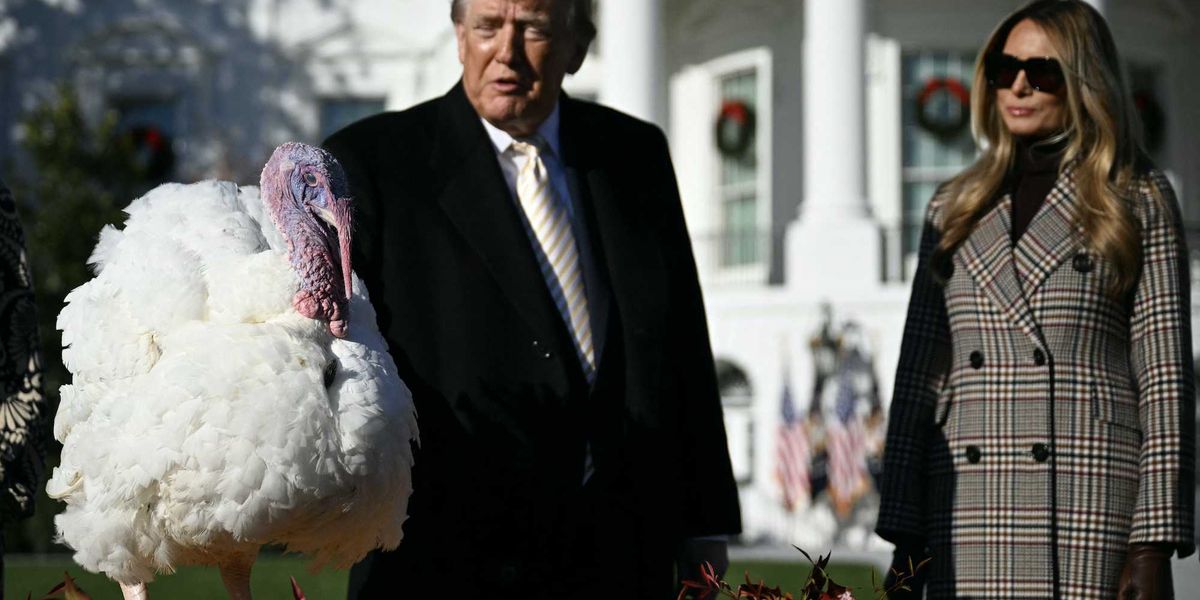
“For those traveling on the roads this holiday season, as you know, we have a very antiquated system, and we’re going to rebuild it for the airports,” Trump said, speaking at the annual White House turkey pardoning ceremony.
Trump’s comments come after the Federal Aviation Administration (FAA) ordered a nationwide ground stop for several hours earlier this month, interrupting travel for millions of Americans.
The agency has cited a router in Arkansas and a radar site in Texas as the two likely causes of the outage.
FAA Administrator Bryan Bedford told The Hill in an interview earlier this month that the system is “absolutely safe” for travelers ahead of the holiday season.
The Transportation Security Administration said Tuesday it expects to screen nearly 18 million travelers over the Thanksgiving week.
The reality is that some major storm systems are lining up to wreak havoc on travelers both in the air and on America’s highways over the Thanksgiving season.
Another saying comes to mind for those of you who will be travelling to see family and loved ones, and I mean this to be a poignant reminder of the importance of prudent planning — not some macabre scare tactic.
“No one is coming to save you.”
The flip side of that, as many of you understand, is that it doesn’t apply to God. He’s in the saving business — both eternally, and in the here and now. (
Call on Him in your hour of need!)
And often, the best of humanity can sometimes rise to the surface when we find ourselves in shared tough circumstances.
So for those of you setting out on the highways and airways, please be careful.
Plan ahead. Look out for each other. Be kind. Be patient. Be reasonable.
And don’t forget what this season is all about —
even when the weather and the technology doesn’t seem to want to cooperate.
Continue reading...
[ H/T WLT Report ]