



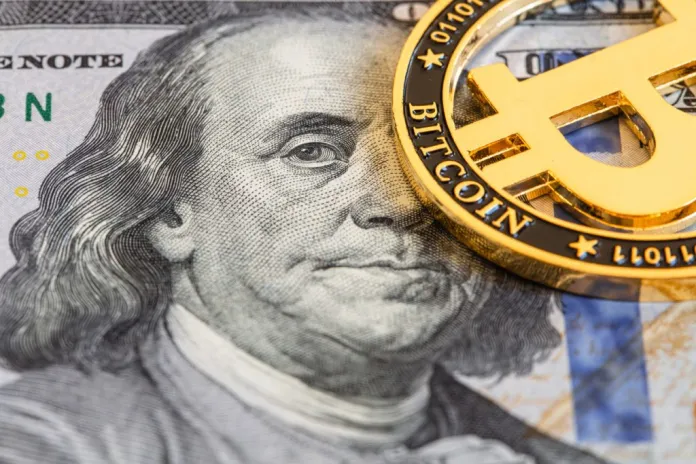
Proponents of a federal “strategic Bitcoin reserve” wrap their arguments in futuristic tech jargon. They claim a digital ledger will lead global finance into the next century. Strip away the slick buzzwords, and this model isn’t futuristic at all. It is ancient. Trying to back the credit of the world’s top superpower with volatile digital tokens drags us backward. It forces a return to a primitive economic state. In fact, if the United States truly wanted to anchor its wealth to an alternative asset, even physical seashells would make a better national reserve than Bitcoin.
To understand why this is a trap for taxpayers, we must look at how human history defines money. True currency has evolved across three stages. History shows that a sovereign Bitcoin stockpile rests on a basic misunderstanding of what makes money work. It directly counters the natural progress of human trade.
Seashells and wampum: Money from the ground
Before modern banking, early economies relied on simple barter and raw trade goods. People swapped items with real physical use, or things that took hard work to find. Examples include salt, cows, gold, and cowrie shells. In early American history, native tribes and European settlers used wampum. These were small beads carved out of clam shells. Wampum served as a primary way to buy and sell goods across early America.
Wampum worked because it had a natural, physical limit. It required immense time, skill, and labor to harvest and polish the shells. The currency was anchored in a tangible reality. Even if social trust broke down, the physical item remained. It held decorative value on its own, independent of any digital network or marketplace. A seashell exists in the real world. You can hold it, trade it, or use it, regardless of whether a computer network has electricity.
But the fate of wampum serves as a sharp warning for modern policymakers. European settlers eventually brought steel drills and mass production to the American coast. Suddenly, the labor needed to make wampum dropped to almost zero. The market flooded with an artificial oversupply of beads. Because the shells lacked a central authority to manage supply or guarantee utility, wampum collapsed. Early America hit its very first hyperinflation crisis. This proved that when technology destroys the scarcity of a commodity, the entire monetary system breaks.
Paper money: Money from the government
Civilizations learned that global powers need a stable anchor, not raw objects. This realization created modern paper money. Critics often attack the U.S. dollar because it left the gold standard in 1971. They argue that because a government can print cash, the bills in your wallet are just an illusion.
But that critique misses the entire point of a modern economy. The U.S. dollar is backed by the strongest real-world anchor available: the total economic output of the United States. It is backed by the legal requirement to pay American taxes in dollars. It is backed by the rule of law enforced by our government. The dollar’s value links directly to the productivity and security of the nation. Spending and money printing create real inflation risks. Yet, the dollar remains a predictable tool that keeps global trade moving every single day. It works because it represents a binding social contract.
Bitcoin and crypto: Money from the computer
This brings us to cryptocurrency. As I noted before, the Trump administration has a plan for our $20 billion war chest of 328,372 captured Bitcoin. Treating this contraband as a permanent national asset is a dangerous gamble. Bitcoin fans claim they have blended the best of both worlds. They say a hard limit of 21 million coins recreates the permanent scarcity of gold, but with digital speed.
This is a complete illusion, and it underpins the four economic lies told by crypto lobbyists today. Code-based scarcity is entirely fake. Gold has unique chemical properties, conducts heat, and has real industrial uses. Wampum required physical artistry and labor. Even a basic cowrie seashell requires someone to physically find it on a beach. Bitcoin has no intrinsic use. It has no sovereign backing, no underlying economic output, and no physical reality. It is just a math problem on a screen. If the internet goes dark or a cryptographic flaw is exposed, Bitcoin possesses zero baseline value. A seashell at least remains a shell. A crashed Bitcoin is nothing but a broken line of code.
We do not have to guess how this turns out because other nations have already tried it. Look at El Salvador. It embraced Bitcoin as legal tender and built a sovereign stockpile. The result has been a fiscal failure. Public adoption collapsed, forcing the legislative assembly to strip away its mandatory status. The country’s credit rating tanked, and ongoing IMF fiscal audits revealed that actual reserve growth didn’t come from a booming economy, but from unliquidated private crypto donations.
Look also at the kingdom of Bhutan. It used its national hydropower to build a massive, state-backed Bitcoin mining reserve. Yet, facing fiscal realities and cash flow demands, it has spent the last 18 months quietly offloading roughly 70% of its total stockpile to secure actual, spendable cash. They learned the hard way that you cannot pay civil servants or build cities with unliquidated digital tokens.
When our government creates a strategic petroleum reserve, it stores physical oil. That oil powers factories, moves trucks, and protects the economy during a fuel crisis. A strategic crypto reserve does the exact opposite. It locks in extreme market volatility at the highest level of American governance. It ties our national stability to a highly speculative digital asset.
THE STRATEGIC CRYPTO RESERVE IS BUILT ON FOUR ECONOMIC LIES
A superpower cannot anchor its national security to an asset driven by online hype and shifting regulations. If global confidence shifts, a digital ledger can lose half its value in days. The American taxpayer would be left holding a collection of digital seashells with zero backup value.
History shows that money moves forward from raw commodities toward stable, sovereign-backed systems built to survive crises. A strategic crypto reserve flips this history upside down. It asks the wealthiest nation on Earth to walk away from a currency backed by American work. It demands that we step into a volatile digital barter system. We cannot let tech trends blind us to the plain facts of monetary history. We must protect our financial future by remembering the lessons of our past.
Eric Wargotz, M.D., is a policy analyst and writer whose work has appeared in media outlets including the Washington Examiner, the Baltimore Sun, the Jerusalem Post, and syndicated via aggregators including MSN, FDD, and RealClearWorld. He is a judge, a former U.S. Senate nominee, and clinical professor emeritus at George Washington University. Dr. Wargotz is also the former elected President of the Queen Anne’s MD County Commission and the current president of MedChi, the Maryland State Medical Society. Views are his own.
Continue reading...
[ H/T Washington Examiner ]