





EU NatGas Hits 2022 Crisis Levels As Goldman Warns 150 Euros Could Be Next
Back in late August, Goldman Sachs commodities expert Samantha Dart warned that EU natural gas prices would need to soar dramatically to discourage Asian LNG demand and shift cargoes to Europe amid disruptions at the Strait of Hormuz.
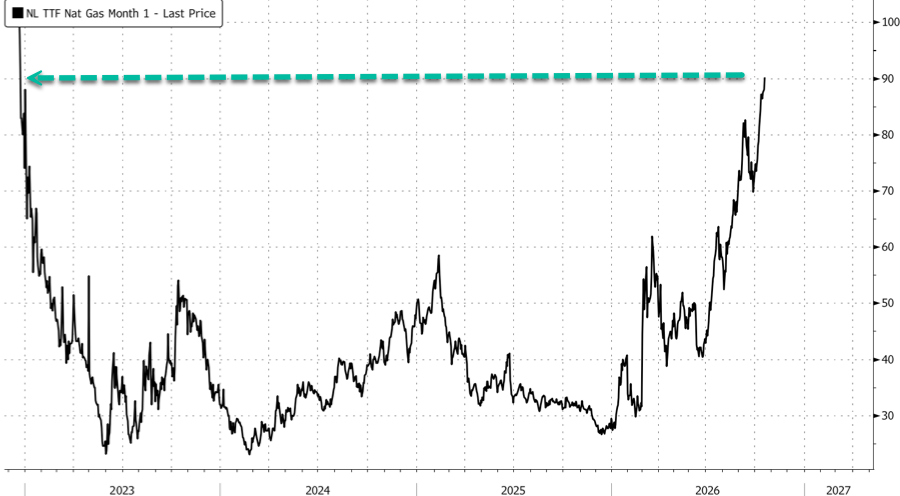
Fast forward to Tuesday morning, European gas prices (TTF) have topped 90 euros per megawatt-hour, the highest level since late 2022. Notably, Dart warned about where prices were headed when EU NatGas was trading around 67 euros.
Separately, Goldman's Daan Struyven and Dart released a new note earlier today, putting their base case for Brent crude at $90 a barrel and European benchmark EU NatGas at 70 euros by year-end, assuming a recovery in Middle Eastern supply and easing risk premiums. Brent is forecast to average $80 in 2027.
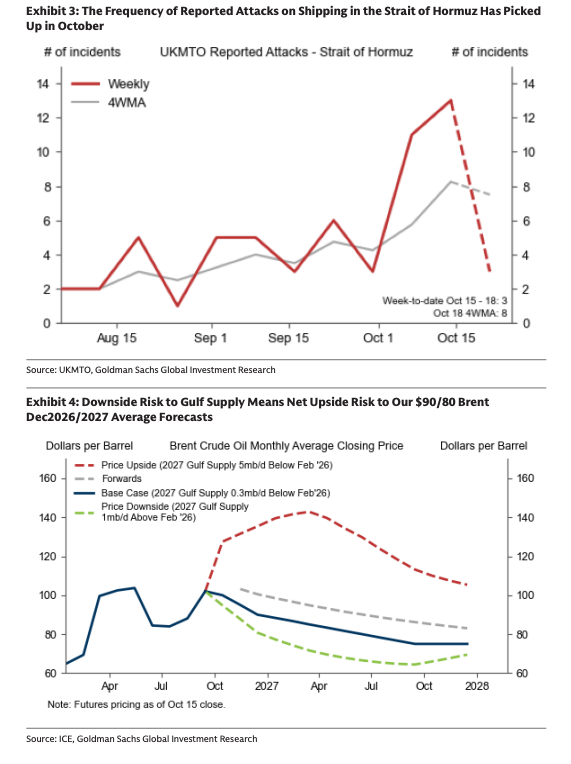
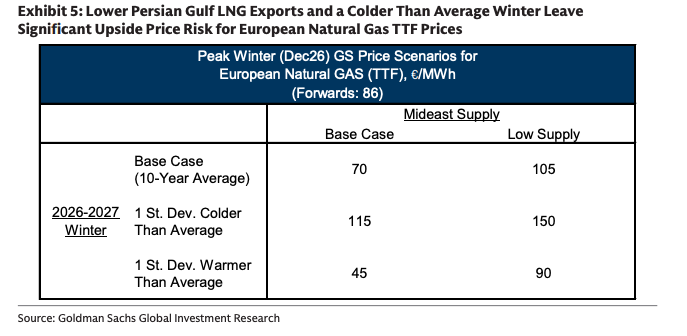
However, they warned that risks remained skewed toward the upside: Brent crude could climb to $140 early next year and average about $125 in 2027 if Gulf oil output averages 5 million barrels a day below February 2026 levels. As for EU NatGas, they warned it could soar to 150 euros if Gulf LNG exports remain at just one quarter of normal levels and a more severe winter boosts heating demand.
Here's what they said:
Our base case is that a further recovery in Mideast supply and a moderation in the risk premium reduce prices of Brent crude and European natural gas to $90/bbl and EUR70/MWh, respectively, by end-2026.2 However, we remain concerned that geopolitical escalation—such as intensified shipping attacks or damage to energy infrastructure—and, for European natural gas, a cold winter could push energy prices significantly higher.
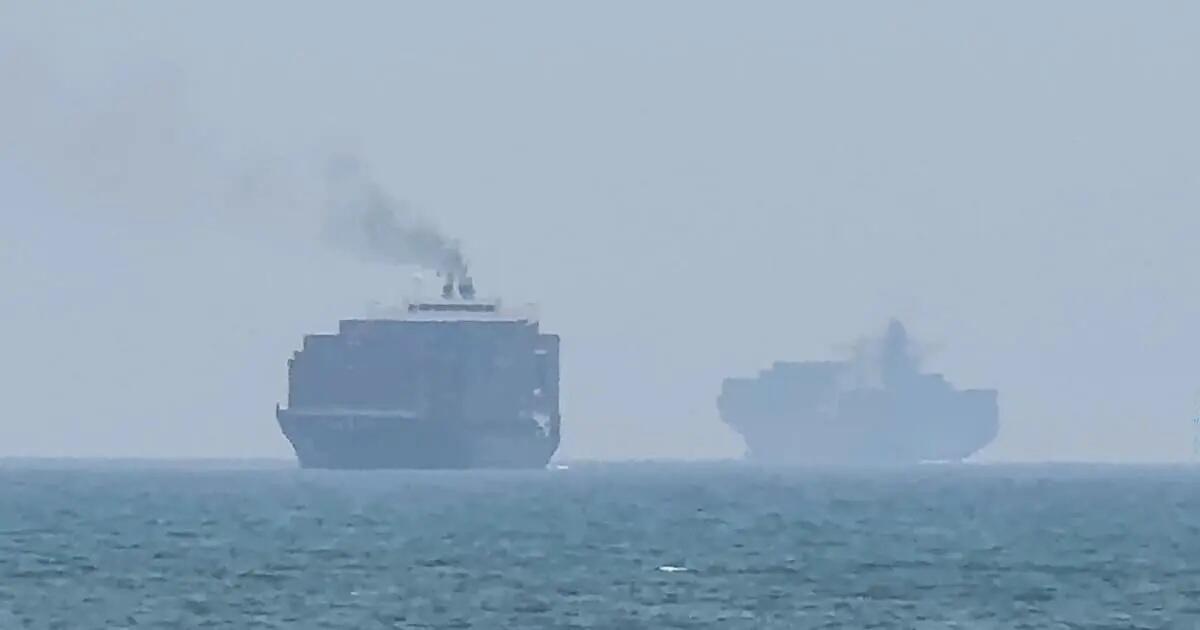
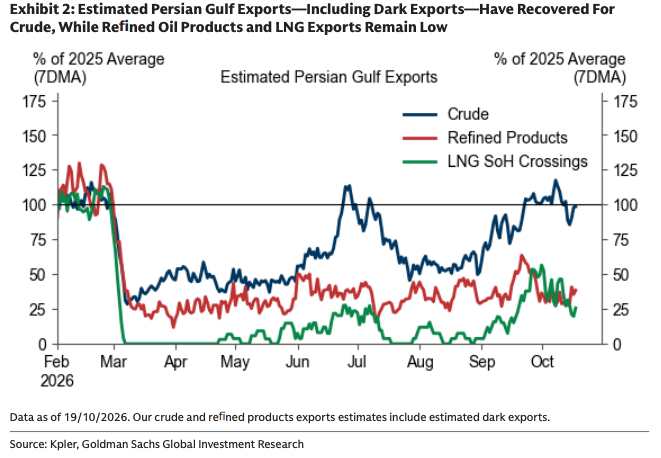
While estimated Persian Gulf exports of crude oil—including estimated dark exports— remained near their 2025 average over the past 7 days (Exhibit 2), they edged down from the early October highs as attacks on ships attempting to cross Hormuz have picked up (Exhibit 2). Estimated Gulf exports of refined oil products are much lower at around 40% of the 2025 average, in part reflecting Mideast refinery outages. Similarly, visible LNG crossings through Hormuz, have edged down this month relative to late October levels.
Misses in Mideast supply could push energy prices significantly higher:
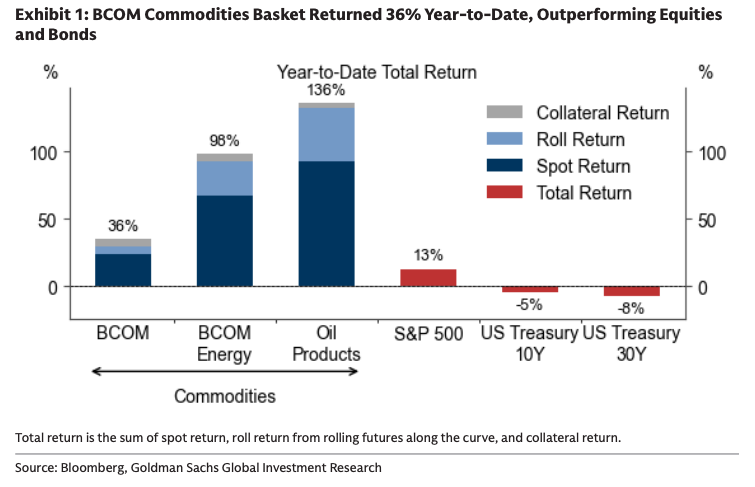
Beyond energy, the analysts noted that the Bloomberg Commodity Index delivered a 36% total return this year, outperforming equities and bonds.
As ex-Goldman Sachs Jeff Currie, including ourselves, has pointed out, commodities have entered a period of scarcity, whether due to resource nationalism, adverse weather, supply woes, and more.
Tyler Durden Tue, 10/20/2026 - 08:45
Continue reading...
[ H/T ZeroHedge ]
Back in late August, Goldman Sachs commodities expert Samantha Dart warned that EU natural gas prices would need to soar dramatically to discourage Asian LNG demand and shift cargoes to Europe amid disruptions at the Strait of Hormuz.
Fast forward to Tuesday morning, European gas prices (TTF) have topped 90 euros per megawatt-hour, the highest level since late 2022. Notably, Dart warned about where prices were headed when EU NatGas was trading around 67 euros.
Separately, Goldman's Daan Struyven and Dart released a new note earlier today, putting their base case for Brent crude at $90 a barrel and European benchmark EU NatGas at 70 euros by year-end, assuming a recovery in Middle Eastern supply and easing risk premiums. Brent is forecast to average $80 in 2027.
However, they warned that risks remained skewed toward the upside: Brent crude could climb to $140 early next year and average about $125 in 2027 if Gulf oil output averages 5 million barrels a day below February 2026 levels. As for EU NatGas, they warned it could soar to 150 euros if Gulf LNG exports remain at just one quarter of normal levels and a more severe winter boosts heating demand.
Here's what they said:
Our base case is that a further recovery in Mideast supply and a moderation in the risk premium reduce prices of Brent crude and European natural gas to $90/bbl and EUR70/MWh, respectively, by end-2026.2 However, we remain concerned that geopolitical escalation—such as intensified shipping attacks or damage to energy infrastructure—and, for European natural gas, a cold winter could push energy prices significantly higher.
While estimated Persian Gulf exports of crude oil—including estimated dark exports— remained near their 2025 average over the past 7 days (Exhibit 2), they edged down from the early October highs as attacks on ships attempting to cross Hormuz have picked up (Exhibit 2). Estimated Gulf exports of refined oil products are much lower at around 40% of the 2025 average, in part reflecting Mideast refinery outages. Similarly, visible LNG crossings through Hormuz, have edged down this month relative to late October levels.
Misses in Mideast supply could push energy prices significantly higher:
- Brent might rally to $140 in early 2027 and average around $125/bbl in 2027 (red line, Exhibit 4) if 2027 average Gulf output remains 5mb/d below Feb26 levels (while refined product prices would likely rise further from already very high levels)
- TTF might rally to 150 EUR/MWh by year-end if Persian Gulf LNG exports don't improve beyond 25% of normal and if the winter realizes 1 std. dev. colder than average (Exhibit 5)
Beyond energy, the analysts noted that the Bloomberg Commodity Index delivered a 36% total return this year, outperforming equities and bonds.
As ex-Goldman Sachs Jeff Currie, including ourselves, has pointed out, commodities have entered a period of scarcity, whether due to resource nationalism, adverse weather, supply woes, and more.
Tyler Durden Tue, 10/20/2026 - 08:45
Continue reading...
[ H/T ZeroHedge ]