



EU Judges Said It Might Be Racist... Denmark's Supreme Court Just Cleared Its 'Non-Western' Evictions Anyway
Denmark's Supreme Court ruled Monday that a landlord did not discriminate on ethnic grounds when it evicted tenants from a Helsingør social housing estate to keep it off the government's "ghetto" list, handing the country's hard line on immigration a win less than a year after the EU's top court said the same law could amount to direct ethnic discrimination.

The Danish Supreme Court building in Copenhagen (Håkan Dennersten)
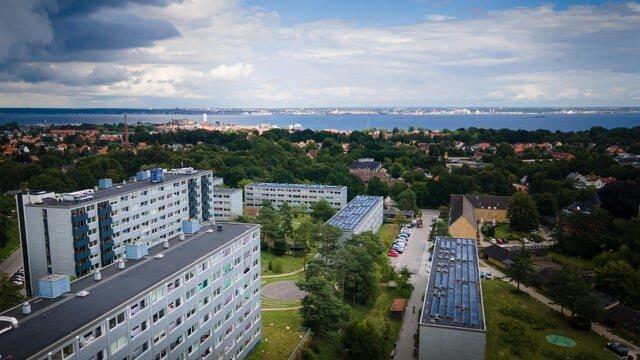
Seven households brought the case after the landlord, Boliggården, ended 91 leases at the Nøjsomhed estate north of Copenhagen in 2020 so it could rebuild the flats. Seven Supreme Court judges heard it instead of the usual five. The court found that neither statistics nor concrete information about the residents' ethnic background showed they had been put at a particular disadvantage because of their ethnic origin, according to the tenants' union LLO.
The judges held that the law's category, "immigrants and descendants from non-Western countries," splits people into two groups, and that "both groups include a very large majority of different ethnic origins, and there will simultaneously be persons with the same ethnic origin in both groups." The category, they concluded, "must be regarded as a neutral criterion and not as a criterion relating to ethnic origin."
Under the 2018 "ghetto" package, since renamed the parallel society laws, an estate of at least 1,000 residents goes on the list when more than half are immigrants or their descendants from non-Western countries and it meets two of four other tests on crime, education, jobs and income. Five years on the list makes it a "transformation area," which must cut its share of social family housing by Jan. 1, 2030 - to no more than 40% of its homes - through demolition, sale or conversion.
Nøjsomhed went on the list in December 2018. Boliggården announced the terminations in seven stairwells in January 2020, before the five years were up, and the estate came off the list in December 2021, partly because its population fell below 1,000. Boliggården's lawyer, Henrik Qwist, argued that the aim was to keep the estate from becoming a "hard ghetto" and that the landlord had no information on which tenants counted as non-Western. The tenants' lawyer, Eddie Khawaja, argued that the deciding aim was to cut the number of residents with non-Western backgrounds. The Housing Court and the Eastern High Court both sided with Boliggården, the latter in 2022.
"It's about whether the criteria regarding the tenants' origin is neutral or not," Khawaja told AFP before the hearing. After the ruling, he said: "We are disappointed with the outcome, because we believe the case is inextricably linked to ethnicity".
The EU's Court of Justice had put that question back to Danish judges in December 2025, in a case over evictions at Ringparken in Slagelse and Mjølnerparken in Copenhagen. It found that nationality or country of birth alone isn't enough to place someone in an ethnic group, but that a broad criterion covering many ethnic origins doesn't by itself rule out direct discrimination, and that "offensive and stigmatizing" labels in a law or its preparatory papers can count toward showing less favorable treatment.
The Mjølnerparken case, which concerns the sale of more than 200 family homes, goes back to the Eastern High Court, and LLO's chief legal adviser Anders Svendsen said the door "may not be completely closed" if the kind of evidence the Supreme Court found missing can be produced in other cases. Tenants' groups estimate that about 11,000 people across Denmark will have to move by 2030 to meet the law, which came with 12 billion kroner for demolishing estates and selling homes on the private market.
The ruling lands three days after Denmark's left-wing prime minister rejected "large population replacement," and less than two weeks after the government's own tally of what every resident pays in and takes out left some migrant groups $11,000 short.
LLO chair Helene Toxværd said the union accepts the verdict, but added: "The Supreme Court has ruled on the question of discrimination, but not on what good housing policy is".
Tyler Durden Thu, 11/26/2026 - 06:00
Continue reading...
[ H/T ZeroHedge ]
Denmark's Supreme Court ruled Monday that a landlord did not discriminate on ethnic grounds when it evicted tenants from a Helsingør social housing estate to keep it off the government's "ghetto" list, handing the country's hard line on immigration a win less than a year after the EU's top court said the same law could amount to direct ethnic discrimination.
The Danish Supreme Court building in Copenhagen (Håkan Dennersten)
Seven households brought the case after the landlord, Boliggården, ended 91 leases at the Nøjsomhed estate north of Copenhagen in 2020 so it could rebuild the flats. Seven Supreme Court judges heard it instead of the usual five. The court found that neither statistics nor concrete information about the residents' ethnic background showed they had been put at a particular disadvantage because of their ethnic origin, according to the tenants' union LLO.
The judges held that the law's category, "immigrants and descendants from non-Western countries," splits people into two groups, and that "both groups include a very large majority of different ethnic origins, and there will simultaneously be persons with the same ethnic origin in both groups." The category, they concluded, "must be regarded as a neutral criterion and not as a criterion relating to ethnic origin."
Under the 2018 "ghetto" package, since renamed the parallel society laws, an estate of at least 1,000 residents goes on the list when more than half are immigrants or their descendants from non-Western countries and it meets two of four other tests on crime, education, jobs and income. Five years on the list makes it a "transformation area," which must cut its share of social family housing by Jan. 1, 2030 - to no more than 40% of its homes - through demolition, sale or conversion.
Nøjsomhed went on the list in December 2018. Boliggården announced the terminations in seven stairwells in January 2020, before the five years were up, and the estate came off the list in December 2021, partly because its population fell below 1,000. Boliggården's lawyer, Henrik Qwist, argued that the aim was to keep the estate from becoming a "hard ghetto" and that the landlord had no information on which tenants counted as non-Western. The tenants' lawyer, Eddie Khawaja, argued that the deciding aim was to cut the number of residents with non-Western backgrounds. The Housing Court and the Eastern High Court both sided with Boliggården, the latter in 2022.
"It's about whether the criteria regarding the tenants' origin is neutral or not," Khawaja told AFP before the hearing. After the ruling, he said: "We are disappointed with the outcome, because we believe the case is inextricably linked to ethnicity".
The EU's Court of Justice had put that question back to Danish judges in December 2025, in a case over evictions at Ringparken in Slagelse and Mjølnerparken in Copenhagen. It found that nationality or country of birth alone isn't enough to place someone in an ethnic group, but that a broad criterion covering many ethnic origins doesn't by itself rule out direct discrimination, and that "offensive and stigmatizing" labels in a law or its preparatory papers can count toward showing less favorable treatment.
The Mjølnerparken case, which concerns the sale of more than 200 family homes, goes back to the Eastern High Court, and LLO's chief legal adviser Anders Svendsen said the door "may not be completely closed" if the kind of evidence the Supreme Court found missing can be produced in other cases. Tenants' groups estimate that about 11,000 people across Denmark will have to move by 2030 to meet the law, which came with 12 billion kroner for demolishing estates and selling homes on the private market.
The ruling lands three days after Denmark's left-wing prime minister rejected "large population replacement," and less than two weeks after the government's own tally of what every resident pays in and takes out left some migrant groups $11,000 short.
LLO chair Helene Toxværd said the union accepts the verdict, but added: "The Supreme Court has ruled on the question of discrimination, but not on what good housing policy is".
Tyler Durden Thu, 11/26/2026 - 06:00
Continue reading...
[ H/T ZeroHedge ]