







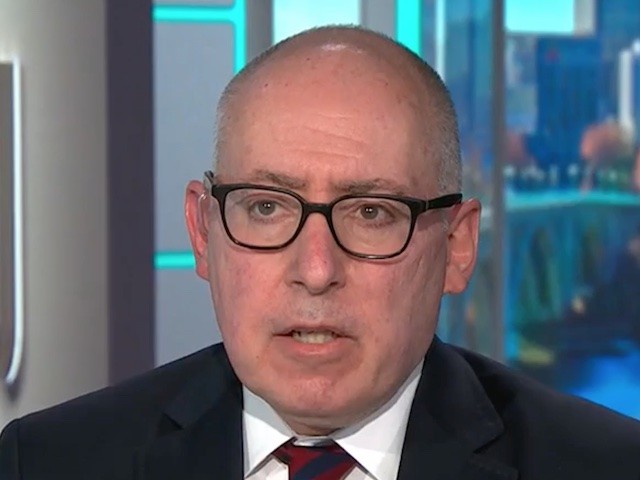

President Trump’s intelligence chief says the wave of major technology outages rattling Americans does not appear to be a cyberattack or a coordinated operation by a foreign government.
Director of National Intelligence Jay Clayton said officials have examined the disruptions closely and believe the common thread is a rush to patch and upgrade aging systems—not one hidden enemy flipping switches across the country.
The concern intensified Tuesday after reporters learned that NSANet, the National Security Agency’s classified internal communications network, had gone offline.
The first reports described a serious disruption inside one of the country’s most sensitive intelligence agencies.
The Associated Press reported that the outage affected the network NSA employees use to exchange classified information internally. Officials said the agency’s ability to communicate urgent intelligence to President Trump was not affected and that there was no evidence of a cyberattack.
The report said the problem was tied to a software update and that classified communications on other critical channels remained available.
The agency did not immediately disclose the full scope of the disruption. The outage was first reported by CNN, and employees were told to stagger their arrival times while technicians worked through the failure.
That combination—a classified network going dark, limited public detail and several unrelated outages already dominating the news—made the public alarm understandable. It also made a careful intelligence assessment more urgent than social-media speculation.
A second reporter on the story said workers were given staggered arrival times while the agency assessed the disruption.
The NSA failure did not happen in isolation. Microsoft services, the national air-traffic system, major banking functions, United Airlines and Apple services have all experienced disruptions within days of one another.
That cluster naturally triggered public suspicion. Americans have watched supposedly resilient systems fail before, and officials need to answer reasonable questions with evidence, timelines and specific technical findings.
But suspicion is not evidence. Clayton’s assessment is that institutions and companies are pushing urgent upgrades through legacy infrastructure at roughly the same time, creating failures that look connected even when their causes are separate.
The White House released his conclusion directly.
The Associated Press said Secretary of State Marco Rubio likewise found no information tying the outages together or connecting them to hackers, criminals, a foreign government or another malign actor. The report said the affected organizations have attributed their incidents to internal technical problems.
Rubio called the succession of failures unsettling but said the incidents were distinct and had different causes. Clayton pointed to organizations patching vulnerable legacy systems and running into unexpected trouble as they took systems down and brought them back online.
The report also noted that Apple acknowledged service interruptions after an internal update. Officials say separate update failures exposed how little margin for error exists inside aging infrastructure.
That does not make the failures harmless.
A bad update that grounds flights, blocks customers from their money or shuts down a classified network is still a major operational failure. America’s enemies do not need to cause every outage to learn from the weaknesses the outages expose.
The Office of the Director of National Intelligence identifies Clayton as the official responsible for integrating intelligence across the government and serving as the president’s principal intelligence adviser. His conclusion carries weight, but it should be followed by a clear public accounting as each investigation is completed.
The Trump administration’s immediate task is twofold: keep foreign-threat analysis disciplined and force agencies and contractors to stop treating brittle legacy systems as somebody else’s problem.
Congress also has a responsibility. Members should demand exact technical explanations, measurable modernization plans and consequences when contractors introduce single points of failure into national systems.
Clayton’s statement should cool unsupported claims of a coordinated attack. It should not cool the urgency to harden the infrastructure Americans depend on every day.
No panic. No excuses.
Find the failure points, fix them and prove the systems can withstand the next update—or the next real attack.
This is a Guest Post from our friends over at 100 Percent Fed Up. View the original article here.
Continue reading...
[ H/T WLT Report ]


