
According to “redistricting expert” John B. Morgan, when votes are counted on Nov. 3, Democrats will have failed to make the midterm elections all about President Donald Trump. Thus, reports Morgan, who has observed elections at the precinct, county, state, and national levels since childhood, Republicans keep their majority in the Senate and perhaps in the House. Nonetheless, he sees remarkably close elections with enough districts still in play that majority control comes down to a dozen seats.
“This is a midterm election like no other,” Morgan declares, “because state environments are bigger factors than strictly national issues; each state is going its own way.”
Landslides, such as the Tea Party sweep in 2010, which netted the GOP 63 House seats, or the blue wave in 2018, when Democrats won 40 new seats, are all but impossible with today’s tight playing field. Plus, the Supreme Court’s ruling barring racially gerrymandered districts yielded new Republican seats and increased GOP congressional opportunities.
“It’s not over, however,” warns Morgan. “In district after district, coast to coast, with campaign expenditures and media buys even, it is a knife fight. It comes down to who is at the head of the ticket, what local issues predominate, and the strength of the individual candidate.”
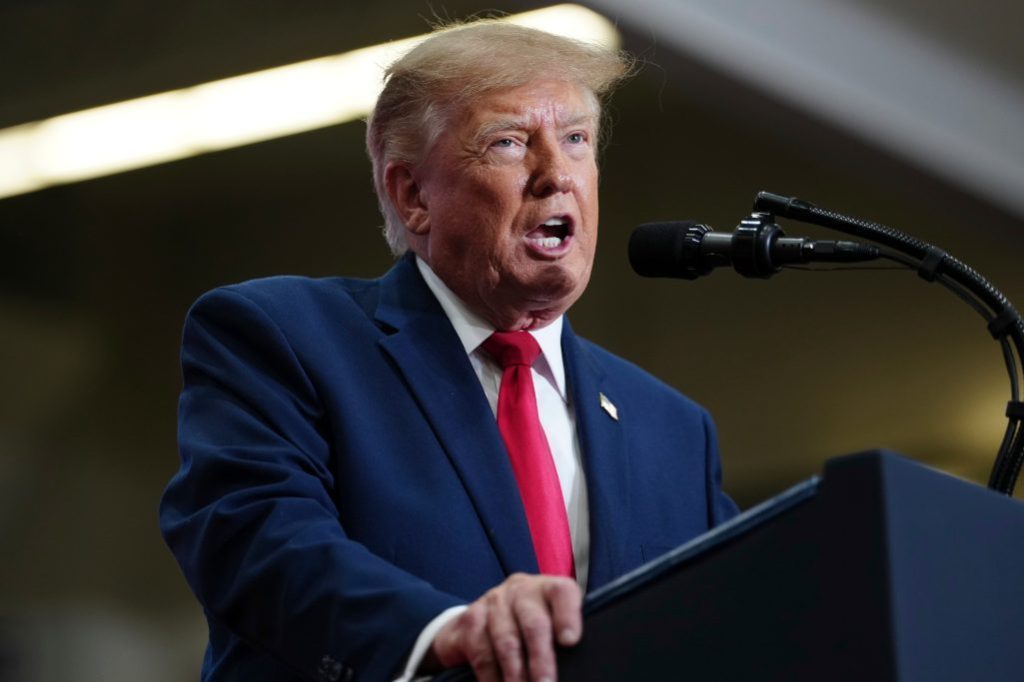
That is why, in Morgan’s view, Trump’s “strategic” involvement makes a huge difference.
“Not only have Democrats failed to make the Iran war or ‘affordability’ the winning national issues they hoped — they have no vision, no message, and no clear leader.” Conversely, concludes Morgan, like Nixon in 1966 and Gingrich in 1994, “Trump is bringing the cavalry.”
After the Supreme Court’s and other courts’ rulings, several states — Florida, Texas, Louisiana, Alabama, and Tennessee — eagerly redrew congressional districts consistent with the Constitution’s equal protection guarantee, resulting in a net “pickup” of potential Republican seats. Although RINOs in some rock-solid Republican states, such as Indiana and South Carolina, declined the opportunity, for which, in Indiana, six of eight were run out of office in the primaries, the redistricting resulted in more than outright new Republican or potential GOP districts.
After the 2024 election, there were 13 Democratic representatives in districts Trump carried, and three Republicans in districts Harris won. After redistricting, however, there are 22 Democrats defending seats in districts where Trump prevailed in 2024, and eight Republicans in districts where Harris prevailed. This increase in the number of Democrats in Trump seats has changed the landscape, dramatically improving the GOP’s chances.
Nevertheless, the top of the ticket still matters, Morgan instructs. In New York, for example, Gov. Kathy Hochul (D-NY) is in a tough battle because Republicans fielded an extremely strong candidate in Nassau County Executive Bruce Blakeman. Importantly, the vigor of the battle Blakeman wages may allow Republicans to retain toss-up congressional seats they hold now.
On the other hand, south of the Empire State in Pennsylvania, weak, underfunded, and virtually unknown state Treasurer Stacy Garrity is doomed against familiar Gov. Josh Shapiro (D-PA). As a result, notes Morgan, for the two seats Republicans picked up in 2024, “There’s nothing to break the fall; they must make their own victories.”
Across the country in Texas, voters will reject the strange man Democrats thought would appeal to Texans and instead will elect state Attorney General Ken Paxton to the U.S. Senate, but it will be closer than necessary and risks Republicans not fully delivering all the redistricted seats. Hence, deduces Morgan, the importance of Trump’s five trips to Texas: Dallas, Denton, San Antonio, Lubbock, and Waco.
Similarly, in North Carolina, Republicans redistricted its congressional map from 10-4 to 11-3, but are now in an uphill battle against a former Democratic governor to replace a retiring Republican senator. Therefore, Trump made a tactical Greenville stop and announced a return visit to boost the odds of gaining that 11-3 advantage.
On the other hand, Trump has no plans to campaign in New England, relying instead on two strong Republican heads of the ticket in New Hampshire, where an incumbent governor and former senator are campaigning for their return to those offices. Their success will determine whether the GOP picks up the 1st District.
THE PRESIDENT STILL THINKS HE’S ON REALITY TV
Likewise, in another state unlikely to be visited by Trump, Minnesota, the effectiveness of former ESPN reporter Michele Tafoya’s Senate run is likely to save a Republican down-ballot congressional seat. Meanwhile, next door in Michigan, Trump campaigned in Port Huron to help win a U.S. Senate seat pickup and to save one or two congressional seats.
In my view, regardless of who controls the House next year, Democrats face a dark future. Held in low regard by the American people, their party is run by America-hating, anti-white, dual-justice socialists who care more about grifters, rapists, and killers illegally in the country than about most Americans. Their party is doomed.
William Perry Pendley, a Marine, Wyoming attorney, and Colorado-based, public-interest lawyer for three decades with victories at the Supreme Court of the United States, served in the Reagan administration, and led the Bureau of Land Management for President Donald Trump.
Continue reading...
[ H/T Washington Examiner ]