




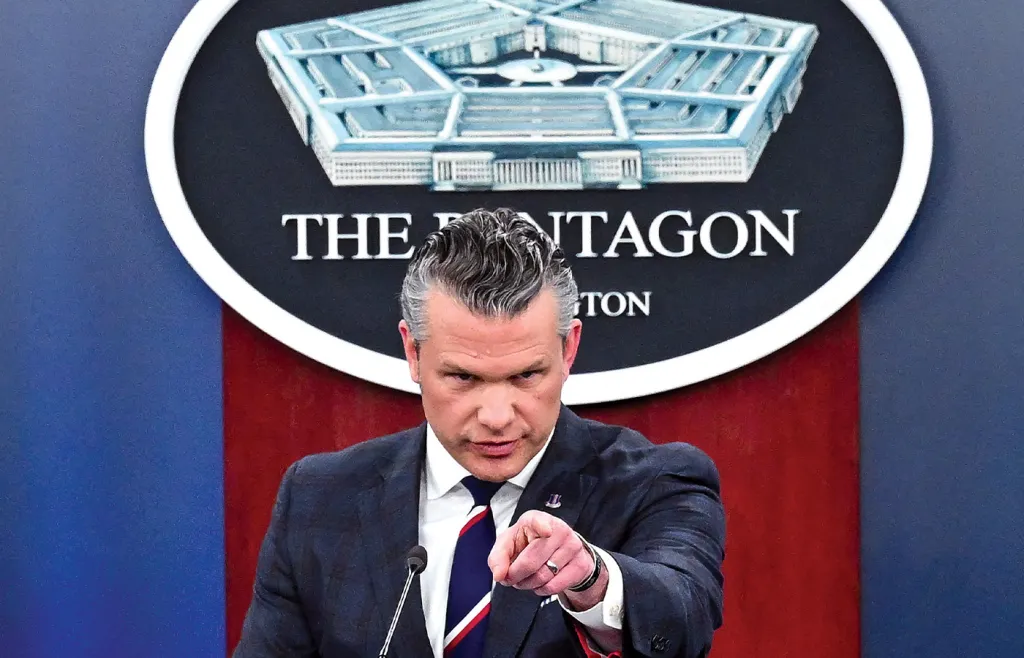
The knives are out for War Secretary Pete Hegseth. There has already been one failed attempt to impeach him, but there will surely be others. He has been taking fire from Republicans and Democrats. He’s being blamed for the Iran war’s impact on the midterm elections. There has been unconfirmed speculation that he may be offered up for sacrifice by President Donald Trump.
Hegseth’s critics blame him for: the “illegal” war against Iran, alleged war crimes while attacking drug traffickers in the Caribbean and in Iran, supposedly being open to the use of the military in a domestic setting to ensure a Republican victory in the midterm elections, purging senior officers without cause, focusing on appearance and physical fitness within the military, and substituting his judgment for that of the uniformed military. He was widely mocked for his “all hands” meeting with senior officers in Quantico, Virginia. Imagine, a man who only achieved field-grade rank in the Army and National Guard lecturing generals and admirals. The effrontery!
Hegseth certainly does not fit the recent model of defense secretary. Most of his predecessors have been chosen based on their perceived ability to run a large organization. Many distinguished men have held the position, but even some with the most sterling credentials, such as James Forrestal, Robert McNamara, Les Aspin, and Donald Rumsfeld, have fallen short of success. Each of them faced different problems. The more successful were able to adapt to the circumstances, whether these involved changes in the security environment, developments in technology, or the availability of resources.
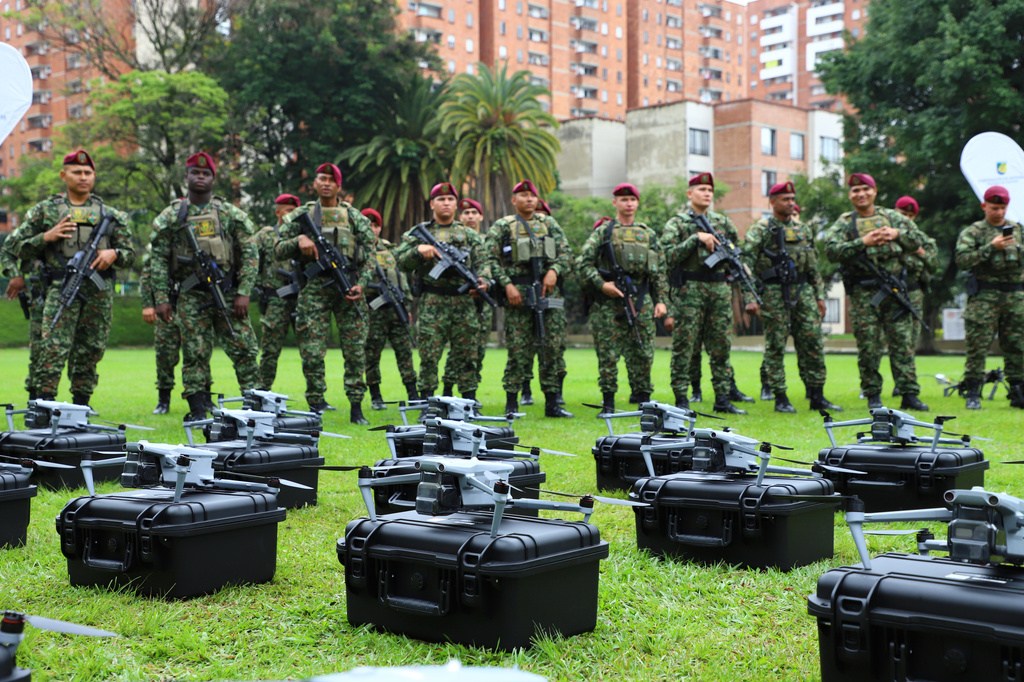
(Photograph by Roberto Schmidt/AFP via Getty Images)
" data-large-file="https://www.washingtonexaminer.com/wp-content/uploads/2026/11/Feat.Hegseth1.111826.jpg?w=1024" height="658" width="1024" src="https://www.washingtonexaminer.com/wp-content/uploads/2026/11/Feat.Hegseth1.111826.jpg?w=1024" alt="(Photograph by Roberto Schmidt/AFP via Getty Images)" class="wp-image-4803670" srcset="https://www.washingtonexaminer.com/wp-content/uploads/2026/11/Feat.Hegseth1.111826.jpg 1400w, https://www.washingtonexaminer.com/...26/11/Feat.Hegseth1.111826.jpg?resize=300,193 300w, https://www.washingtonexaminer.com/...26/11/Feat.Hegseth1.111826.jpg?resize=768,494 768w, https://www.washingtonexaminer.com/...6/11/Feat.Hegseth1.111826.jpg?resize=1024,658 1024w" sizes="(max-width: 1024px) 100vw, 1024px">
The problems that today’s military faces are different and require a correspondingly different sort of Pentagon chief. (Photograph by Roberto Schmidt/AFP via Getty Images)
The problems that today’s military faces are different and require a correspondingly different sort of Pentagon chief. Hegseth was chosen to influence organizational culture and morale. As such, he has been accused of politicizing the military by waging a culture war. But to paraphrase Leon Trotsky, you may not be interested in the culture wars, but the culture wars are interested in you. When all is said and done, Hegeth’s actions have been in line with his emphasis on accountability and morale.
The ‘illegal war’ against Iran
The United States has been in a state of war with Iran since 1979. Iran leads an “axis of resistance” against the U.S. and its interests in the Middle East and has waged armed conflict. In addition, every president since that time, Democratic and Republican, has stated that Iran cannot be permitted to have a nuclear weapon. Yet despite alleged agreements, such as the 2015 Joint Comprehensive Plan of Action, Iran has continued to pursue that end. In addition, Iran has confirmed that it possesses intermediate-range ballistic missiles capable of reaching Europe.
I believe that Trump should have stated his objectives for the war clearly at the beginning of our armed response to Iranian depredations, but the idea that the president needs the “permission” of Congress to respond to armed attacks against the U.S. misperceives the concept of a declaration of war. That does not mean that Congress has no say: It can refuse to fund military action.
As constitutional law scholar John Yoo has argued, the framers rejected the simplistic “Congress decides on war, and then the president wages it” argument. Instead, they left the decision to wage war to the discretion of politics, dividing the war power between the president and Congress, allowing them either to cooperate or contest for primacy over war policy. The Constitution creates a presidency that can respond forcefully to prevent serious threats to our national security. Presidents can take the initiative, and Congress can use its funding power to check them. If presidents lead the nation into disastrous mistakes, Congress can impeach them, and the people can reject them at the ballot box.
If Congress feels it has been misled in authorizing war or disagrees with the president’s decisions, all it needs to do is cut off funds, either all at once or gradually. It can reduce the size of the military, shrink or eliminate units, or freeze its supplies. Congress successfully ended the war in Vietnam by cutting off funds. It similarly used the power of the purse to halt President James Polk’s designs to occupy all of Mexico.
Removing senior officers
Critics charge that Hegseth is attempting to “politicize” the military by purging those who do not share the president’s vision. They point to the fact that the Hegseth has fired a number of flag and general officers since taking office, including Gen. CQ Brown, former chairman of the Joint Chiefs of Staff; Adm. Lisa Franchetti, former chief of naval operations; Adm. Linda Fagan, former commandant of the Coast Guard; Gen. James Slife, former vice chief of staff of the Air Force; Lt. Gen. Jeffrey Kruse, former head of the Defense Intelligence Agency; Vice Adm. Nancy Lacore, former chief of the Navy Reserve; and Rear Adm. Milton Sands, former head of Naval Special Warfare Command.
Early in his tenure, Hegseth confirmed his intention to cut the number of four-star generals and admirals by at least 20%. Despite critics’ claims that this is another example of politicizing the officer corps, its top-heavy nature has been apparent for many years. For instance, in his classic 1986 study, The Pentagon and the Art of War, Edward Luttwak observed that the U.S. achieved victory on multiple fronts during World War II with far fewer officers commanding far more troops and ships than was the situation at the time. The proliferation of commands and especially senior officer billets has coincided with a decline in strategic thinking and military performance, from Vietnam to Afghanistan. History has confirmed that the military does not benefit from the bloat of senior officers.
Before the 2024 election, the Wall Street Journal published an article claiming that the Trump transition team had drafted an executive order that would “create a board to purge generals … which if enacted, could fast-track the removal” of flag and general officers “found to be lacking in requisite leadership qualities.” But the outlet went on to report that it “could also create a chilling effect on top military officers, given the president-elect’s past vow to fire ‘woke generals,’ referring to officers seen as promoting diversity in the ranks at the expense of military readiness.”
The article implied that any attempt to remove flag and general officers from the U.S. military is, like Josef Stalin’s purge of the Red Army before World War II, ideological, aimed at eradicating officers deemed not sufficiently committed to Trump and his administration. A better interpretation of such a board is that it is an attempt to restore accountability, something that has been missing in the military for some time.
Writing in World Affairs in 2009, Richard Kohn, the dean of U.S. military historians, observed that “nearly twenty years after the end of the Cold War, the American military, financed by more money than the entire rest of the world spends on its armed forces, failed to defeat insurgencies or fully suppress sectarian civil wars in two crucial countries, each with less than one-tenth of the U.S. population, after overthrowing those nations’ government in a matter of weeks.” What, he asked, accounted for this lack of military effectiveness?
In his 2012 book, The Generals: American Military Command from World War II to Today, Tom Ricks, formerly of the Washington Post and Wall Street Journal, suggested an answer, arguing that many of the failures suffered by the military over the past decades could be attributed to the fact that the Army no longer held officers accountable for failures on the battlefield. During World War II, relief was a common occurrence. Gen. George Marshall, the “architect of victory” during that conflict, routinely relieved subordinates.
In the decades following the war, whatever relief did occur was executed by political leaders. And even then, many officers were simply “kicked upstairs,” as in the case of William Westmoreland in Vietnam and George Casey in Iraq. As one Army officer observed during the early phases of Operation Iraqi Freedom, “As it stands now, a private who loses a rifle suffers far greater consequences than a general who loses a war.”
An important point to keep in mind is that although the president requires the Senate’s consent to appoint officers, he has the authority to fire them without congressional approval. And presidents have exercised this authority since the beginning of the republic. Indeed, President Thomas Jefferson nominated officers for ideological reasons. It should be noted that the idea of a nonpartisan, professional officer corps is of recent vintage, dating only to the Progressive Era at the end of the 19th century. When Jefferson became president, he set out to replace Federalist officers, who had dominated the Army since the Revolution, with Republicans. Establishing the U.S. Military Academy was one means of accomplishing this end.
It is also the case that commissions such as the one suggested by the Wall Street Journal are nothing new in U.S. military history. During the Civil War, Congress created the Joint Committee on the Conduct of the War, which investigated all matters affecting the conflict, including operational and tactical matters and the performance of officers in the field. And prior to World War II, Marshall established a board led by retired officers to review officer records and “remove from line promotion any officer for reasons deemed good and sufficient.” The goal, of course, was to remove “dead wood” to make room for younger and more capable officers.
It is also important to recognize that recent Democratic presidents have not hesitated to remove flag and general officers without providing a justification, something that is certainly within their power to do. Former President Barack Obama removed several senior officers, the most surprising of which was his ouster of Gen. James Mattis as commander of U.S. Central Command. Nominated by Obama and confirmed by the Senate in the summer of 2010, Mattis presided over the most volatile region in the world.
During his time as commander, none of the symptoms of unhealthy civil-military relations that usually afflict administrations manifested themselves. There were no leaks to the press over policy disagreements and no reports of “slow rolling” or “foot dragging” as Mattis implemented the president’s policy.
Yet right after Obama’s reelection, the administration announced that Mattis would be leaving his post in March 2013, well short of what would be expected of a combatant commander who had acquitted himself well in the position. Most observers were stunned. There seemed to be no logical reason for his being replaced early. But according to Ricks on his blog, The Best Defense, at Foreign Policy, Mattis was relieved early as commander of Central Command because he pushed the civilians so hard on considering the second- and third-order consequences of actions against Iran. Apparently, Mattis’s efforts to address the Iranian strategic framework by insisting on the need to plan not just for what we assumed Iran might do, but also for what Iran was capable of doing, was not welcomed by the White House.
‘Illegal’ orders
Six congressional Democrats recently posted a video aimed at service members. It features Sens. Elissa Slotkin (D-MI) and Mark Kelly (D-AZ) along with Reps. Maggie Goodlander (D-NH), Jason Crow (D-CO), Chris Deluzio (D-PA), and Chrissy Houlahan (D-PA), all of whom are either military veterans or former intelligence officials.
In the video, the lawmakers “remind” active members of the military and national security community that they swore to protect and defend the Constitution. “Right now, the threats to our Constitution aren’t just coming from abroad, but from right here at home,” Deluzio, a former Navy officer, and Crow, a former Army Ranger and paratrooper, say in turn. Kelly, a former Navy captain, then says, “Our laws are clear: You can refuse illegal orders,” which Slotkin, a former CIA officer, repeats. Crow then adds that military members “must refuse illegal orders” before the others say, “No one has to carry out orders that violate the law or our Constitution.” And they all pledge that when service members refuse to carry out illegal orders, “We have your back.”
Of course, regarding unlawful orders, these members of Congress are correct. All service members learn early in their training that they have an affirmative obligation to refuse unlawful orders. But service members do not get to refuse orders because they disagree with the administration’s policies. And this video, at the very least, carelessly blurs the line between these things in a way that undermines trust between civilian policymakers and the military, and between seniors and subordinates within the military.
The video was clearly political in nature and is likely to foster confusion within the military ranks. The lawmakers failed to identify any specifics regarding unlawful orders. Nor did they offer examples of the kinds of orders soldiers should refuse to obey. Without context, the phrase “refuse illegal orders” blurs the line between legitimate legal instruction and political signaling. For a system that depends on discipline, clarity, and stability, ambiguity is a real problem.
The civil-military implications are serious. Civilian control of the military rests on a clear hierarchy. Congress passes laws, the executive directs operations, and the military follows lawful commands. By addressing the troops directly about which orders to follow, the participants in the video disrupt that structure. Military leaders, not legislators, are responsible for issuing guidance to troops on how to evaluate or report questionable orders. The seriousness of the matter is underlined by the fact that the video comes from politicians rather than military authorities. The video draws service members into a political dispute, sowing discord, which is especially dangerous during periods of political tension.
When queried, the six lawmakers in the video were unable to identify a single example of an “unlawful order” issued by Trump or his administration. That changed temporarily in late November when the Washington Post reported, citing anonymous sources, that Hegseth had ordered an illegal second strike on a drug boat aimed at killing drug traffickers. Accusations of war crimes quickly dissolved, however, as the New York Times followed up with a story debunking this account, and Adm. Frank Bradley, who himself ordered the second strike, testified before Congress.
Targeting drug traffickers
Trump’s critics charge him with violating both domestic and international law by using the military to target drug cartels and drug runners, claiming that his actions are unprecedented. But as far back as the Reagan administration in 1986, Army infantry and aviation assets operated with Bolivian forces against drug producers in that country. And in 1993, then-President Bill Clinton issued a presidential decision directive on counter-narcotics in the Western Hemisphere, assigning a substantial role in drug interdiction to the military.
The National Defense Authorization Act of 1995 authorized use of military assets in drug interdiction: 14 USC Section 526 authorizes firing on vessels carrying drugs, and 8 USC Section 1189 authorizes the designation of narco-terrorist groups as foreign terrorist organizations, unlocking powers used by every administration since 9/11. As for international law, the United Nations Convention on the Law of the Sea authorizes military force against suspected stateless vessels engaged in piracy and slave trafficking, essentially labeling them “hostis humani generis,” meaning enemies of mankind.
The Trump administration has proceeded in accordance with legal prudence. Adm. Alvin Holsey, commander of U.S. Southern Command, properly sought legal justification for the strikes on suspected drug boats. Subsequently, the Justice Department Office of Legal Counsel advised the Pentagon that the strikes were legal under both U.S. and international law, that all strikes have been conducted in “complete compliance with the law of armed conflict,” and that U.S. troops would not be subject to prosecution for carrying out the orders. It is legitimate to argue that Trump’s policy regarding these strikes is wrongheaded, but it is not unprecedented. Indeed, his interpretation of what constitutes the boundary of his military authority is historically ordinary.
But what about the lack of congressional approval for the use of force against narco-traffickers? In this regard, Trump’s policy is comparable to the Obama administration’s war in Libya and extensive drone attacks, the Biden administration’s attacks on Houthi targets in Yemen, and, indeed, going way back, Jefferson’s attack on the Barbary pirates. All these were undertaken without congressional approval. Trump’s actions in the Caribbean are well within U.S. political norms.
Domestic disorder
Trump’s critics claim that deploying National Guard and regular military forces to enforce the law in U.S. cities has violated civil-military norms, is unconstitutional, and is an irresponsible use of the professional military. But while there may be good reasons to limit the use of the military in domestic affairs, U.S. troops have been so employed since the beginning of our republic. Indeed, the U.S. Army Historical Center has published three 400-page volumes on the use of federal military forces in domestic affairs.
The authority of the president to use force in response to domestic disorder arises from the Constitution itself. Section 4 of Article IV reads: “The United States shall guarantee to every State in this Union a Republican Form of Government, and shall protect each of them against Invasion; and on Application of the Legislature, or of the Executive (when the Legislature cannot be convened) against domestic Violence.”
The fundamental purpose of a republican government is to protect its citizens’ rights to life, liberty, and property. Although the First Amendment to the Constitution guarantees “the right of the people peaceably to assemble, and to petition the Government for a redress of grievances,” it does not protect riot, arson, and looting.
Under Article II of the Constitution, the president, as “Commander in Chief of the Army and Navy of the United States,” and of the militia when under federal control, has the authority to act against enemies both foreign and domestic. In 1792, Congress passed two laws pursuant to its constitutional power “to provide for calling forth the Militia to execute the Laws of the Union, suppress Insurrections and repel Invasions”: the Militia Act and the “Calling Forth” Act, which gave the president limited authority to employ the militia in the event of domestic emergencies.
In 1807, at the behest of Jefferson, who was troubled by his inability to use the regular Army and the militia to deal with the Aaron Burr conspiracy to establish an independent country within the U.S., Congress passed the Insurrection Act. Although intended as a tool for suppressing rebellion when circumstances “make it impracticable to enforce the laws of the United States in any State or Territory by the ordinary course of judicial proceedings,” it also enabled the Army to enforce federal laws, not only as a separate force, but also as part of a local posse comitatus, a group conscripted to enforce the law. Accordingly, troops were often used in the antebellum period to enforce fugitive slave laws and suppress domestic violence.
In 1854, President Franklin Pierce’s attorney general, Caleb Cushing, issued an opinion that endorsed the legality of using the Army in a posse comitatus: “A marshal of the United States, when opposed in the execution of his duty, by unlawful combinations, has authority to summon the entire able-bodied force of his precinct, as a posse comitatus. The authority comprehends not only bystanders and other citizens generally, but any and all organized armed forces, whether militia of the state, or officers, soldiers, sailors, and marines of the United States.”
As John Brinkerhoff, an authority on the use of the military in domestic affairs, wrote in 2002, “The president’s power to use both regulars and militia remained undisturbed by the Posse Comitatus Act.”
Too many in the government in general and the Pentagon in particular seem to have forgotten the purpose of the military. We ask it to do many things beyond soldiering, but its primary purpose remains what Samuel Huntington, in his classic study of U.S. civil-military relations, The Soldier and the State, called its functional imperative: to fight and win wars. The foundation of this functional imperative is a military “ethos,” which underpins unit cohesion and thereby military effectiveness and fosters trust among soldiers, between superiors and subordinates, and, at the societal level, between soldiers and citizens.
It has long been an article of faith that, to fulfill its functional imperative on behalf of the nation, the military must, of necessity, maintain an identity distinct from that of liberal society. Indeed, a democratic republic faces a paradox: The military cannot govern itself in accordance with the democratic principles of society at large. If the military fails, the society it protects may not survive. And long experience has taught us that certain kinds of behavior are destructive of good order, discipline, and morale, without which a military organization will certainly fail. The goal of military policy must be victory on the battlefield — a purpose that cannot be in competition with any other, including the provision of entitlements, “equal opportunity,” or diversity. Indeed, the battlefield mocks “diversity.”
For too long, diversity has seemed to trump battlefield effectiveness as the goal of military policy. But the Pentagon’s attempts to address an alleged lack of “diversity” in the ranks can worsen the situation because “identity politics,” which suggests that justice is a function of attributes such as sex and skin color rather than individual excellence, tends to divide people rather than unify them. This undermines military effectiveness, which depends on cohesion born of trust among those who operate together.
For most of U.S. history, military leadership stood up for the military ethos, explaining to fellow citizens why it is critical to its effectiveness. It is largely for this reason that the military has remained one of the most respected institutions in America. But now, the commitment to “diversity” at all costs is the party line within the Pentagon. No one wants to be accused of racism or sexism. Therefore, too many officers hold their tongues as the rank and file are indoctrinated by diversity, equity, and inclusion and the like. Those who don’t can find themselves sacked.
Hegseth has insisted on the accountability of senior officers and demanded that the officer corps renew its commitment to the military ethos as the foundation of professionalism. The unfortunate fact is that, although the U.S. military claims to be professional, it has recently acted like just another self-interested bureaucracy. Officers owe it to their profession, and, more importantly, to the public, to subject themselves to the demands of accountability.
PETE HEGSETH DOESN’T DESERVE TO BE IMPEACHED
Equally important is that they say publicly what most say privately: that bending the military ethos to the demands of DEI undermines military effectiveness and will lead inexorably to disaster on some future battlefield. If the U.S. military wants to maintain its standing with the public, its leadership needs to display moral courage.
This is what Hegseth seeks to reinforce.
Mackubin Owens is a retired Marine and former Naval War College professor.
Continue reading...
[ H/T Washington Examiner ]