WHAT’S HAPPENING TODAY: Good afternoon and happy Wednesday! We have another midweek poll for dear readers, as we quickly approach the November midterm elections. Callie and Maydeen are curious to know if you believe the polls are accurate in indicating sweeping wins for the Democratic Party.

 In the meantime, Callie spoke with former Biden official Jane Flegal about the infighting among environmental and climate groups over the Senate’s permitting proposal, and how the debate may reshape climate policy as we know it.

Welcome to Daily on Energy, written by Washington Examiner energy and environment writers Callie Patteson (@CalliePatteson) and Maydeen Merino (@MaydeenMerino). Email cpatteson@washingtonexaminer dot com or mmerino@washingtonexaminer dot com for tips, suggestions, calendar items, and anything else. If a friend sent this to you and you’d like to sign up, click here. If signing up doesn’t work, shoot us an email, and we’ll add you to our list.
IS PERMITTING REFORM RESHAPING CLIMATE POLICY?
In the four weeks since Senate negotiators released text for their bipartisan permitting reform legislation, commonly referred to as BAAJA, one thing has been abundantly clear: climate hawks and environmentalists can’t agree on whether it is a good bill.
This split among the green groups, clean energy organizations, and even former Biden administration officials could be seen as evidence of a broader shift already forming within the U.S. climate movement regarding the best way to decarbonize and hit net-zero targets.
Jane Flegal, who served as Senior Director for Industrial Emissions in the Biden administration’s Office of Domestic Climate Policy, has been at the forefront of the debate on social media regarding the benefits and drawbacks of the permitting legislation.
Flegal, a fellow Granite Stater like Callie, currently serves as a senior fellow with Searchlight Institute, a public policy think tank that strongly endorsed BAAJA earlier this month. She told Callie that she believes the bill is “really important for climate.”
“I don’t think it’s great that the organizations that are being funded at massive scale to represent public interest in climate are not supporting it,” Flegal said.
If you forgot, more than 200 environmental and climate organizations have publicly opposed the bipartisan legislation, criticizing proposed changes to the Endangered Species Act, Clean Water Act, National Historic Preservation Act, National Environmental Policy Act, as well as new permit certainty provisions.
And while some of the provisions would facilitate the accelerated build-out of clean energy resources, critics have also said the bill would open more pathways for fossil fuel projects, and thereby increase greenhouse gas emissions.
“One thing that is surprising for me – as someone who has devoted my life to climate – is how much the discussion of this bill with Democrats is about its emissions impact and not about affordability or other things,” Flegal said.
What it comes down to: In her view, this debate boils down to one question: is blocking fossil fuel infrastructure the fastest and most effective path to decarbonization?
“It’s a debate about whether we should be focused on weaponizing the permitting regime to block fossil or not,” she said. “I don’t think there’s any evidence that rescinding permits for fossil fuels has been an effective decarbonization strategy.”
Flegal pointed out that fossil fuel projects historically have not had a hard time getting built (as a reminder, the Biden administration approved nearly 50% more oil and gas permits in its first three years than Trump 1.0 did). She argued that any attempts to leverage permits to block oil and gas projects such as pipelines have only had “marginal impact on emissions at best.”
“Whereas unleashing clean energy has had tremendous benefits for deployment rates and emissions trajectories globally,” she said.
If BAAJA passes this Congress, Flegal said, it could represent the start of a “new era in climate politics and policy.” One could argue this era is already underway, as the two Democratic sponsors of the bill – Martin Heinrich of New Mexico and Sheldon Whitehouse of Rhode Island – have long been considered climate champions in Congress.
Flegal said green groups risk “making themselves irrelevant” if the bill passes in spite of their opposition.
Pushback from tribal groups: Outside of the emissions debate, one of the largest criticisms regarding BAAJA centers on the bill’s overhaul of the National Historic Preservation Act, which requires the analysis of a project’s effect on historic properties.
The bill would narrow the law, requiring analyzed effects to be “reasonably foreseeable,” essentially barring reviews from including downstream effects. It would also limit what qualifies as a historic or sacred property, shorten review periods, put new restrictions on Tribal Historic Preservation Officers, and limit how long tribal nations have to sue over certain projects.
The provisions are vehemently opposed by tribal communities, which claim they were never the cause of any permitting delays.
“If the Bipartisan American Affordability and Jobs Act is passed as is, tribal voices will effectively be shut out of the process with regard to our own sacred and cultural sites,” Jordan Harmon, member of the Muscogee (Creek) Nation and legislative advocate with the Indigenous Environmental Network, said during a press conference earlier today.
Harmon explained that, while most tribal nations would like to see more clean energy built to lower their utility bills, she does not believe BAAJA is a “magic fix” to the affordability issue.
Hundreds of students across New Mexico walked out of class yesterday to protest the bill, arguing that the legislation would make it easier to build transmission infrastructure and data centers on native land.
Flegal argued that changes to the NHPA in the permitting bill would help create pathways to build clean energy resources to power tribal communities. While she said she expects the NHPA measures to be one of the key considerations when amending the bill next month, Flegal said she did not think the concerns were worth “undermining” the legislation.
All the rest:
IN OTHER PERMITTING NEWS – BIDEN’S ENERGY CHIEF BACKS THE BILL: Jennifer Granholm, who led the Department of Energy under former President Joe Biden, is advising Democrats to pass BAAJA before the next Congress or face the risk of not being able to strike another deal.
In an interview with Axios this week, Granholm said that, while she knows the bill isn’t perfect, “I think we should pass it.”
“Who’s to say we’re going to get a better deal?” she added. “We still need a presidential signature in the next two years.”
The former energy secretary acknowledged that while the bill could also make it easier to build oil and gas projects, she believes that clean energy alternatives would win in the long run when put on an even playing field due to faster timelines and lower costs.
More from Biden alums: Her remarks come just one day after former Biden climate advisor John Podesta said BAAJA should only pass if Congress revises provisions granting permit certainty to projects regardless of energy source.
Podesta likened this provision to a “poison pill,” when speaking with Heatmap News, saying it would give President Donald Trump more power to permit development on public lands.
If those concerns can be addressed, Podesta said, members should “go ahead” and pass the bill during the lame duck.
A FEDERAL LOAN FOR NATURAL GAS: The Department of Energy has closed on another multibillion-dollar loan to add more energy to the electric grid, and this time the funds are going toward building out natural gas.
The agency’s Office of Energy Dominance Financing – formerly known as the Loan Programs Office – announced this morning that it closed on a $5.1 billion loan package to Alliant Energy.
The utility is set to use the funds to build new natural gas power plants, energy storage systems, and upgrade existing facilities in Iowa and Wisconsin.
The investments are expected to add more than 2.6 gigawatts of new and upgraded generation capacity to the local grids, enough electricity to power nearly 2 million homes, according to the Department of Energy.
NEW RULES TO ‘FAST-TRACK’ LNG PROJECTS: The Department of Transportation is moving to speed up approvals for liquefied natural gas projects, as part of the Trump administration’s broader push to expand exports of LNG.
The agency’s Pipeline and Hazardous Materials Safety Administration proposed new rules today that would allow LNG project developers to adopt new technologies it says will generate up to $100 million in savings each year and increase safety. This includes technologies such as pipe-in-pipe systems, single-walled ASME containers, and membrane tanks.
The PHMSA says the rules will “fast-track new LNG infrastructure projects, lower energy costs, expand export capacity, and boost America’s status as a global energy powerhouse.”
A new license approval: The updated rules come the same day that Transportation Secretary Sean Duffy was expected to travel to Texas to announce the approval of a license application for an $8.2 billion deepwater LNG export facility, according to Punchbowl News.
The facility is expected to be built off of Port Houston, and would reportedly expand the country’s LNG export capacity by 7%. The approval also reportedly marks the fastest deepwater port license review conducted by the agency in over 20 years.
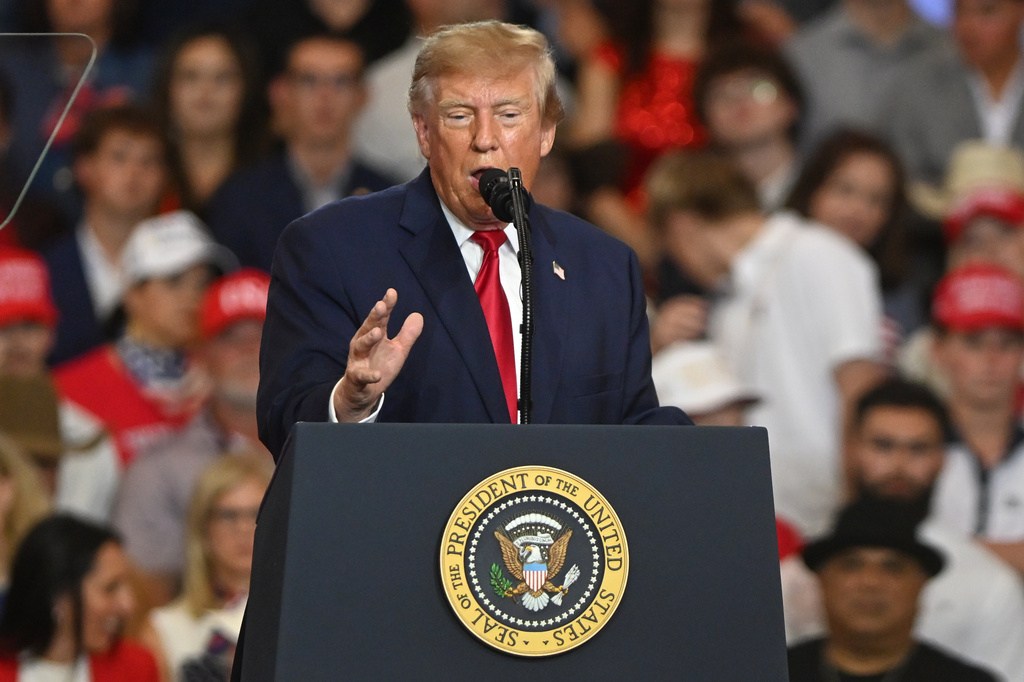
EPA OFFICIALLY SEEKS TO ROLL BACK METHANE EMISSION RULES FOR OIL AND GAS PRODUCERS: Trump announced during a campaign event last night that the Environmental Protection Agency would begin to roll back the Biden administration’s methane emission rules for oil and gas producers in an effort to bolster production and lower prices.
The president at a campaign rally in Texas touted that the EPA’s proposed rule would save companies and consumers $45 billion and unlock 210 million barrels of oil.
As a reminder, the EPA’s proposal would reconsider the Biden administration’s 2024 oil and natural gas rules on methane emissions and other pollutants, also known as OOOOb/c. It would specifically reconsider standards for low-producing oil wells. The agency will hold a 48-day comment period in the Federal Register.
GAS PRICES HIGHER UNDER TRUMP THAN BIDEN: Meanwhile, the average price of gasoline during Trump’s second term is now higher than it was in Biden’s time in office.
The average price of gasoline since Trump took office is at $3.472 a gallon, just a little above the Biden administration’s average price of $3.471 per gallon, Reuters reported this week.
EUROPEAN NATURAL GAS REACHING NEW HIGHS: Europe’s natural gas briefly hit €100 per megawatt hour for the first time since 2022.
Reuters reports that prices have been rising to 2022 highs as Europe has been facing major supply chain disruptions due to the war in the Middle East, tightening its supply ahead of the winter season.
U.S. WARNS SHIPS TO AVOID TRANSIT THROUGH THE STRAIT OF HORMUZ: The U.S. military released a notice today advising vessels to avoid transiting between ports in the Gulf of Oman and the Strait of Hormuz due to the geopolitical situation.
“Due to the current geopolitical situation, vessels which do not need to transit the area are advised to remain well clear to avoid unnecessary delays to their voyage,” the US Naval Forces Central Command said in an advisory issued via the Joint Maritime Information Center, Bloomberg reports.
“Vessels transiting this area are advised to plan additional transit time to allow for increased traffic density and military blockade enforcement operations,” the notice said.
Bloomberg noted that the U.S. military issued a similar notice in mid-July, when it began to block Iranian ships but it is unclear what prompted the new notice. Traffic through the waterways has improved in recent months but there is still looming escalation in the region.
ICYMI – PERMITTING COUNCIL REACHES ITS 10TH FEDERAL- STATE DEAL: The Permitting Council announced a partnership with Wyoming to streamline permitting for energy and industrial projects, its 10th such agreement with states.
Republican Wyoming Gov. Mark Gordon signed a Memorandum of Understanding with the Permitting Council, which is a federal agency that coordinates and speeds up the permitting process for key infrastructure projects.
The Permitting Council currently oversees two Wyoming projects under its FAST-41 program. One of those projects is the Bear Lodge Rare Earth project, which is located in northeastern Wyoming and contains several deposits of rare earth elements used in magnets and defense technology.
Alaska was the first state last year to sign a federal-state agreement with the Permitting Council. The other states that have signed a partnership with the council are Georgia, Idaho, Iowa, Louisiana, Missouri, Nevada, Tennessee, and Utah.
RUNDOWN
NPR How a lifelong Republican came to lead the data center battle in Ohio
Bloomberg Wind Projects Become Bargaining Chip in Trump’s Permitting Push
Grist Extreme weather is creating a perfect storm of misinformation
Continue reading...
[ H/T Washington Examiner ]