




WHAT’S HAPPENING TODAY: Good afternoon and happy Thursday, readers! Looking for something to do this weekend?


 The day is finally here! The Senate is scheduled to vote on passing BAAJA tonight. We could still see some votes on amendments to the legislation, but as of last night, that pathway is no longer as clear. Keep reading to find out what we mean.

Welcome to Daily on Energy, written by Washington Examiner energy and environment writers Callie Patteson (@CalliePatteson) and Maydeen Merino (@MaydeenMerino). Email cpatteson@washingtonexaminer dot com or mmerino@washingtonexaminer dot com for tips, suggestions, calendar items, and anything else. If a friend sent this to you and you’d like to sign up, click here. If signing up doesn’t work, shoot us an email, and we’ll add you to our list.
THE COUNTDOWN TO BAAJA:
As of 3 p.m., the Senate was scheduled to vote on passing the Bipartisan American Affordability and Jobs Act (BAAJA) after 8 p.m. tonight.
It’s important to note that the vote could be moved up if both parties are able to come to a time agreement for voting on a number of amendments to the bill. There was hope – among members and energy reporters alike – that the agreement would be struck last night.
What you missed last night: Senate Majority Whip John Barrasso, a long-time permitting reform advocate, told reporters yesterday evening that there would be votes on around 15-16 amendments. These amendments were expected to come from both Republicans and Democrats looking to make last-minute changes to provisions regarding transmission, the National Historic Preservation Act, and data centers.
Just about two hours later, however, late-night votes were scratched. Why? Oregon Sens. Ron Wyden and Jeff Merkley withheld consent.
Wyden later said he was blocking the amendment votes because Republicans would not vote on his amendment that would bar data centers from being built on public lands.
What does this mean for tonight’s vote? A failure to vote on amendments to BAAJA does not necessarily mean the final vote on passing the bill will fail. In fact, the broad consensus on the Hill is that BAAJA will pass and advance to the House in its current form.
The lack of additional amendments, however, could cost some Democratic votes. Ultimately, this would make it more difficult to whip votes in the House. Proponents of the bill have said roughly 70-75 votes are needed in the Senate to draw more support in the lower chamber. Yesterday, only 65 senators voted to advance the bill.
BAAJA negotiator Sen. Martin Heinrich told Politico that he is hopeful Wyden and Merkley lift their hold on amendments, saying the bill would “benefit” from the amendment process.
“I’m in the same place as Wyden on data centers and public lands,” Heinrich said. “I just don’t know that the Republicans are going to allow that amendment.”
Who is still opposing: Only two Republicans in the Senate have voted against BAAJA so far: Sens. Mike Rounds of South Dakota and Josh Hawley of Missouri.
Rounds confirmed to Callie this afternoon that he was still a “no.” While Hawley voted against BAAJA yesterday, he told reporters that he was expecting to have two of his amendments on the transmission provisions receive votes. Without that consideration, it’s Daily on Energy’s view that he too will vote against final passage.
On the Democratic side, here are the names to watch as they have all voted against advancing BAAJA during some or all procedural votes over the last week and a half:
- Sen. Angela Alsobrooks of Maryland
- Sen. Tammy Baldwin of Wisconsin
- Sen. Michael Bennet of Colorado
- Sen. Richard Blumenthal of Connecticut
- Sen. Lisa Blunt Rochester of Delaware
- Sen. Cory Booker of New Jersey
- Sen. Maria Cantwell of Washington
- Sen. Tammy Duckworth of Illinois
- Sen. Dick Durbin of Illinois
- Sen. Maggie Hassan of New Hampshire
- Sen. Mazie Hirono of Hawaii
- Sen. Tim Kaine of Virginia
- Sen. Mark Kelly of Arizona
- Sen. Andy Kim of New Jersey
- Sen. Ben Ray Lujan of New Mexico
- Sen. Ed Markey of Massachusetts
- Sen. Jeff Merkley of Oregon
- Sen. Patty Murray of Washington
- Sen. Jon Ossoff of Georgia
- Sen. Alex Padilla of California
- Sen. Gary Peters of Michigan
- Sen. Bernie Sanders of Vermont
- Sen. Jeanne Shaheen of New Hampshire
- Sen. Adam Schiff of California
- Sen. Tina Smith of Minnesota
- Sen. Chris Van Hollen of Maryland
- Sen. Elizabeth Warren of Massachusetts
- Sen. Peter Welch of Vermont
- Sen. Ron Wyden of Oregon
Be sure to follow Callie on X (Twitter) for more updates on the final vote tonight.
All the rest:
WHY GAS AND DIESEL PRICES FELL AFTER THE ELECTION – NOT BEFORE: The drop in prices in the weeks after the election raises the question of why the markets did not turn before the midterm elections, when Republicans paid a high price for voter discontent with gas prices.
Callie and Maydeen took a closer look at the various factors putting downward pressure on prices, and the answer is more complex than one might expect.
The biggest variable has been wavering tensions in the Middle East, as there has not been a significant escalation between the U.S. and Iran since the midterm elections.
“Leading up to the midterms, there was some pretty strong rhetoric coming out of the U.S. administration that Iran is going to face a ramp-up in strikes from the U.S. post-midterm election,” Susan Bell, senior vice president of Downstream Research with Rystad Energy, told the Washington Examiner. “And that hasn’t happened.”
Other contributing factors include:
- Seasonal demand
- Switching to winter blends
- Extending the Jones Act waiver
You can read more in detail about how these policies and market actions influence prices, and where prices could be headed here.
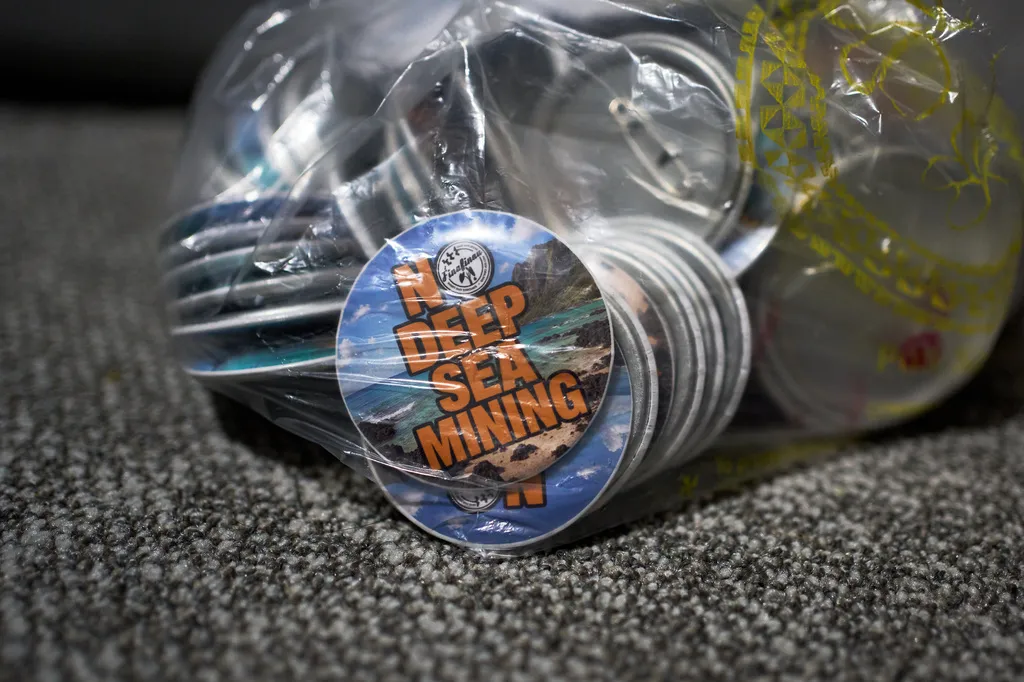
TRUMP ADMINISTRATION AUCTIONS 32 MILLION ACRES FOR OFFSHORE MINING: Only two companies offered bids today for the Trump administration’s lease sale of two deep-sea mining areas covering nearly 32 million acres off the coast of American Samoa.
The Marine Minerals Administration (MMA) held the first-ever U.S. offshore mining lease sale this afternoon, which brought in $6 million in bids. The companies that participated included Adepth Minerals Inc. and Wetstone US Ventures.
Winning companies will be allowed to do preliminary activities that will help them better understand the area, such as mapping and testing.
The American Samoa coast has been targeted for deep-sea mining because it contains polymetallic nodules, which are potato-sized rocks that sit on the sea floor that could contain critical minerals such as cobalt, copper, iron, manganese, and nickel.
The lease sale comes just a few days after a federal court in Hawaii ruled that the National Marine Fisheries Service (NMFS) violated the Endangered Species Act in greenlighting the deep-sea lease sale.
Read more by Maydeen here.
EPA PETITIONS SUPREME COURT OVER BIDEN CLEAN ENERGY GRANTS: The Environmental Protection Agency has appealed to the high court in its effort to terminate the Biden administration’s clean energy grants.
Over the summer, a federal appeals court ruled against the EPA’s efforts to suspend $20 billion in clean energy grants issued to green groups.
In question is the Greenhouse Gas Reduction Fund, which was established through the Biden administration’s Inflation Reduction Act. The Trump EPA has frozen and attempted to terminate the grants, arguing that they were improperly distributed through Citibank.
The agency, however, was quickly met with litigation by three grantees: Climate United, Coalition for Green Capital, and Power Forward Communities. The grantees and Citibank have until Dec. 15 to file a response to the EPA’s petition to the Supreme Court.
The Supreme Court could decide whether to take up the case as soon as early next year.
META RECONSIDERS 2030 CLIMATE GOAL: Mark Zuckerberg’s Meta is reconsidering its target of achieving net-zero emissions by 2030, as the rapid development of artificial intelligence is pushing up greenhouse gas emissions in the U.S.
The tech giant released its 2026 sustainability report today, which revealed that the company is re-evaluating its climate mitigation goals. Meta first set its target of reaching net-zero emissions in 2020.
Executives said in the report that those goals were set at a time when the company was expecting “steady growth, falling clean energy costs, and changes in the broader system that would enable progress at the pace we envisioned.”
“The reality has been far more complex,” the report reads.
Meta admitted that, while it has been able to drive deployment of clean energy and low-carbon solutions, that progress has not kept pace with the rapid growth in demand.
As a result, Meta said it is re-evaluating timelines, sequencing, and interim milestones, such as the 2030 net-zero target.
If you forgot: A Harvard study released this week found that the largest U.S. data centers have emitted 25.7 million tonnes of carbon dioxide between May 2024 and April 2025, which is three times higher than in 2018.
In its report, Meta said its own emissions increased by 45% year-over-year.
MARKETS WON’T BE GOING BACK TO THE WAY THINGS WERE BEFORE THE WAR: The International Energy Agency is now predicting that there is no credible way for global energy markets to return “to the way it was before” the war in Iran began.
That doesn’t mean markets will remain in a state of chaos, however, as the Paris-based agency also said there is a pathway to ending the world’s dependence on the Strait of Hormuz.
In its World Energy Outlook report released this morning, the IEA said the world can end dependence on the strait if roughly $240 billion is invested in alternative pipelines and new sources of energy.
Specifically, the IEA said building pipelines bypassing the strait would cost around $40 billion. Increasing crude supplies outside the region would cost roughly $200 billion over the next decade.
“The Hormuz crisis has delivered a huge shock to the system,” IEA chief Fatih Birol said. “While the energy sector and the global economy have shown considerable resilience, the longer the crisis lasts, the deeper the effects will be. And I don’t see any credible pathway for the energy world to return to the way it was before.”
You can read the full report here.
KENYA AWARDS RARE EARTH DEPOSIT TO U.S. GROUP: Kenya has selected Frontier Minerals as the group to develop Mrima Hill’s niobium and rare earth deposits in Kwale County, Reuters reports.
Frontier Minerals is a U.S. consortium of Frontier Minerals LLC, Bunker Hill Mining Corp., American Resources Corp., and rare earth startup ReElement Technologies.
Kenya’s mining ministry says Mrima Hill holds tens of billions of dollars’ worth of rare earth elements and niobium. The Trump administration has identified the site as a key area to help boost the mineral industry.
Editor’s Note: This week’s sponsor does not reflect the views or opinions of Daily on Energy’s writers, nor is the news coverage a reflection of the sponsor.
RUNDOWN
Canary Media Wisconsin’s new Dem trifecta could be a boon for clean energy
Bloomberg Nations Take Aim at a Climate Threat Hiding in Power Grids
Grist In Utah, a ‘hydrocarbon highway’ could run right through this petroglyph-filled canyon
Continue reading...
[ H/T Washington Examiner ]