




At the risk of stating the obvious, the sky is blue, death and taxes are inevitable, and California is a very liberal state. At the risk of angering my readers, I have even worse news: California isn’t secretly Republican.
We don’t need last week’s gubernatorial election to prove my point. And the results up and down the Golden State merely buttress it. Of course, as I write, we don’t have the final results for every race. We don’t need them, either. We have the bulk of the tally, plus the benefit of elections and public opinion polling from the past 20 years. Time flies, even when you’re losing.
The voters have been telling Republicans who they are for a generation. Republicans might begin to rebuild by believing them.
Xavier Becerra won roughly two-thirds of the vote against Republican Steve Hilton. The other Republican candidates for statewide office are doing about as well — or as badly. The margin isn’t 52-48, the sort of close result that can sustain a thousand theories about stolen elections and a few million bucks’ worth of fundraising appeals.
It’s about 66-34. Across the ballot. No cheating required.
The grim reality for California Republicans is that they haven’t won a statewide office since 2006. In the latest registration report, Democrats make up 44.96% of the electorate, Republicans 24.69%. If a secret Republican majority exists somewhere, it has maintained extraordinary operational security.
A toxic brand
Something more fundamental is going on. The Republican brand is politically radioactive in California. I don't mean merely that its candidates lose. I mean that the name itself discourages people who might agree with Republicans on taxes, crime, regulation, or any number of other issues from voting for its candidates.
Polls bear this out. A June 2025 Public Policy Institute of California survey found that 70% of likely voters viewed the Republican Party unfavorably. Among independents, the figure was 73%. A September PPIC poll found that 44% of California adults thought the Republican Party had almost no good ideas. Only 23% said the same about Democrats. These are opinions about the parties, not just candidates in a particular election.
The damage didn’t begin with Donald Trump. He arrived long after it was under way.
It’s hard to believe now, but California was once central to Republican national politics. Richard Nixon and Ronald Reagan came out of this state. George H.W. Bush carried it in 1988. Pete Wilson won re-election as governor in 1994, when Republicans represented a little more than 37% of registered voters. By 2006, they were down to about 34%. In 2018, voters with no party preference outnumbered registered Republicans for the first time. Republicans have yet to recover.
The customary explanation begins and ends with Wilson’s embrace of Proposition 187, the 1994 ballot initiative to deny certain public services to illegal aliens. The proposition passed with nearly 59% of the vote. Its opponents nonetheless built an organizing movement, and the battle left a durable mark on the GOP’s standing among Latino voters. Political scientists have documented the shift.
But a single ballot measure cannot explain 30 years of demographic change, political miscalculation, and the collapse of Republican strength in mostly white suburbs that once kept the party competitive.
RELATED: Trump conquered the Republican Party. What a waste of a victory.

It would be just as foolish to blame all this on Trump. He inherited the damage. He also became its most recognizable contemporary emblem. California gave him 31.6% of the vote in 2016, 34.3% in 2020, and 38.3% in 2024. His numbers improved. The party’s statewide prospects did not.
But whatever Trump’s appeal to his supporters, his identification with the party gave California Democrats a ready-made target. Becerra emphasized his opposition to Trump’s policies, and he tied Hilton, who had Trump’s endorsement, to the president.
The latest PPIC registration analysis shows how difficult it is to replenish the ranks: Among Californians who registered for the first time after January 2025, only 18% registered Republican. Among new registrants under 35, it was a paltry 15%. A party cannot live indefinitely on the voters it already has.
By Wednesday afternoon, the disaster had spread far beyond statewide races. Politico’s California Playbook reported that five Republican Assembly incumbents had lost to Democrats. Republican state Sen. Tony Strickland conceded. An open Senate seat being vacated by Republican Minority Leader Brian Jones just turned blue. More races remain uncalled as I write this. But California Target Book projected that Republicans could end up with just 12 seats in the 80-member Assembly. That would be the smallest Republican caucus since 1875.
Oof.
Consider Alexandra Macedo. Only months after Assembly Republicans chose her as their leader, she was trailing Democrat Hipolito Angel Cerros by 325 votes in a Central Valley district that Trump carried two years ago by nearly 19 points. Republican state Sen. Roger Niello was running an unexpectedly close race against a Democrat whose party reportedly hadn’t spent a penny to help him. These are not simply hopeless districts Republicans had no business contesting. And yet!
Republican consultant Dave Gilliard offered Politico a memorable diagnosis: “Each of those candidates ran with an R after their name, but what voters saw was a T for Trump.” He may be right. But the party was in trouble long before Trump descended the escalator; now Republicans have to contend with both battered brands.
Policies aren’t candidates
Here’s a wrinkle: Californians do not reflexively vote for every progressive idea put before them. They’re perfectly capable of discriminating among policies, even while seemingly voting “blue no matter who.”
Take taxes. (Please.) Voters approved higher income taxes on upper earners in 2012 and extended them in 2016. This year, they approved making those rates permanent, while rejecting Proposition 40's one-time tax on billionaires. They have left the central protections of Proposition 13 intact since 1978, despite modifying some of its provisions. In 2024, they rejected a proposal to make certain local bonds easier to approve.
Or consider voter ID. In April, a Berkeley IGS survey found 56% initial support for a ballot initiative mandating identification at the polls. Good news, right? But after respondents heard competing arguments about the proposal, including who backed it, support fell to 39%.
Proposition 39, sponsored by Republican Assemblyman Carl DeMaio, lost by roughly 60% to 40%. The survey does not prove that hearing DeMaio’s name alone caused the decline. The measure’s requirements and its opponents’ campaigning also played a part. But the pattern should discourage anyone from treating abstract support for a policy as votes available to a Republican candidate.
RELATED: BASS-ACKWARD: Los Angeles may dump its mayor and move farther left
I’ve seen DeMaio lately described as a “Republican firebrand,” which is weird because I remember when he was a socially liberal, ride-or-die-gay-marriage Log Cabin Republican. Whatever has happened to DeMaio, something rather more consequential has happened to the Republican brand.
The last conspicuous exception, Arnold Schwarzenegger, proved less about Republican vitality than his admirers wanted to believe. Arnold was a celebrity with crossover appeal and typically Hollywood liberal views. In 2006 he won a second term, and lukewarm Republican Steve Poizner won the insurance commissioner’s race. Neither victory produced a lasting GOP revival. How could they? Near the end of Schwarzenegger’s tenure, I wrote in the Sacramento Bee about his “legacy of disappointment.” He was his own brand. That was his edge and, ultimately, part of the problem.
The farm-team advantage
The California Republican Party, or what remains of it, too often looks like ladies who lunch. This isn’t a swipe at the loyal volunteers who keep showing up, God bless them. It’s an indictment of the people who have failed to build an effective political apparatus around them.
Democrats understand politics down to the neighborhood block. They organize through unions, clubs, school boards, city councils, county governments, and campaigns that train the people who will run the next ones. Their state party advertises year-round canvassing and volunteer training. Elections are one phase of the operation. Republicans too often behave as though six-month election campaigns are the whole story.
Democrat Hipolito Cerros, who may yet unseat the Assembly Republican leader, illustrates what a proper farm team looks like. He was mayor of Lindsay, a small agricultural town in California’s Central Valley, and once interned for Democrat state Sen. Melissa Hurtado. Local offices aren’t just places where Democrats win elections. They’re where prospective candidates learn the day-to-day, build relationships, and prepare for the next opening for higher office.
The truth is that Republicans may have dug their own grave 36 years ago by pushing for one of their favorite pet projects: term limits.
Proposition 140 in 1990 imposed strict limits on legislative service and reduced legislative staffing. The entrenched incumbents were supposed to disappear, leaving Sacramento to ordinary citizens. Obviously, that didn’t happen.
Instead, the permanent political networks survived while elected legislators had to begin again and again. Democrats could move candidates from local office into the Assembly, from the Assembly into the Senate, and from the Legislature into statewide office. Term limits made a functioning farm team more valuable, not less.
Worse, they damaged the Legislature’s capacity to stand on its own. In 1991, the Los Angeles Times was already reporting that lobbyists had begun filling gaps left by staff cuts. A 2024 study found that the staffing cuts increased the relative success of interest-group-sponsored bills.
The upshot is familiar: The people answerable to voters lost expertise and support. The people paid to influence them retained both.
Republicans love to talk about entrenched power. They have been considerably less attentive to where that power goes when elected officials are weakened. Unlike institutional memory, it doesn’t simply evaporate. It finds another address.
RELATED: Barney Frank’s dying warning should worry conservatives
Where the fight goes next
So what is left to contest? I wouldn’t spend much time fantasizing about reviving a party whose name repels much of the once Golden State’s electorate. The more interesting question is where the next struggle for political power in California will play out.
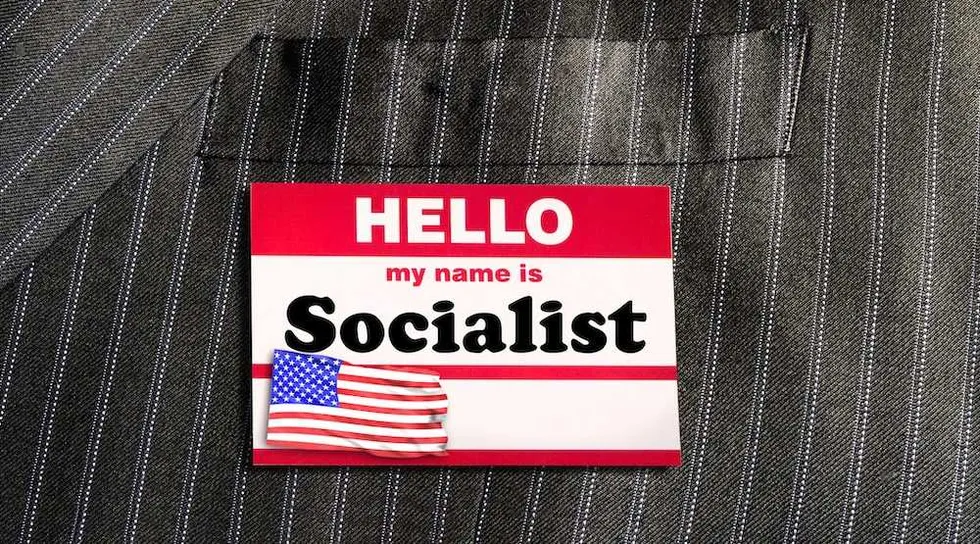
My guess is that the next six years will see increasing conflict between establishment Democrats and the Democratic Socialists of America. Socialist Nithya Raman defeated marginally less socialist Karen Bass for mayor of Los Angeles, America’s second-largest city. Socialist Jane Kim defeated garden-variety Democrat Ben Allen for insurance commissioner. True, the wealth-tax fight set Democrats against themselves. But a political coalition can dominate elections without agreeing on much about what government should do once the votes are counted.
I can imagine circumstances in which right-wing and left-wing populists find common cause, at least temporarily, over the cost of living, government favoritism, or the failure of public institutions. They will disagree, sometimes bitterly, about immigration, policing, taxes, and much else. Coalition politics does not require pretending those disagreements have vanished. It requires understanding what can and cannot be done together.
Remember: Politics is the art of the possible.
There is no guarantee that such an opening will emerge. But it is more plausible than expecting millions of disaffected Democrats and independents to wake up one morning and decide suddenly they are Republicans, secret or otherwise.
If the next serious challenge to California’s governing arrangements comes from people who reject the Republican label, it would be a fitting consequence of the party’s long decline. The voters have been telling Republicans who they are for a generation. Republicans might begin to rebuild by believing them.
Continue reading...
[H/T Blaze Media]


