
Summary
- Democrats have maintained their supermajority in the California Legislature.
- Gov.-elect Xavier Becerra has been vague in offering solutions to the problems of affordability and budget overruns.
- Legislative Analyst Gabe Petek warns of a roughly $29 billion “wall of debt” that will eventually have to be repaid.
With one-party rule in California for more than 20 years, voters again handed Democrats a supermajority. But for the average person, the question is straightforward: Will they get any real break on the issues that have dominated voters’ minds for years?
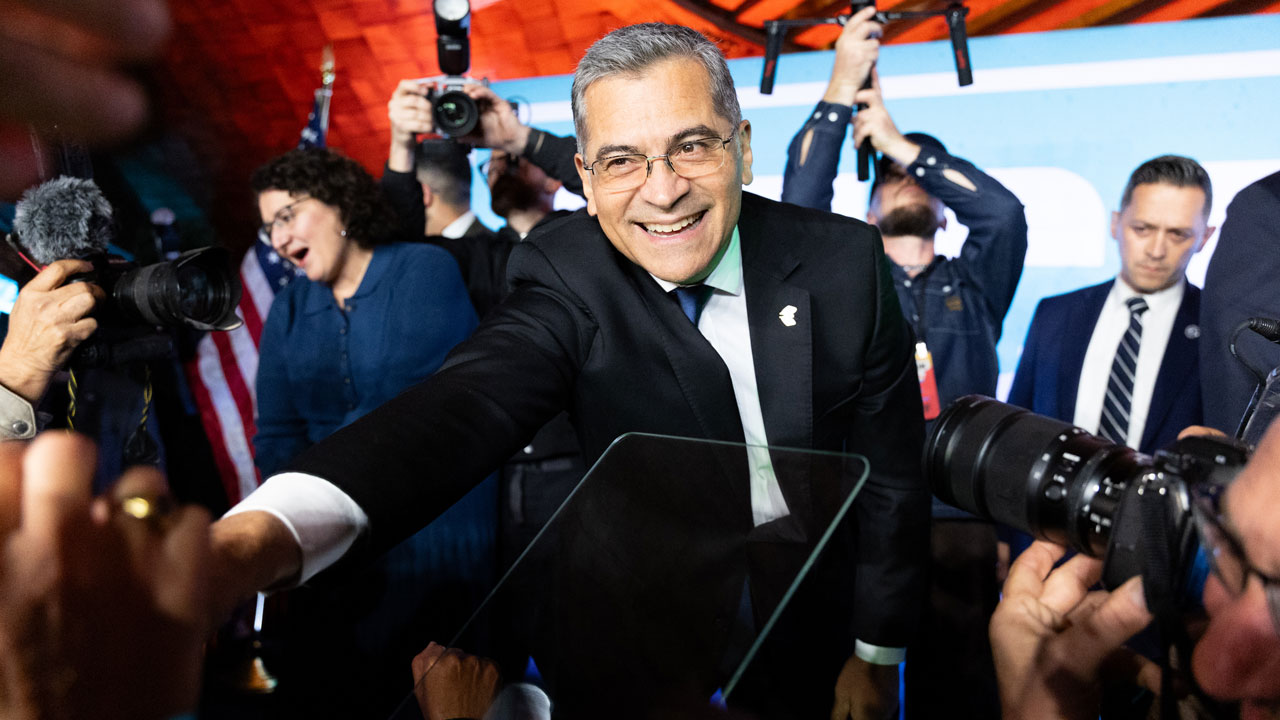
Former Health and Human Services Secretary Xavier Becerra defeated Republican challenger Steve Hilton on Tuesday, with Decision Desk HQ showing Becerra at 65% and Hilton at 34% as of Friday. While final counts for the state’s Senate and Assembly seats remain incomplete, Democrats are set to keep the veto-proof supermajorities they walked in with and could pick up a small gain.
“As governor, my mission is straightforward, but not simple. Deliver a California we can afford and defend a California we can’t afford to lose,” Becerra said in his victory speech.
Voters have been saying for most of the year that the cost of living is the issue that matters. (RELATED: Undercover Camera Catches Newsom Predicting DSA’s Rise in Democratic Party)
A February Public Policy Institute of California (PPIC) survey found 32% named the cost of living, economy, or inflation as the most important issue for the governor and Legislature to work on. It led across parties, regions, and demographic groups.
Seventy-one percent of adults said their income was not keeping up with inflation, and 71% of adults and 73% of likely voters expected bad economic times in the next 12 months.
By October, the same survey series still showed cost of living and the economy as the top concern for 45% of adults and 38% of likely voters. Housing costs and availability ranked next. While 76% of adults and 73% of likely voters said their incomes were not keeping up with inflation.
Seventy-seven percent of adults and 79% of likely voters expected bad economic times ahead, and majorities continued to say the state is headed in the wrong direction.
Those concerns have tracked measurable conditions. California has the highest average gas price in the country.
The statewide homeless count remains above 180,000, with the largest unsheltered population of any state. Additionally, only 19% of California households can afford the median-priced home, according to the California Association of Realtors, and the state still ranks among the highest in the nation for overall tax burden.
Despite years of promises to voters from the dominant party, the nonpartisan Legislative Analyst’s Office (LAO) has warned about the same pattern for years.
In its November recent fiscal outlook, the independent office projected an almost $18 billion budget problem for 2026-27, jumping about $5 billion more than what the administration expected in June despite improved revenues.
Starting in 2027-28, the Legislative Analyst’s Office estimated structural deficits would grow to roughly $35 billion a year, with spending growth expected to continue outstripping revenue. The independent office called the budget position weak and said the state’s budget is “undeniably less prepared for downturns.”
The office also noted that this would be the fourth consecutive year of budget problems, all during a period of overall revenue growth, and that the state has already used most of its resiliency tools on prior shortfalls. The critical warning to lawmakers from the Legislative Analyst’s Office urged them to pursue ongoing solutions, such as spending reductions, revenue increases, or both, rather than another round of temporary fixes.
During the last eight years, the state took in roughly $1.4 trillion in General Fund revenue and spent $1.7 trillion, an average of about $37 billion more in spending than revenue per year.
Legislative Analyst Gabe Petek has described the result as a roughly $29 billion “wall of debt” that will eventually have to be repaid.
In a Bond Buyer interview, Petek noted that the state has now borrowed that amount “during years the stock market has rallied,” adding that “Californians will ultimately need to consider how much state government they are willing and able to pay for.”
While Becerra’s campaign ultimately shied away from the media spotlight, the governor-elect recently called the cost of living “job one, two, and three,” but has given limited details on what his solutions will be.
On his campaign site, the most specific housing commitment is a day-one executive order declaring a housing emergency and the development of a Housing Affordability Master Plan aimed at making median-priced homes affordable to median-income families.
In a late October interview with KCRA’s Ashley Zavala, Becerra said “everything should be on the table” when asked about a mileage tax to replace or supplement the gas tax.
“Everything should be on the table. Our roads aren’t maintained just by some magic wand. We have to pay for it. Do I want to tax people more than necessary? No,” Becerra said.
“Should we pay a gas tax? Yes. Should people who drive electric vehicles, who don’t need gas, pay for those roads to be repaired as well? Absolutely.”
Following the election, in his first press conference as governor-elect, Becerra declined to commit to reversing earlier Medi-Cal cuts, and continuing to offer broad rather than specific solutions.
“I’m no longer a candidate; I’m now the governor elect. So I will take this very seriously,” Becerra told reporters. “But, guys, don’t play this game about asking me to commit, because I didn’t get elected doing that.”
The revenue options left open during the campaign and the spending authority voters approved sit on top of the baseline Petek described.
New measures recently approved by voters such as Proposition 3 make permanent the temporary high-earner income tax that was set to expire in 2031. The Legislative Analyst’s Office estimates roughly 40% of the resulting revenue would go to schools and community colleges, with the rest going to other state programs and, in part, budget reserves.
Housing and homebuyer bond measures authorize billions in new debt service without removing the local-approval, environmental-review, and fee barriers that keep construction expensive.
Petek has said that closing the structural gap through revenue increases alone would require substantially more new revenue than the deficit itself because education automatically claims 40 to 50 cents of every new dollar.
This is the baseline the next administration and Legislature will start from.
Continue reading...
[ H/T The Daily Signal ]