

Buy-Now-Pay-Later Klarna Crashes As Outlook Cut Exposes Consumer Growth Cracks
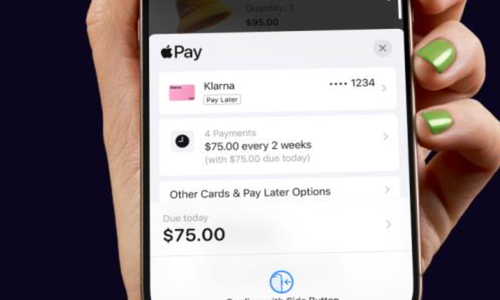
Klarna, the Swedish fintech firm best known for its buy now, pay later services, crashed in premarket trading in New York after it lowered its full-year revenue and gross merchandise value forecasts following a second-quarter active-user miss, overshadowing stronger-than-expected earnings.
The buy-now, pay-later firm now expects 2026 revenue of $4.08 billion to $4.16 billion, down from a previous forecast exceeding $4.34 billion. Gross merchandise value is projected to be $149 billion to $151 billion, compared with earlier guidance of above $155 billion.
Third-quarter revenue is expected to range from $940 million to $980 million, well below the $1.11 billion consensus estimate. The company forecast gross merchandise value of $35 billion to $36 billion, versus expectations of $39.26 billion.
Second-quarter revenue was a bright spot, rising 27% to $1.04 billion and beating estimates, while gross merchandise value reached $36.6 billion. Earnings were 1 cent per share, compared with an expected 6 cent loss. But active users totaled 120 million for the quarter, missing the 122 million estimate.
Klarna cited about $600 million of currency headwinds and a more cautious view of Germany, its largest market by volume. The company left its US outlook unchanged, with US gross merchandise value rising 27% during the quarter.
Klarna noted that "the U.S. remains Klarna's fastest-growing large region."
Klarna also said CFO Niclas Neglén will step down in early 2027 after six years in the role.
Nordea analyst Thomas Nilsson provided clients with his first take on the earnings:
Klarna shares are down 18.5% in premarket trading.

The most staggering figure from Klarna's earnings report is that more than 120 million consumers now use its payment network for everyday purchases, ranging from groceries and gasoline to airline tickets.
Management identified the US as its fastest-growing market, but that bright spot carries a darker macro warning: increasingly stretched US consumers are turning to short-term financing to cover routine expenses.
Tyler Durden Tue, 08/18/2026 - 08:50
Continue reading...
[ H/T ZeroHedge ]
Klarna, the Swedish fintech firm best known for its buy now, pay later services, crashed in premarket trading in New York after it lowered its full-year revenue and gross merchandise value forecasts following a second-quarter active-user miss, overshadowing stronger-than-expected earnings.

The buy-now, pay-later firm now expects 2026 revenue of $4.08 billion to $4.16 billion, down from a previous forecast exceeding $4.34 billion. Gross merchandise value is projected to be $149 billion to $151 billion, compared with earlier guidance of above $155 billion.
Third-quarter revenue is expected to range from $940 million to $980 million, well below the $1.11 billion consensus estimate. The company forecast gross merchandise value of $35 billion to $36 billion, versus expectations of $39.26 billion.
Second-quarter revenue was a bright spot, rising 27% to $1.04 billion and beating estimates, while gross merchandise value reached $36.6 billion. Earnings were 1 cent per share, compared with an expected 6 cent loss. But active users totaled 120 million for the quarter, missing the 122 million estimate.
Klarna cited about $600 million of currency headwinds and a more cautious view of Germany, its largest market by volume. The company left its US outlook unchanged, with US gross merchandise value rising 27% during the quarter.
Klarna noted that "the U.S. remains Klarna's fastest-growing large region."
Klarna also said CFO Niclas Neglén will step down in early 2027 after six years in the role.
Nordea analyst Thomas Nilsson provided clients with his first take on the earnings:
Klarna shares are down 18.5% in premarket trading.

The most staggering figure from Klarna's earnings report is that more than 120 million consumers now use its payment network for everyday purchases, ranging from groceries and gasoline to airline tickets.
Management identified the US as its fastest-growing market, but that bright spot carries a darker macro warning: increasingly stretched US consumers are turning to short-term financing to cover routine expenses.
Tyler Durden Tue, 08/18/2026 - 08:50
Continue reading...
[ H/T ZeroHedge ]