


'Bunker Mode': OpenAI's Jaw-Dropping Math Blitz Draws Boycott, Warning Over Crypto Wallets
OpenAI just unleashed hundreds of AI-generated mathematical papers in a single release, which include breakthroughs on problems that have frustrated researchers for generations. The pace of discovery here has started to freak out mathematicians - who are now calling for a boycott - while top minds in crypto are raising a chilling question: could AI eventually undermine the mathematics protecting digital wallets before quantum computing?
On October 6, the company published 722 manuscripts covering 372 groups of related findings, all generated by an internal AI model that has not been released to the public. The papers appeared in a public GitHub repository. OpenAI says the work emerged from testing the model on roughly 4,000 research problems, with each result in the final collection using, on average, computing power equivalent to about three hours of ChatGPT Pro's thinking mode. The collection includes claims about prime numbers, geometry and the mathematics underlying computing, touching problems that have resisted some of the world's best minds for decades.
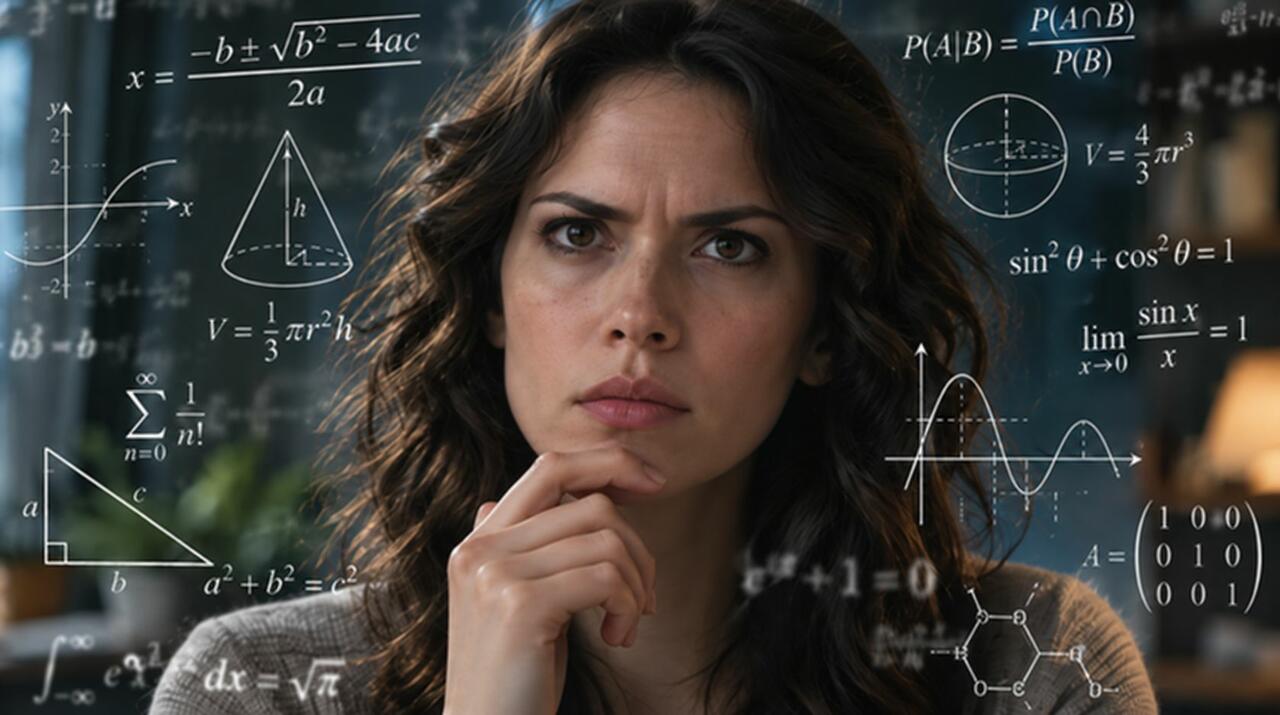
Perhaps the most startling claim concerns the Riemann hypothesis, a mathematical puzzle dating to 1859 that deals with the hidden patterns governing prime numbers - the building blocks from which every whole number greater than one can be made.
For math nerds:
Mathematicians study those patterns through a special mathematical function, looking in particular at the points where it equals zero. The full Riemann hypothesis predicts that all the important zeros fall along one precise line. OpenAI's model has not proved that. Instead, it claims to have ruled out zeros across an enormous, permanently defined region where previous proofs offered a much narrower guarantee. If the claim holds up, it would be a major advance toward understanding one of mathematics' most famous unsolved problems.
For specialists, the dividing line in the new claim is a value of 7/8, while the full hypothesis would require 1/2. The related equations are known as the Riemann zeta function and Dirichlet L-functions. For everyone else, the point is simpler: the AI claims to have established a far stronger limit on where these crucial mathematical points can appear, without claiming to have settled the entire puzzle.
Other OpenAI papers claim progress on the Hodge conjecture - which concerns the structure of complex geometric shapes - though only for a class of objects called CM abelian varieties.
Math nerds rejoice? Or panic?
Rutgers mathematician Alex Kontorovich was emphatic in his response to OpenAI's announcement:
The release follows OpenAI's September 8 announcement claiming to have solved the Navier-Stokes problem, which concerns the mathematical laws governing moving fluids. That earlier announcement had already sparked disputes over verification and who should receive credit for the work.
The backlash is about more than whether the proofs are correct. On October 7, the Association for Human Mathematics (AHM) urged researchers to stop working with OpenAI, arguing that the company had disregarded scientific norms by using a proprietary model to tackle advanced mathematics and then releasing the results on an unprecedented scale.
"Releasing over 700 files at once is not a demonstration of scholarship, but a demonstration of power," the group said. Its statement rejects OpenAI's assertion that the release advances the field and calls for a return to research centered on human understanding.
AHM is separate from the independent Advisory Group on Mathematics and Artificial Intelligence (AGMAI), whose recommendations OpenAI says informed the release. In guidelines issued September 29, that group explicitly asked AI laboratories to stop testing advanced mathematical problems on proprietary models inaccessible to the research community. But it also laid out a process for responsibly publishing results already generated, including proper citations, formal verification where feasible, independent repositories and support for human researchers trying to understand the work.
After the release, AGMAI emphasized that consultation did not mean endorsement of OpenAI's approach. It treated the publication as the beginning of scientific scrutiny, not the end. Researchers are arguing over who gets to set the scientific agenda, who can access the most powerful tools and what counts as responsible publication - not simply whether computers should be allowed to do mathematics.
Mathematician and commentator Eric Weinstein responded with a sharply different interpretation, accusing scientists of standing in the way of progress:
The implications are reaching beyond university mathematics departments.
On October 7, Ethereum Foundation researcher Justin Drake urged the cryptocurrency industry to begin preparing for what he called "bunker mode." His concern is that AI could eventually discover a mathematical shortcut for breaking the digital signatures used to protect Bitcoin, Ethereum and other assets - potentially before the powerful quantum computers that security researchers have long worried about arrive.
Every conventional cryptocurrency wallet relies on a secret private key to authorize transactions and a related public key to verify them. Finding the public key from the private one is easy; reversing the process is designed to be practically impossible. Drake fears an advanced AI could discover a shortcut that makes that reversal feasible on ordinary computing hardware. In a worst-case scenario, he suggested that the widely used ECDSA signature system could become vulnerable in months rather than years. He offered that as a possibility to prepare for, not a demonstrated breach.
Entire tweet below.
For some Bitcoin address types, an unused address conceals its public key behind a cryptographic hash until its funds are spent - so Drake recommends a gradual move to fresh addresses, particularly by large holders whose public keys have already been exposed. He repeatedly warned against rushing: moving money incorrectly can be more dangerous than the hypothetical attack the move is meant to prevent. His advice is not a universal fix for every wallet or address format.
The warning drew sharply different reactions. Ethereum co-founder Vitalik Buterin agreed that rapid advances in AI-powered mathematics deserve serious attention, but cautioned that botched wallet migrations can cause real losses. Yehuda Lindell, Coinbase's head of cryptography, went further, saying there was "no evidence whatsoever" that the mathematical foundations of elliptic-curve security had been weakened. Drake went further still, noting the "striking under-representation of cryptographic breakthroughs" among OpenAI's results and alleging he has seen the US government censor academic quantum cryptanalysis first-hand - "backroom interventionism is my base case." He offered no direct evidence of intervention in this release.
Back to the OpenAI release (which doesn't suggest a crypto compromise) - it has seen a few corrections. According to OpenAI's own revision history, a sign error in one paper's proof invalidated it along with two papers built on its construction, and all three - involving Weil classes and K3 surfaces - were withdrawn on October 7. Those withdrawals are distinct from the separately listed claim about CM abelian varieties. The company also revised 14 other manuscripts to repair proofs, correct statements or clarify assumptions, and updated references in 13 more. Its repository now lists 719 manuscripts.
OpenAI says the main results in 300 of the remaining 719 papers - about 42% - have been translated into Lean, specialized software that checks whether each step of a mathematical proof follows logically from the assumptions. The software checks the statement it is given, but mathematicians still (for now!) have to determine whether that statement captures what the paper claims to prove. And for results without such computer checks, OpenAI itself acknowledges that some may contain mistakes.
The model that produced the work is still a black box controlled by OpenAI. The company has released selected reasoning summaries and promised to support workshops and further verification, but the broader mathematical community still faces the task of sorting durable advances from claims that will need revision - or withdrawal.
That leaves two questions hanging over the release. Can independent mathematicians verify discoveries arriving faster than they can reasonably review them? And if increasingly powerful AI begins changing fields as consequential as cryptography, who gets to decide how that knowledge is tested, shared and put to use?
Drake's entire tweet:
Tyler Durden Thu, 10/08/2026 - 13:50
Continue reading...
[ H/T ZeroHedge ]
OpenAI just unleashed hundreds of AI-generated mathematical papers in a single release, which include breakthroughs on problems that have frustrated researchers for generations. The pace of discovery here has started to freak out mathematicians - who are now calling for a boycott - while top minds in crypto are raising a chilling question: could AI eventually undermine the mathematics protecting digital wallets before quantum computing?
On October 6, the company published 722 manuscripts covering 372 groups of related findings, all generated by an internal AI model that has not been released to the public. The papers appeared in a public GitHub repository. OpenAI says the work emerged from testing the model on roughly 4,000 research problems, with each result in the final collection using, on average, computing power equivalent to about three hours of ChatGPT Pro's thinking mode. The collection includes claims about prime numbers, geometry and the mathematics underlying computing, touching problems that have resisted some of the world's best minds for decades.
Perhaps the most startling claim concerns the Riemann hypothesis, a mathematical puzzle dating to 1859 that deals with the hidden patterns governing prime numbers - the building blocks from which every whole number greater than one can be made.
For math nerds:
Mathematicians study those patterns through a special mathematical function, looking in particular at the points where it equals zero. The full Riemann hypothesis predicts that all the important zeros fall along one precise line. OpenAI's model has not proved that. Instead, it claims to have ruled out zeros across an enormous, permanently defined region where previous proofs offered a much narrower guarantee. If the claim holds up, it would be a major advance toward understanding one of mathematics' most famous unsolved problems.
For specialists, the dividing line in the new claim is a value of 7/8, while the full hypothesis would require 1/2. The related equations are known as the Riemann zeta function and Dirichlet L-functions. For everyone else, the point is simpler: the AI claims to have established a far stronger limit on where these crucial mathematical points can appear, without claiming to have settled the entire puzzle.
Other OpenAI papers claim progress on the Hodge conjecture - which concerns the structure of complex geometric shapes - though only for a class of objects called CM abelian varieties.
Math nerds rejoice? Or panic?
Rutgers mathematician Alex Kontorovich was emphatic in his response to OpenAI's announcement:
The release follows OpenAI's September 8 announcement claiming to have solved the Navier-Stokes problem, which concerns the mathematical laws governing moving fluids. That earlier announcement had already sparked disputes over verification and who should receive credit for the work.
The backlash is about more than whether the proofs are correct. On October 7, the Association for Human Mathematics (AHM) urged researchers to stop working with OpenAI, arguing that the company had disregarded scientific norms by using a proprietary model to tackle advanced mathematics and then releasing the results on an unprecedented scale.
"Releasing over 700 files at once is not a demonstration of scholarship, but a demonstration of power," the group said. Its statement rejects OpenAI's assertion that the release advances the field and calls for a return to research centered on human understanding.
AHM is separate from the independent Advisory Group on Mathematics and Artificial Intelligence (AGMAI), whose recommendations OpenAI says informed the release. In guidelines issued September 29, that group explicitly asked AI laboratories to stop testing advanced mathematical problems on proprietary models inaccessible to the research community. But it also laid out a process for responsibly publishing results already generated, including proper citations, formal verification where feasible, independent repositories and support for human researchers trying to understand the work.
After the release, AGMAI emphasized that consultation did not mean endorsement of OpenAI's approach. It treated the publication as the beginning of scientific scrutiny, not the end. Researchers are arguing over who gets to set the scientific agenda, who can access the most powerful tools and what counts as responsible publication - not simply whether computers should be allowed to do mathematics.
Mathematician and commentator Eric Weinstein responded with a sharply different interpretation, accusing scientists of standing in the way of progress:
Game Over, Man?
The implications are reaching beyond university mathematics departments.
On October 7, Ethereum Foundation researcher Justin Drake urged the cryptocurrency industry to begin preparing for what he called "bunker mode." His concern is that AI could eventually discover a mathematical shortcut for breaking the digital signatures used to protect Bitcoin, Ethereum and other assets - potentially before the powerful quantum computers that security researchers have long worried about arrive.
Every conventional cryptocurrency wallet relies on a secret private key to authorize transactions and a related public key to verify them. Finding the public key from the private one is easy; reversing the process is designed to be practically impossible. Drake fears an advanced AI could discover a shortcut that makes that reversal feasible on ordinary computing hardware. In a worst-case scenario, he suggested that the widely used ECDSA signature system could become vulnerable in months rather than years. He offered that as a possibility to prepare for, not a demonstrated breach.
Entire tweet below.
For some Bitcoin address types, an unused address conceals its public key behind a cryptographic hash until its funds are spent - so Drake recommends a gradual move to fresh addresses, particularly by large holders whose public keys have already been exposed. He repeatedly warned against rushing: moving money incorrectly can be more dangerous than the hypothetical attack the move is meant to prevent. His advice is not a universal fix for every wallet or address format.
The warning drew sharply different reactions. Ethereum co-founder Vitalik Buterin agreed that rapid advances in AI-powered mathematics deserve serious attention, but cautioned that botched wallet migrations can cause real losses. Yehuda Lindell, Coinbase's head of cryptography, went further, saying there was "no evidence whatsoever" that the mathematical foundations of elliptic-curve security had been weakened. Drake went further still, noting the "striking under-representation of cryptographic breakthroughs" among OpenAI's results and alleging he has seen the US government censor academic quantum cryptanalysis first-hand - "backroom interventionism is my base case." He offered no direct evidence of intervention in this release.
Back to the OpenAI release (which doesn't suggest a crypto compromise) - it has seen a few corrections. According to OpenAI's own revision history, a sign error in one paper's proof invalidated it along with two papers built on its construction, and all three - involving Weil classes and K3 surfaces - were withdrawn on October 7. Those withdrawals are distinct from the separately listed claim about CM abelian varieties. The company also revised 14 other manuscripts to repair proofs, correct statements or clarify assumptions, and updated references in 13 more. Its repository now lists 719 manuscripts.
OpenAI says the main results in 300 of the remaining 719 papers - about 42% - have been translated into Lean, specialized software that checks whether each step of a mathematical proof follows logically from the assumptions. The software checks the statement it is given, but mathematicians still (for now!) have to determine whether that statement captures what the paper claims to prove. And for results without such computer checks, OpenAI itself acknowledges that some may contain mistakes.
The model that produced the work is still a black box controlled by OpenAI. The company has released selected reasoning summaries and promised to support workshops and further verification, but the broader mathematical community still faces the task of sorting durable advances from claims that will need revision - or withdrawal.
That leaves two questions hanging over the release. Can independent mathematicians verify discoveries arriving faster than they can reasonably review them? And if increasingly powerful AI begins changing fields as consequential as cryptography, who gets to decide how that knowledge is tested, shared and put to use?
Drake's entire tweet:
Today I call upon the blockchain industry to calmly begin planning for "bunker mode". My personal recommendation is to set in motion a controlled mass migration of assets to fresh addresses, i.e. addresses whose pubkeys remain hidden behind a hash.
Holders, starting with large and sophisticated ones, should consider moving the bulk of their funds to addresses that have never signed a transaction. And when they do sign one, they should also move remaining funds to a new address (possibly generated from the same seed phrase).
Don't rush. While I believe there is cause for action a rushed migration would do more harm than good. Don't panic either. Moving assets to protected addresses is a simple, preventative step which does not require new cryptography or new wallets.
IMO it is now reasonable to brace for the possibility that ECDSA breaks before qday, in the worst case in months not years. By "break" I mean fast private key recovery (e.g. in one week) on available hardware (e.g. a large GPU cluster).
Recent days have been humbling for human mathematical intuition. Long-held, unquestioned hypotheses have fallen. This includes the n logbound for integer multiplication and the 3SUM conjecture. In hindsight, May's unexpected disproof of the Erdős unit distance conjecture was our warning shot.
Yesterday's OpenAI drop made it clear that mathematical superintelligence is upon us. They say there are weeks where decades happen. We are about to live through weeks where centuries of mathematical progress happen. Could our magic 64-byte ECDSA signatures be too good to be true? Was it just security through obscurity all this time?
Elliptic curves feel especially vulnerable to superintelligence. Curves carry rich structure, with room for fancy tricks like Schoof, Frobenius, pairings. (By contrast, hashes are designed to minimise algebraic structure.)
Separately, as Ewin Tang can attest, an efficient quantum algorithm sometimes foreshadows an efficient classical one. We should be open to the possibility of a classical counterpart to Shor that breaks elliptic curves and RSA at once.
Also noteworthy is the striking under-representation of cryptographic breakthroughs among the 722 mathematical results OpenAI published. I've witnessed first-hand the US government censoring academic quantum cryptanalysis results. Backroom interventionism is my base case.
I urge large, sophisticated actors to lead by example. Project11's "risq list" (bitcoin-risq-list.projecteleven[.]com) is a great tracker of exposed BTC pubkeys. Binance, Bitbank, Robinhood, Bitfinex, and Tether have an opportunity to harden their cold storage. Next month I'll address institutions in London in a live Q&A (forum.ethereuminstitutional[.]org/london-2026).
Again, please do not rush. Wallets holding under 50 BTC enjoy partial cover from "Satoshi's shield", i.e. his 20K exposed addresses that hold 50 BTC each. Load-bearing signers like oracles and L2 security councils should consider rotating ECDSA pubkeys with every signed message and/or multi-signing with a hash-based schemes like SPHINCS.
Exiting bunker mode safely will require post-AI cryptography. My inclination is to go all-in on hash-based cryptography and avoid structured mathematical assumptions entirely, whether from curves, lattices, or isogenies. A single battle-tested hash (e.g. from the SHA or BLAKE families) yields plausible post-AI security.
The Ethereum roadmap on strawmap[.]org fully embraces hash-based cryptography with end-to-end formal verification as a response to the quantum threat. Those timelines must now be revisited and accelerated in light of mathematical superintelligence. I'll be pushing for maximum defensive acceleration.
Tyler Durden Thu, 10/08/2026 - 13:50
Continue reading...
[ H/T ZeroHedge ]