



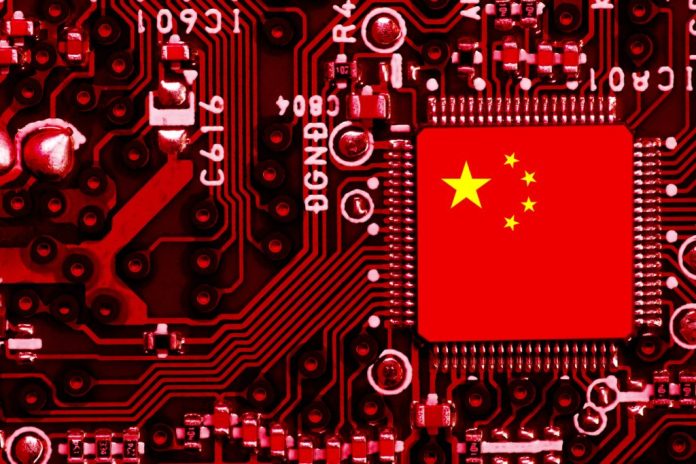
In 1994, China connected to the global internet for the first time. Thirty-two years later, the country has built the largest online population on Earth: 1.32 billion people, nearly the entire nation. Yet the deepest irony of this achievement is that ordinary Chinese citizens still cannot reach the same internet that the rest of the world uses. They live inside a parallel network, sealed off by the Great Firewall, boxed in like a cage, the very opposite of what the internet was supposed to be.
Now, to make matters worse, artificial intelligence is arriving to reinforce that wall, not tear it down. AI gives Beijing new tools to automate censorship, monitor dissent, and shape the output of generative models in real time — technology that lets the state watch more people, more closely, with less effort than ever before. On the surface, this looks like triumph: a more efficient, more total system of control than the Chinese Communist Party could ever have built with human censors alone. The party may feel quite complacent about where this is heading.
But this is a double-edged sword, and the edge facing inward may cut deeper than the one facing out.
From America’s vantage point, the key question is whether severe censorship and repression of the internet, information, and AI actually help China catch up with the United States, both technologically and civically. The answer is primarily no, and the gap this creates may widen rather than close.
Different priorities
A censored information environment degrades the raw material AI models are built on. It narrows what domestic researchers can freely discuss, publish, and criticize. It teaches an entire generation of engineers to build guardrails around truth rather than chase it wherever it leads. None of this is a foundation for frontier innovation. It is a foundation for control and the defense of state power.
Here, then, is the deeper point most American commentators miss: Technology has always been secondary to the CCP. What the Party cares about, first and always, is the security of its own power. Whether Chinese AI beats American AI on a benchmark is not really the point. The real test Beijing is running is different: Is AI robust enough to secure the Party’s rule at home while extending its influence abroad? That is the goal that matters.
This is where the American and Chinese approaches diverge most fundamentally, and where Washington keeps misreading the contest. When people in the U.S. talk about AI competition, they talk about it professionally and technically — compute, benchmarks, market share, safety evaluations.
That is not how the CCP thinks about it. Beijing treats technology and competition as inherently political and geopolitical. Professionalism and profitability are necessary, but they are instrumental, not primary. They serve the party’s survival and grip on power — they are not ends in themselves.
Chinese AI mirrors its internet
The internet itself is the clearest proof of this asymmetry. While the rest of the world worries about teenagers’ overexposure to social media, or AI’s potential for misinformation and job disruption, China’s government worries first about the internet’s impact on its own hold on power. Different fears produce different systems.
America built an open, chaotic, commercially driven internet and is now trying to regulate its excesses. China built a closed, curated, politically managed internet from the start, and it is now extending that same architecture into AI — not because it produces better models, but because it makes the rulers feel safer.
This is precisely why the fortress looks strong on the surface but may be brittle at its core. A system engineered above all to protect political power will optimize for exactly that, at the expense of the openness, dissent, and unpredictability that actually drive breakthrough innovation.
History’s freest, most chaotic, most argumentative research environments have produced the most genuine leaps forward, not the most controlled and biased ones. If AI progress increasingly rewards open experimentation, adversarial critique, and the free flow of ideas across borders and disciplines, a system built to suppress exactly those things is competing with one hand tied behind its back, no matter how arduously its talents work.
LEAVE YOUR AI PANIC NEXT TO YESTERDAY’S NUCLEAR POWER OPPOSITION
None of this means China cannot win pieces of this contest. It may well win the race for global adoption — cheap, capable, open-weight models embraced across the developing world — and for influence over how other authoritarian governments govern their citizens’ data and speech.
These are not small victories, but they remain tactical in scale. Strategically, they are not the same as winning the underlying technological race, and they are certainly not the same as building a durable, adaptive, self-correcting innovation system.
David W. Wang (@DavidWWang203) is a senior international business executive, geopolitical affairs consultant, analyst, and writer based in the Washington, D.C., metro area.
Continue reading...
[ H/T Washington Examiner ]