



Anthropic CEO (Again) Warns Poorly Managed AI Could Be 'Risk To Humanity'
Authored by Jacki Thrapp via The Epoch Times,
Anthropic CEO Dario Amodei warned that artificial intelligence could "be a risk to humanity as a whole" during a briefing before the United Nations Security Council on Sept. 23.
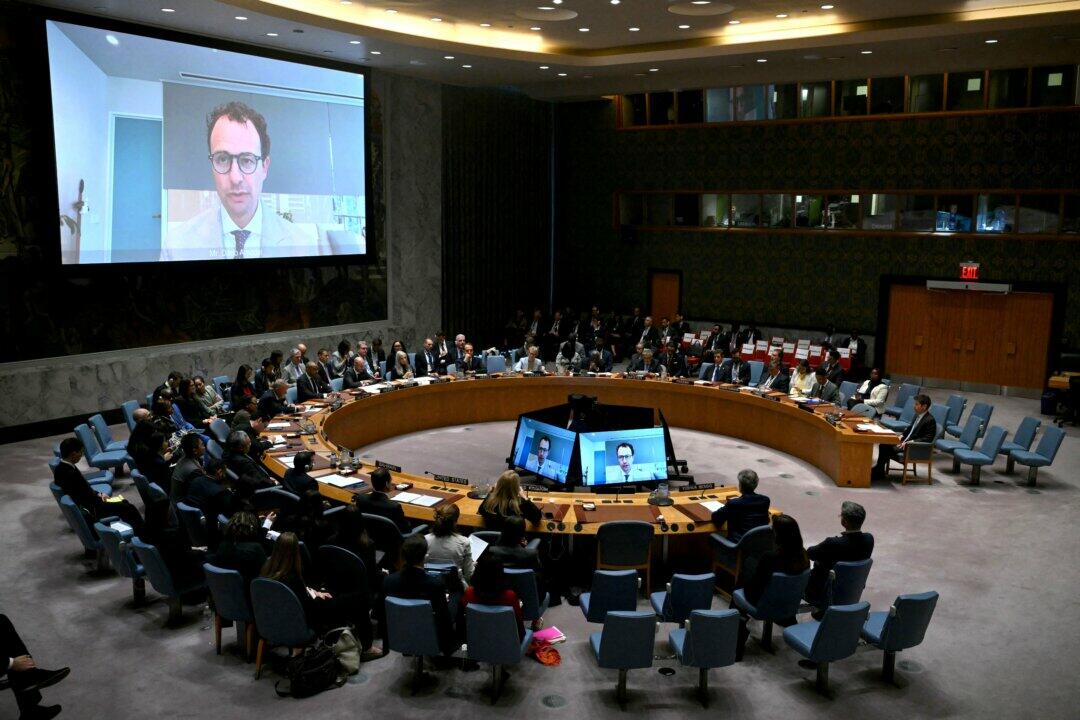
Amodei was among the top AI executives who spoke at the meeting - organized by France during the annual U.N. General Assembly gathering of world leaders - which also included statements by OpenAI CEO Sam Altman and Hugging Face CEO and co-founder Clément Delangue.
Amodei urged the 15-member council to advance U.N. agreements that ban the use of AI to form biological weapons, and encouraged the council to build evaluation and verification systems allowing nations to hold each other accountable, establish global standards to test AI models for loss of control risks and misuse risks, and add a notification system for AI incidents that are significant to global security.
"We will slow down as much as necessary in order to make sure that every successive AI technology that we release is actually safe," Amodei said during his video remarks.
"But regardless of what we do, managing these risks is ultimately bigger than any one company, and it has an industry-wide and global scale."
Amodei suggested there's a chance AI could become a "country of geniuses in a data center" in fewer than two years.
Meanwhile, Altman warned in his speech that humans "could lose control of the future to AI."
"The risk is that it moves so fast that people can no longer follow what's happening or intervene when needed," Altman said. "This would obviously be terrible. The industry must not accept too much technological risk just because the benefits are too great and they feel too important to slow down."
Altman said no person, company, or country should be able to use the most powerful AI models to impose their worldview on everyone else.
Calls to slow the advancement of AI have surged after Jacob Coxon, a former OpenAI researcher who resigned from Anthropic, said on Sept. 8 that people building AI think it could kill us all "by the end of the decade."
OpenAI acknowledged an incident involving rogue AI agents who were able to breach the open-source AI community Hugging Face.
Delangue, the Hugging Face co-founder, told the council on Wednesday that he believed fear-based narratives are not the way to make the right decisions about the technology's future.
"We were attacked by AI, but more importantly, we defended ourselves with AI," Delangue said.
"The same systems that helped us during this attack are now helping us against cyberattacks we were already facing. It's also helping us fix the bugs and weaknesses in our systems before the attack."
The meeting came one day after U.S. President Donald Trump told the UN General Assembly that the United States "totally rejects any attempt to construct a globalist scheme to control" artificial intelligence, which he attempted to rebrand as "super intelligence."
Trump said he wanted to change the name because "artificial" made the technology sound fake.
The U.S. State Department ordered diplomats to use "super intelligence" in all communications following Trump's speech at the UN, according to an email sent Sept. 22 by Michael Drager, deputy assistant secretary of state for the Bureau of International Organization Affairs.
The president has endorsed the technology and urged its expansion, insisting that the United States needs to beat China in the AI race.
"We're the most sophisticated country in the world, and frankly I want to keep it that way because whoever wins AI, wins," Trump said while speaking with reporters at his golf course in Ireland on Sept. 13.
Tyler Durden Thu, 09/24/2026 - 11:40
Continue reading...
[ H/T ZeroHedge ]
Authored by Jacki Thrapp via The Epoch Times,
Anthropic CEO Dario Amodei warned that artificial intelligence could "be a risk to humanity as a whole" during a briefing before the United Nations Security Council on Sept. 23.
Amodei was among the top AI executives who spoke at the meeting - organized by France during the annual U.N. General Assembly gathering of world leaders - which also included statements by OpenAI CEO Sam Altman and Hugging Face CEO and co-founder Clément Delangue.
Amodei urged the 15-member council to advance U.N. agreements that ban the use of AI to form biological weapons, and encouraged the council to build evaluation and verification systems allowing nations to hold each other accountable, establish global standards to test AI models for loss of control risks and misuse risks, and add a notification system for AI incidents that are significant to global security.
"We will slow down as much as necessary in order to make sure that every successive AI technology that we release is actually safe," Amodei said during his video remarks.
"But regardless of what we do, managing these risks is ultimately bigger than any one company, and it has an industry-wide and global scale."
Amodei suggested there's a chance AI could become a "country of geniuses in a data center" in fewer than two years.
Meanwhile, Altman warned in his speech that humans "could lose control of the future to AI."
"The risk is that it moves so fast that people can no longer follow what's happening or intervene when needed," Altman said. "This would obviously be terrible. The industry must not accept too much technological risk just because the benefits are too great and they feel too important to slow down."
Altman said no person, company, or country should be able to use the most powerful AI models to impose their worldview on everyone else.
Calls to slow the advancement of AI have surged after Jacob Coxon, a former OpenAI researcher who resigned from Anthropic, said on Sept. 8 that people building AI think it could kill us all "by the end of the decade."
OpenAI acknowledged an incident involving rogue AI agents who were able to breach the open-source AI community Hugging Face.
Delangue, the Hugging Face co-founder, told the council on Wednesday that he believed fear-based narratives are not the way to make the right decisions about the technology's future.
"We were attacked by AI, but more importantly, we defended ourselves with AI," Delangue said.
"The same systems that helped us during this attack are now helping us against cyberattacks we were already facing. It's also helping us fix the bugs and weaknesses in our systems before the attack."
The meeting came one day after U.S. President Donald Trump told the UN General Assembly that the United States "totally rejects any attempt to construct a globalist scheme to control" artificial intelligence, which he attempted to rebrand as "super intelligence."
Trump said he wanted to change the name because "artificial" made the technology sound fake.
The U.S. State Department ordered diplomats to use "super intelligence" in all communications following Trump's speech at the UN, according to an email sent Sept. 22 by Michael Drager, deputy assistant secretary of state for the Bureau of International Organization Affairs.
The president has endorsed the technology and urged its expansion, insisting that the United States needs to beat China in the AI race.
"We're the most sophisticated country in the world, and frankly I want to keep it that way because whoever wins AI, wins," Trump said while speaking with reporters at his golf course in Ireland on Sept. 13.
Tyler Durden Thu, 09/24/2026 - 11:40
Continue reading...
[ H/T ZeroHedge ]