







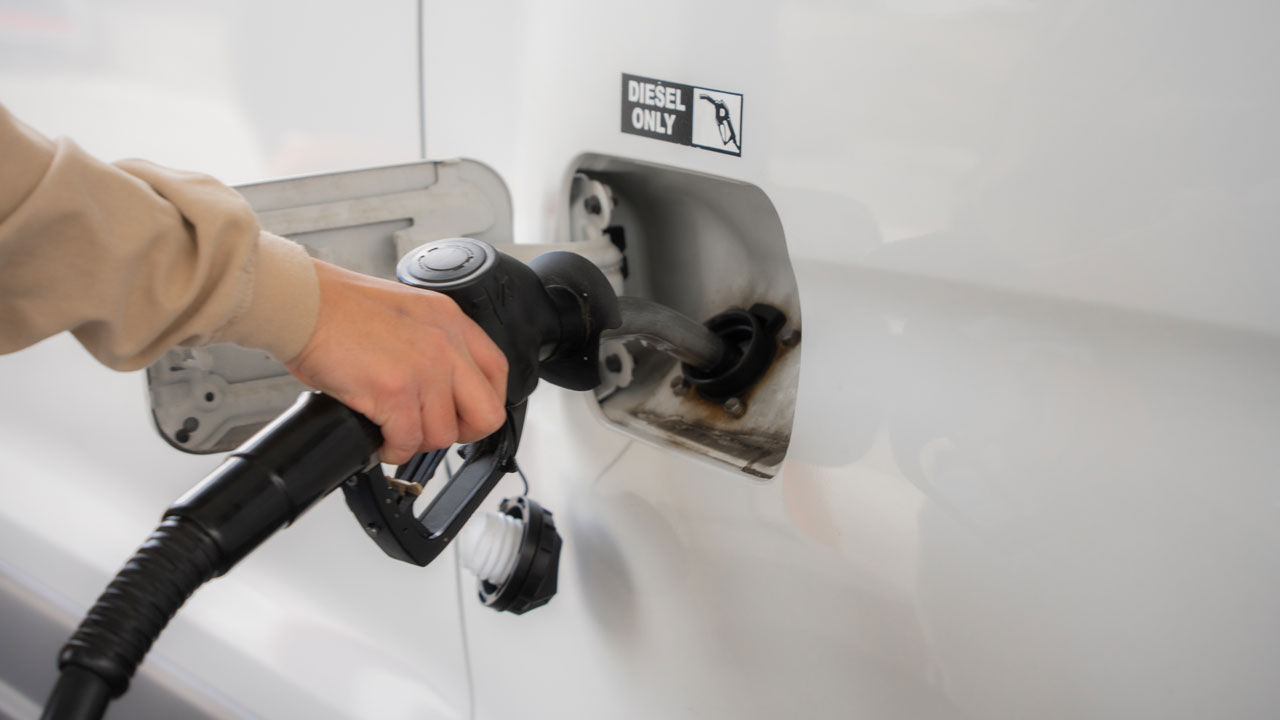
On the latest episode of The Heritage Foundation podcast “The Power Hour,” host Jack Spencer talks energy with Heritage Foundation Executive Vice President Derrick Morgan. In this excerpt, Morgan explains why a potential ban on diesel exports to lower U.S. diesel prices is a bad idea.
This transcript has been edited for clarity.
Jack Spencer: So what brings us here today for this special episode?
Derrick Morgan: Well, diesel prices are very, very high. There are a lot of reasons for that. And as part of that and the fact that you have an election coming up in less than two months probably has something to do with it too. You’ve got people that are really hurting out there. You’ve got harvest season in the ag community where people are trying to power up their combines and everything else with diesel fuel. You do have winter coming around the corner with home heating oil and so forth.
People are very, very concerned about high diesel prices, so they’re looking for some way to lower them. And unfortunately, in my view, they’re looking at a potential option of stopping diesel exports in a way to keep diesel here thinking that will lower prices. But there’s a lot of negative blowback that we could see if we do that.
Jack Spencer: You laid it out good. I mean, diesel prices are high. And there’s both sort of, from a public perspective, they want the politicians to do something. It’s election season. And banning exports seems on its face at least to be a perfectly appropriate thing to do. Keep it here. But a lot of people have tried this before. There are always these negative unintended consequences that occur. Walk us through some of that. Why should we be skeptical or wary of such a policy decision?
Derrick Morgan: Well, the energy markets now are very global in nature. And actually, there was a big change in 2015. We used to have a ban on exporting crude oil until 2015. And that was actually limiting American production. Once we got rid of that ban, American crude oil production skyrocketed. We’re now the number one producer in the world. And so, you might scratch your head and say, well, if that worked well to increase production, then why would we do the reverse when it comes to diesel? And the thought is, as an initial matter, if you stop the export, you have higher supply here.
There are a number of problems with that. First and foremost, you just don’t have a lot of places to put all that produced diesel. Right now, we export about a million and a half barrels a day. That is a lot. We do not have enough storage to do that for very long, to continue producing at the same rate.
There’s a couple of things that you can make, adjustments you can change when you have a barrel of crude oil come in, you have different yields for different fuels. So people don’t always understand how the refining process works. But you’re taking crude oil of one type or another and you put pressure, you add heat and so forth, and you get a yield of different fuels. You get gasoline, you get kerosene, you get jet fuel, you get diesel, etc.
And you can change that around a little bit with the knobs, but not that much. So you can maybe decrease the diesel yield from say 31.5%, maybe down to 29%. On the margins, right. So what do you do with all of this diesel? We’re not going to use it here in the U.S. We’ve been exporting it. Where do you put it?
You’re going to run out of storage pretty quickly. And that’s going to lead refiners to have to reduce the amount of the barrels that are going through the complex altogether. And what’s that going to do? S&P did an analysis of this, and they think that it could lead to about a million barrels a day less of gasoline. So we’re going to have less gasoline, which means higher prices on gasoline.
First order effect. You have more diesel, higher supply presumably. And in the very short run prices would go down. But then you’ve got these other fuels that they’re going to when productions are cut. And by the way, S&P looked at this. They’re estimating that in pretty short order, you’d have to cut refinery runs by about 12%. That means 12% less crude oil coming through, which means all the fuel supply going down. If you have that, it’s going to be a major problem. That’s the first problem.
Second problem: There are parts of the United States that don’t really have access to our awesome Gulf Coast refineries in Texas and Louisiana and elsewhere. The northeast United States relies on imports of diesel and home heating oil. Importantly, as winter is coming. They’re mostly importing that from Canada, some from Europe. And because of our lack of pipelines and Jones Act restrictions, it’s really hard to get that fuel up to the northeast. So you’re going to have parts of the northeast and potentially maybe the West Coast as well, that are going to be supplied by foreign suppliers.
If the United States, a million and a half barrels a day of diesel are taken off, the international diesel prices are going to spike. They’re going to go way up. And then those Americans are going to see higher prices right away. Those are two problems.
The third problem is our allies. And for someone struggling as a farmer struggling to get crops out of the field, it’s not quite as important, but it is something we do need to keep in mind. Latin America, one third of their diesel demand is from the United States. Ninety percent of their imports are from the United States.
We have become energy dominant, thanks in large measure to President Donald Trump and Europe, 50% of their diesel imports recently from the United States. So our allies are relying on us. We’ve become the world’s most reliable supplier. If we do this, we look a lot less reliable in the future. And they’ll look for suppliers somewhere else.
So those are three really big problems.
Continue reading...
[ H/T The Daily Signal ]