







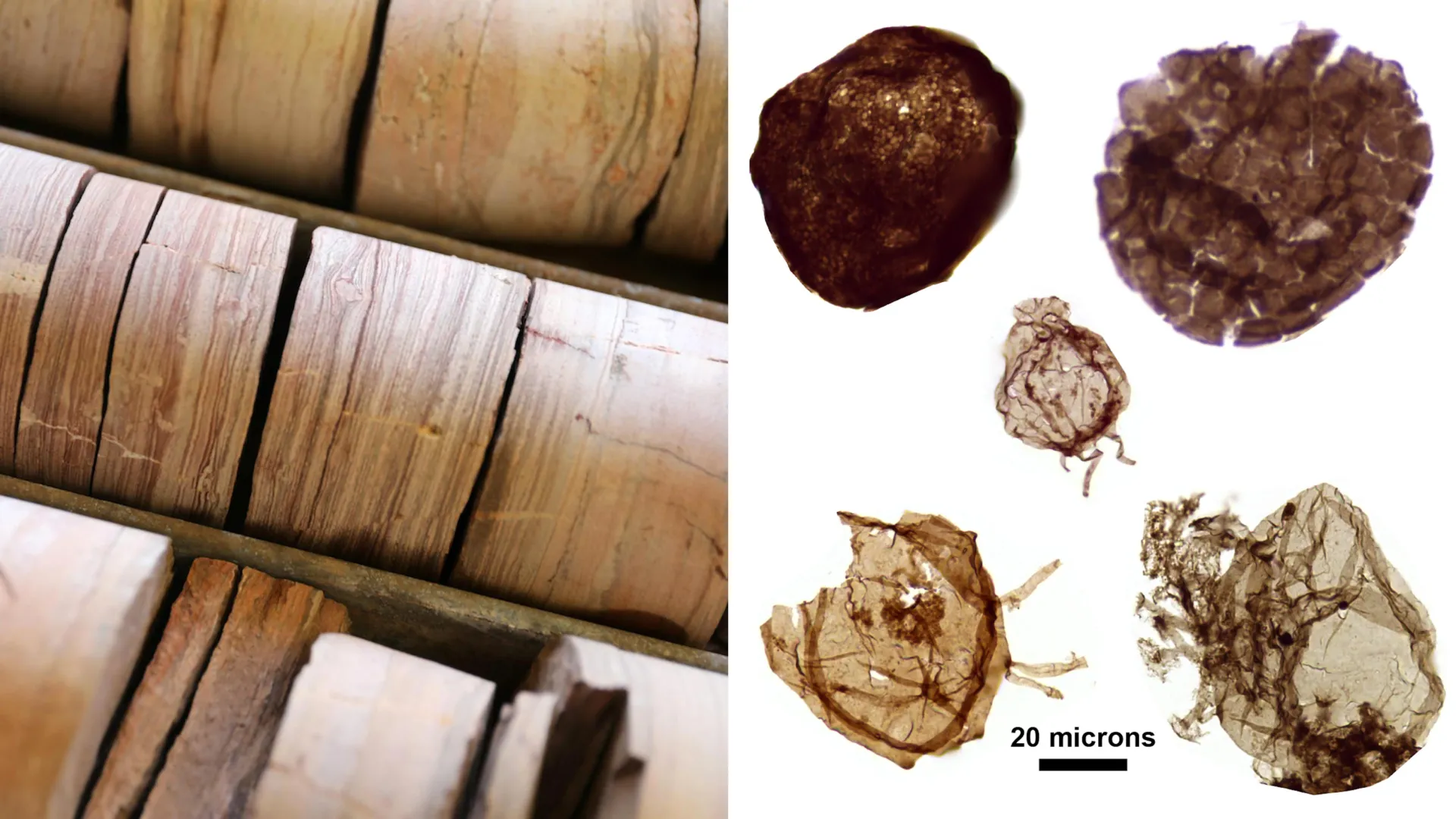
Scientists studying ancient Australian rocks uncovered more than 12,000 fossils from some of the oldest known eukaryotes on Earth. These early complex cells lived in settings ranging from coastal mudflats to the open sea, but only where oxygen was available. Oxygen-free environments contained simpler microbes instead. The findings strengthen the idea that oxygen played a crucial role in the emergence of complex life.
Continue reading...
[ H/T ScienceDaily ]